


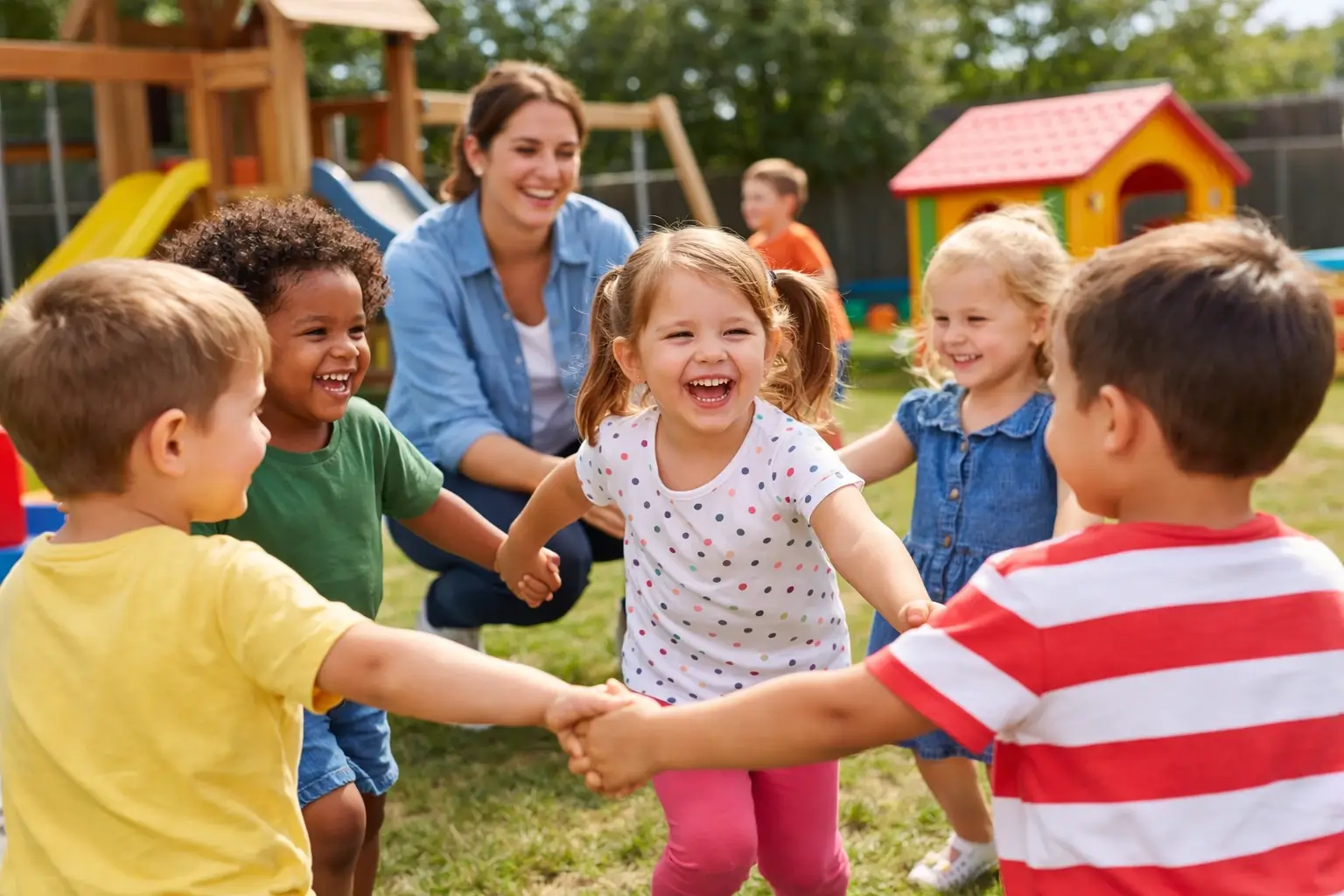
Children learn in many ways, but some of the most meaningful lessons happen when they play together. A simple group game may look like fun on the surface, yet it often teaches much more than parents realize. It can help children listen, cooperate, solve problems, move their bodies, and build confidence in social settings.
For young children especially, learning is not meant to feel separate from play. It happens through shared laughter, simple rules, movement, and interaction with others. Group games create those moments naturally. They give children a safe and encouraging space to explore how to be part of a group while still expressing their own personality.
In daycare and preschool settings, group games are especially valuable because they support development in so many areas at once. A child may be practicing turn-taking, improving balance, building patience, and learning how to communicate all in the same activity. That is one reason group play remains such an important part of early childhood learning.
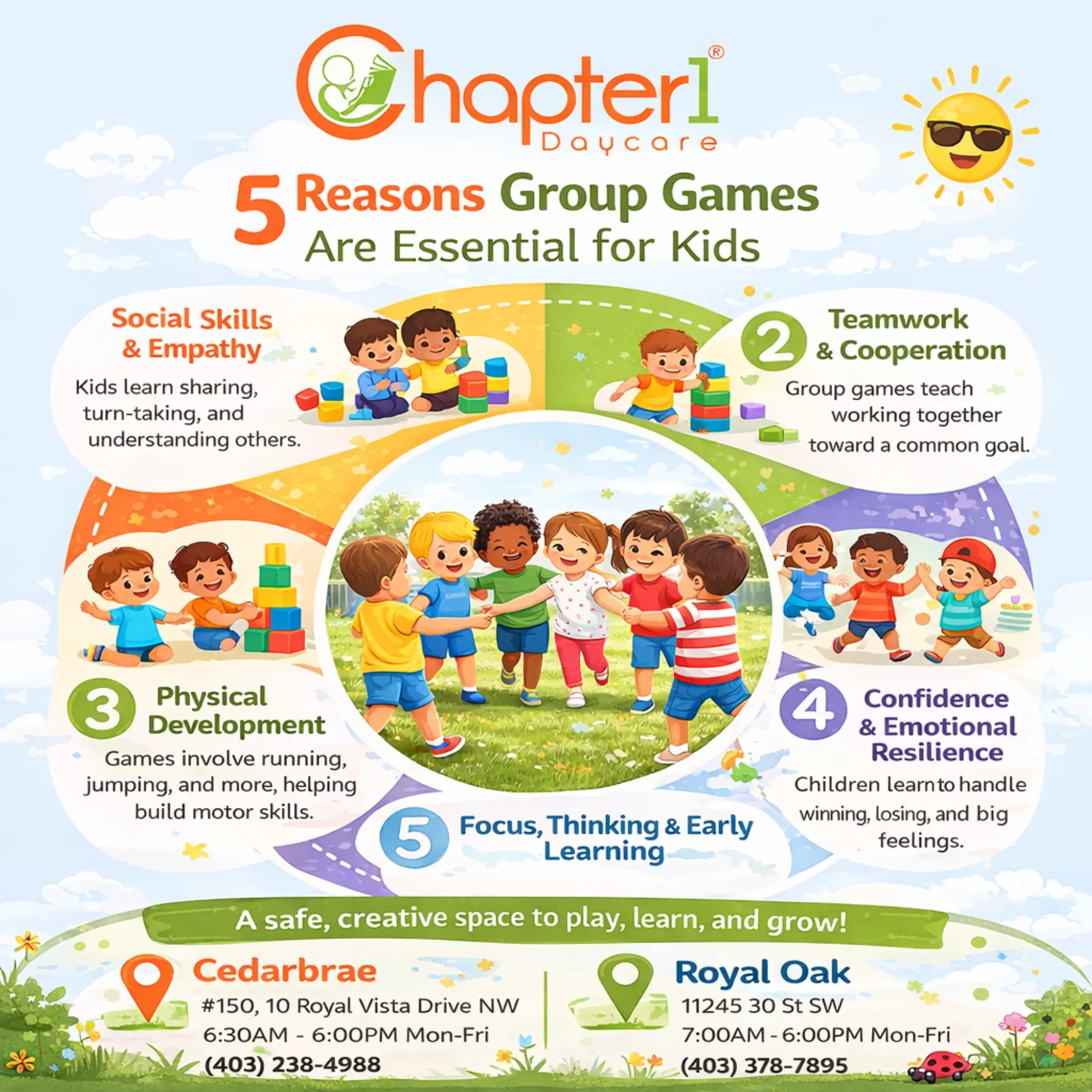
Group Games Help Children Build Social Skills
One of the biggest benefits of group games is the way they support social development. Young children are still learning how to interact with others in a positive and respectful way. They do not automatically know how to share, wait, take turns, or express themselves clearly. These are skills that need time, repetition, and guidance.
Group games create a natural setting for those lessons. When children play with others, they begin to understand that they are part of a shared experience. They learn that everyone gets a turn, that listening matters, and that being kind helps the game continue smoothly. These moments may seem small, but they build a strong social foundation over time.
Learning To Listen And Take Turns
Many group games involve simple rules, short waiting periods, and shared participation. That helps children practice self-control in a way that feels manageable. A child may need to wait for their turn in a circle game, listen to instructions before starting, or watch what another child is doing before responding.
These experiences are important because they help children become more comfortable in group settings. They learn that they can participate without always being first and that they can enjoy an activity while respecting others around them.
Building Early Communication Skills
Group games also encourage children to talk, respond, and engage with others. Some games involve singing, answering questions, following directions, or working with a partner. All of this supports language development and communication.
As children play together, they start using more words to express their ideas, ask for help, join in, and solve small disagreements. These are valuable everyday skills that support friendships and make it easier for children to feel confident in daycare, preschool, and later classroom environments.
Group Games Teach Teamwork And Cooperation
It is never too early for children to begin learning how to work together. Group games show children that not everything has to be done alone. In many activities, success depends on cooperation, encouragement, and shared effort rather than individual performance.
This matters because teamwork is a skill children will use throughout life. Whether they are working on a school project, playing sports, or building relationships, they need to understand how to be part of a group and contribute in a positive way.
Shared Goals Create Stronger Connections
When children play a game together, they often work toward a common goal. They may need to pass an object, complete a task as a team, or help each other follow the game rules. These shared experiences help children feel connected and included.
A child who learns to cheer for others, wait for a partner, or help a friend during play is also learning empathy and cooperation. These moments support the idea that being part of a group can feel rewarding, not stressful.
Learning Fairness And Problem-Solving
Group games also help children understand fairness. They begin to see that rules exist to help everyone enjoy the activity. They learn that sometimes they win, sometimes they do not, and sometimes the most important part is simply playing well with others.
This kind of play also introduces simple problem-solving. If a game is not going smoothly, children may need to adjust, communicate, or try again. Those little moments of working through challenges with others help build patience and cooperation in a very practical way.
Group Games Support Physical Development
For young children, movement is a major part of healthy development. They learn through motion, exploration, and active play. Many group games involve running, hopping, clapping, balancing, reaching, or dancing. These actions help children strengthen both gross motor and fine motor skills.
Physical development in early childhood is about more than burning energy. It affects coordination, body awareness, posture, balance, and confidence in movement. Group games offer a fun way for children to practice these abilities without pressure.
Movement Makes Learning More Engaging
Children are often more focused and engaged when they can move their bodies. A game that includes action can hold attention better than a passive activity, especially for younger age groups. When movement is built into play, children stay interested while also developing important physical skills.
Simple games like follow-the-leader, musical movement games, or obstacle-based team activities can support coordination and control. These playful experiences also make it easier for children to connect physical movement with listening and following directions.
Healthy Habits Start Early
Group games can also encourage children to enjoy active play from a young age. When movement is associated with fun, friendship, and positive routines, children are more likely to see physical activity as something enjoyable.
That matters in daycare and preschool because children need regular opportunities to move, stretch, and release energy in healthy ways. Group games help make activity part of the daily rhythm instead of something separate from learning.
Group Games Build Confidence And Emotional Resilience
Confidence does not appear all at once. It grows slowly through repeated experiences where children feel capable, included, and supported. Group games can play a big role in that process because they allow children to participate, try new things, and feel proud of their efforts.
For some children, joining a group activity can feel a little intimidating at first. They may be shy, unsure of the rules, or hesitant to speak up. But when games are guided in a warm and encouraging environment, children often begin to feel more comfortable. Over time, that participation helps build self-assurance.
Safe Practice With Winning, Losing, And Trying Again
One of the valuable lessons group games teach is how to manage emotions. Not every child will win every game, go first, or get everything exactly right. That is actually part of the benefit. These moments help children learn how to handle disappointment, stay calm, and keep trying.
At the same time, they learn how to celebrate others, accept support, and enjoy the process rather than focusing only on the outcome. This kind of emotional resilience is important in early childhood because it helps children manage frustration in healthier ways.
Inclusion Helps Children Feel Secure
Group games also help children feel like they belong. When a child is included in a shared activity, they begin to understand that they are a valued part of the group. That sense of belonging supports emotional wellbeing and can make daycare or preschool feel more comfortable and secure.
Children who feel safe and included are often more willing to explore, speak up, and try new experiences. In that way, group play does not just build confidence for the moment. It supports a child’s overall comfort in learning and social environments.
Group Games Boost Focus, Thinking, And Early Learning
Group games are not only good for social and emotional growth. They also help support thinking skills. Many games require children to remember rules, respond to cues, solve simple problems, or follow a sequence of steps. That kind of play strengthens attention and cognitive development in a very natural way.
Young children learn best when activities are engaging and hands-on. Group games often combine fun with structure, which makes it easier for children to stay focused while still enjoying the experience.
Learning Through Play Feels Natural
A child may be counting during a game, matching colours, identifying shapes, or remembering a pattern without even realizing they are practicing early academic skills. This is one reason play-based learning is so effective in the early years. It keeps learning developmentally appropriate while still building important abilities.
Games can also support memory, listening, and decision-making. Children may need to remember what comes next, pay attention to a signal, or decide how to respond in the moment. These are useful early thinking skills that support school readiness later on.
Creativity And Imagination Matter Too
Not all cognitive growth comes from structured learning. Many group games invite children to pretend, imagine, and create. That kind of imaginative play supports flexible thinking and helps children explore ideas in a fun and meaningful way.
When children work together in creative games, they are not just playing. They are building confidence in their own ideas, learning how to adapt, and exploring different ways to interact with the world around them.
Why Group Games Matter In Daycare And Preschool
In a high-quality early learning environment, group games are not just a way to fill time. They are a meaningful part of how children learn, connect, and grow. Thoughtfully planned group activities can support social development, physical coordination, emotional confidence, and early learning all at once.
That is why group play fits so naturally into the daily rhythm of a nurturing childcare setting. At Chapter1 Daycare, children are given opportunities to play, learn, and interact in ways that support their development at every stage. With a warm, structured environment and programs designed around early growth, group activities become part of a bigger experience that helps children feel confident, connected, and ready to learn.
Final Thoughts
Group games may seem simple, but their impact is powerful. They help children develop social skills, practice teamwork, stay active, build confidence, and strengthen early thinking skills. Most importantly, they make learning feel joyful and natural.
For young children, these shared moments of play do more than entertain. They teach life skills that carry into friendships, classrooms, and everyday experiences. When children laugh together, solve problems together, and grow together, they are building the foundation for healthy development in ways that truly matter.
FAQs
What are the benefits of group games for children?
Group games help children build social skills, learn teamwork, improve communication, stay physically active, and develop confidence. They also support problem-solving, focus, and emotional growth.
Why are games essential for children?
Games are essential because children learn best through active, engaging experiences. Play helps support physical, emotional, social, and cognitive development in a way that feels natural and enjoyable.
What are the benefits of playgroups?
Playgroups give children a chance to interact with others, practice communication, and build friendships. They also help children become more comfortable in shared settings and support early learning through play.
What are the benefits of group play?
Group play teaches children how to share, cooperate, and participate with others. It also helps them manage emotions, stay engaged, and build important life skills in a supportive environment.
How do group games help preschoolers learn social skills?
Group games help preschoolers practice taking turns, listening, following rules, and communicating with others. These repeated experiences strengthen social confidence and help children feel more comfortable in group settings.
Can group games improve focus and confidence in young children?
Yes, group games can improve both focus and confidence. Children learn to pay attention, follow directions, and stay involved in an activity while also gaining confidence through participation and encouragement.