


When parents think about daycare curriculum, they often picture early letters, numbers, or circle time. But one of the biggest benefits of a well-planned daycare program is something children build with their whole body: physical development in early childhood.
From learning to crawl and balance, to gaining the hand strength needed for drawing and writing, physical development is the foundation for so many everyday skills. It’s also deeply connected to confidence, independence, and school readiness. A strong daycare curriculum doesn’t treat movement as an “extra.” It weaves gross motor and fine motor practice into the day in a way that feels fun, natural, and age-appropriate.
In this blog, we’ll explain how daycare curriculum supports physical growth, share physical development examples you can visualize, walk through stages of physical development, and show how structured and unstructured play work together to help children thrive.
Explain how daycare curriculum enhances physical development
A daycare curriculum isn’t just a set of activities. It’s a consistent plan that supports development through repetition, variety, and a safe environment. Physical skills don’t build from one “sports day” or one craft. They build through daily practice—little moments repeated again and again.
A quality curriculum enhances physical development by:
-
Creating regular opportunities for movement throughout the day
-
Providing age-appropriate challenges that stretch skills gently
-
Blending structured activities (guided games, movement time) with unstructured play (free outdoor play, climbing, running)
-
Including fine motor practice through art, sensory play, and everyday routines
-
Helping children build endurance and coordination gradually, not all at once
Instead of one long stretch of activity, most programs include multiple short bursts. That’s ideal for young children because their bodies and attention work best in cycles—move, rest, move again.
Importance of physical development in early childhood
Physical development is about more than “being active.” It’s how children learn to control their bodies, understand space, and build the strength needed for daily life. It affects confidence, emotional regulation, and learning.
Here’s why physical development matters so much:
It supports independence
Physical strength and coordination help children do everyday tasks: climb into a car seat, wash hands, use utensils, put on shoes, and manage jackets and zippers. These are “small” things, but they are major confidence builders.
It builds readiness for learning
Children learn best when their bodies feel regulated and capable. When kids move regularly, they often focus better, transition more smoothly, and participate more confidently in group routines.
It strengthens confidence and resilience
Physical development is full of tiny wins: “I climbed that step,” “I caught the ball,” “I can cut paper now.” Those wins create a child who feels capable—and that feeling carries into other areas of development.
It supports emotional regulation
Movement helps children release energy, reset their nervous system, and handle frustration. A child who has daily active play often has fewer “pressure cooker” moments.
Stages of physical development: what changes as kids grow
Physical development follows a general sequence, but every child’s pace is unique. A strong daycare curriculum adapts activities so children get the right level of challenge at each stage.
Infants: the foundation of movement
In the early stage, physical development is about building foundational strength and coordination. Infants develop head control, core stability, reaching, grasping, rolling, and eventually crawling and pulling up.
Daycare curriculum supports this through:
Safe floor time, tummy time, and sensory movement
Reaching and grasping activities (soft blocks, textured toys)
Gentle stretching and supported sitting positions
A calm environment that encourages exploration without overwhelm
These early movements are the building blocks for later balance, coordination, and confidence.
Toddlers: mobility, balance, and body control
Toddlerhood is where physical development explodes. Toddlers are learning to run, climb, jump, balance, and navigate space safely. They also begin developing the hand strength and control needed for early drawing, feeding skills, and simple self-care.
Daycare curriculum supports toddler physical growth through:
Climbing structures and safe obstacle-style play
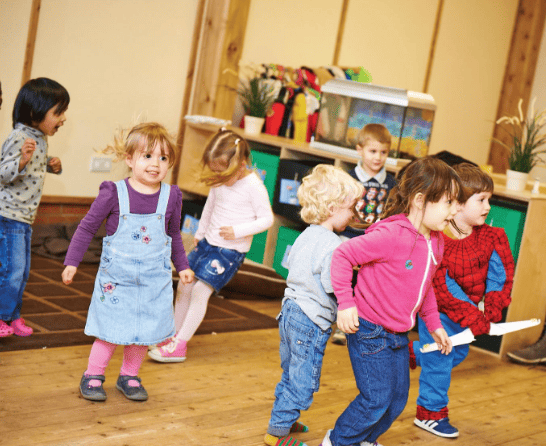
Music and movement time (dancing, jumping, marching)
Ball play (rolling, kicking, tossing)
Sensory and fine motor play (Play-Doh, stacking, large crayons)
Toddlers learn best when movement is built into the routine—not saved for “later.”
Preschoolers: coordination, endurance, and precision
Preschoolers gain more control and coordination. Their bodies become steadier, and their fine motor skills become more precise. This is a key stage for pre-writing skills and school readiness.
Daycare curriculum supports preschool physical development through:
More complex movement games (hopping, balance challenges)
Throwing and catching practice
Guided obstacle courses with simple rules
Fine motor activities like cutting, tracing, and detailed art
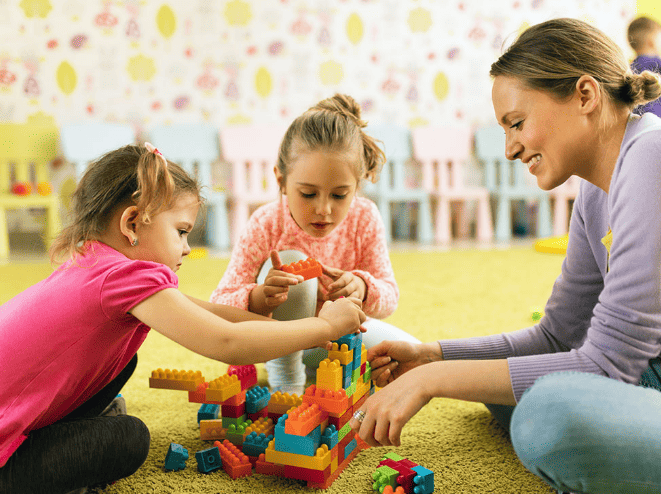
Construction play using smaller pieces and tools
At this age, curriculum can gently blend challenge and structure—without removing the joy of play.
Physical development examples: what daycare activities look like

Parents often ask for concrete physical development examples—what children actually do in a curriculum-based daycare day.
Gross motor examples
Gross motor skills involve the large muscles of the body. These skills help children move, balance, and coordinate big movements.
Common daycare activities that build gross motor skills include:
Outdoor play with running, climbing, and jumping
Obstacle courses using cones, mats, tunnels, and stepping stones
Dance and movement games that build rhythm and coordination
Nature walks that involve uneven surfaces and exploration
Ball play that develops coordination and body awareness
These activities strengthen muscles and also teach children how to manage their body in a group setting—waiting turns, following directions, and moving safely around others.
Fine motor examples
Fine motor skills involve the small muscles of the hands and fingers. These skills are essential for drawing, writing, using utensils, and dressing.
Daycare curriculum supports fine motor skills through:
Crayons, markers, and paintbrushes
Play-Doh, clay, and sensory bins (scooping, pinching, pouring)
Puzzles and building toys that require grip and placement
Beads, lacing cards, and threading activities for older preschoolers
Scissor work for preschool age (with safe tools and guidance)
Even simple activities like peeling a sticker, turning pages, or opening a container support fine motor development.
Gross motor skills: how curriculum builds big-body strength
Gross motor development isn’t just “let them run.” A thoughtful daycare curriculum balances free play with structured activities so children build strength, coordination, and confidence.
Structured gross motor activities
Structured movement is guided by an educator, often with a simple goal. The benefit of structured play is that it teaches specific movement patterns and builds listening skills at the same time.
Examples include:
Short relay-style games
Yoga or stretching for kids
Follow-the-leader movement games
Obstacle courses with simple directions
Music-and-movement sessions with matching actions
These activities help children practice control—not just energy release.
Unstructured gross motor play
Unstructured play is child-led and exploration-based. It gives children the freedom to climb, run, and create their own movement challenges.
This kind of play builds:
Risk awareness and body confidence
Creativity in movement
Natural strength and endurance
Self-directed problem solving
The combination of structured and unstructured play is powerful. Kids need both.
Fine motor skills: how curriculum builds hand strength
Fine motor development is one of the most important school readiness skills, but it’s often misunderstood. It’s not just about holding a pencil—it’s about building the muscles and coordination that make writing possible later.
Fine motor in daily routines (yes, this counts!)
A strong daycare curriculum includes fine motor practice throughout the day, not only during craft time.
Daily routines that build fine motor skills include:
Feeding skills with utensils and cups
Handwashing routines (pumping soap, rubbing hands, turning taps)
Dressing practice (zippers, buttons, Velcro shoes)
Tidying up (grasping, carrying, placing objects carefully)
These are real-life skills that strengthen fingers and build independence.
Fine motor through play
Play-based fine motor activities are effective because children repeat them willingly. They feel fun and satisfying, which means more practice without pressure.
Sensory and art activities build the kind of hand strength that supports:
Pre-writing control
Tool use (scissors, paintbrushes)
Hand-eye coordination
Patience and focus
Supporting physical development in early childhood: what daycare does differently
Daycare environments often support physical development in ways that are hard to replicate at home—not because parents aren’t capable, but because daycare is designed for active learning.
Daycare supports physical development through:
A consistent daily schedule that includes movement every day
A child-safe environment with space to explore
Age-appropriate equipment and materials
Educator guidance that challenges children safely
Peer motivation—kids learn movement skills by watching and copying others
It’s also a setting where physical development naturally connects to social skills: taking turns, sharing equipment, following group rules, and cooperating in games.
Name three factors that may influence physical development of infants and toddlers
Physical development is shaped by many factors, and it’s helpful to understand the big ones. Here are three common influences:
1) Nutrition and sleep
Growing bodies need fuel and rest. Sleep supports growth and recovery, and nutrition provides energy for movement and play.
2) Opportunities for movement
Children develop physical skills when they get safe chances to practice. Time on the floor, outdoor play, climbing, and hands-on activities all matter.
3) Individual development and health
Temperament, comfort, illness, growth patterns, and natural development pace all influence physical skills. Two children can be healthy and developing well—and still hit milestones at different times.
The importance of physical development in early childhood for school readiness
School readiness isn’t just about recognizing letters. It includes the body skills required to participate in a classroom.
Physical development supports school readiness by improving:
Posture and stamina for sitting and listening
Hand strength and pencil control for drawing and early writing
Coordination for activities like gym class and playground play
Confidence in group routines and transitions
Self-care skills like toileting, dressing, and managing lunch containers
When children feel physically capable, they often feel emotionally more secure too.
Chapter1 Daycare: where movement and learning work together
At Chapter1 Daycare in Calgary, physical development is naturally built into our play-based curriculum through daily active play, hands-on learning, and consistent routines that support growing bodies. Children in our Toddler Program (19 months–3 years) spend their days practicing balance, climbing, movement games, and fine motor play that strengthens hand control through sensory activities and art. As they grow into Preschool Program (3–4.5 years), we add more structured movement activities, coordination games, and pre-writing fine motor experiences that build confidence and school readiness—always in a warm, encouraging environment where children feel safe to try, practice, and grow.
A warm takeaway
A strong daycare curriculum supports physical development in early childhood every single day—through movement, play, routines, and age-appropriate challenges. Over time, those small daily experiences build stronger bodies, more confident learners, and children who feel capable in their world.
If you’re looking for a daycare where your child’s growth is supported from every angle—physical, emotional, and educational—Chapter1 Daycare is here to help your child play, learn, and grow with confidence.
FAQs
Explain how daycare curriculum enhances physical development
It provides consistent, daily opportunities for movement and fine motor practice through structured activities, free play, routines, and age-appropriate challenges that build strength and coordination over time.
What are physical development examples in daycare?
Gross motor examples include obstacle courses, outdoor play, dance, and ball games. Fine motor examples include crayons, Play-Doh, puzzles, cutting practice, and hands-on self-care routines.
Why is physical development important in early childhood?
It supports independence, confidence, emotional regulation, and school readiness skills like posture, stamina, and tool control for writing.
What are the stages of physical development?
Physical development generally progresses from foundational movement and strength in infancy, to mobility and coordination in toddlerhood, to greater control, endurance, and fine motor precision in preschool years.
How can we support physical development in early childhood at home?
Create daily movement opportunities, limit long sedentary periods, offer hands-on play (blocks, puzzles, sensory bins), and build routines that encourage self-care skills.
Name three factors that influence physical development in infants and toddlers
Nutrition and sleep, opportunities for movement and play, and individual development/health factors like temperament or illness.
What’s the difference between gross motor and fine motor skills?
Gross motor skills use large muscle groups for actions like running and climbing. Fine motor skills use smaller hand and finger muscles for actions like drawing, buttoning, and cutting.
How does physical development connect to writing readiness?
Fine motor strength and hand-eye coordination support pencil grip, control, and stamina—key building blocks for later writing.
What if my child seems behind in physical milestones?
Children develop at different rates. If you’re concerned, talk with your child’s healthcare provider for guidance and supportive next steps.