


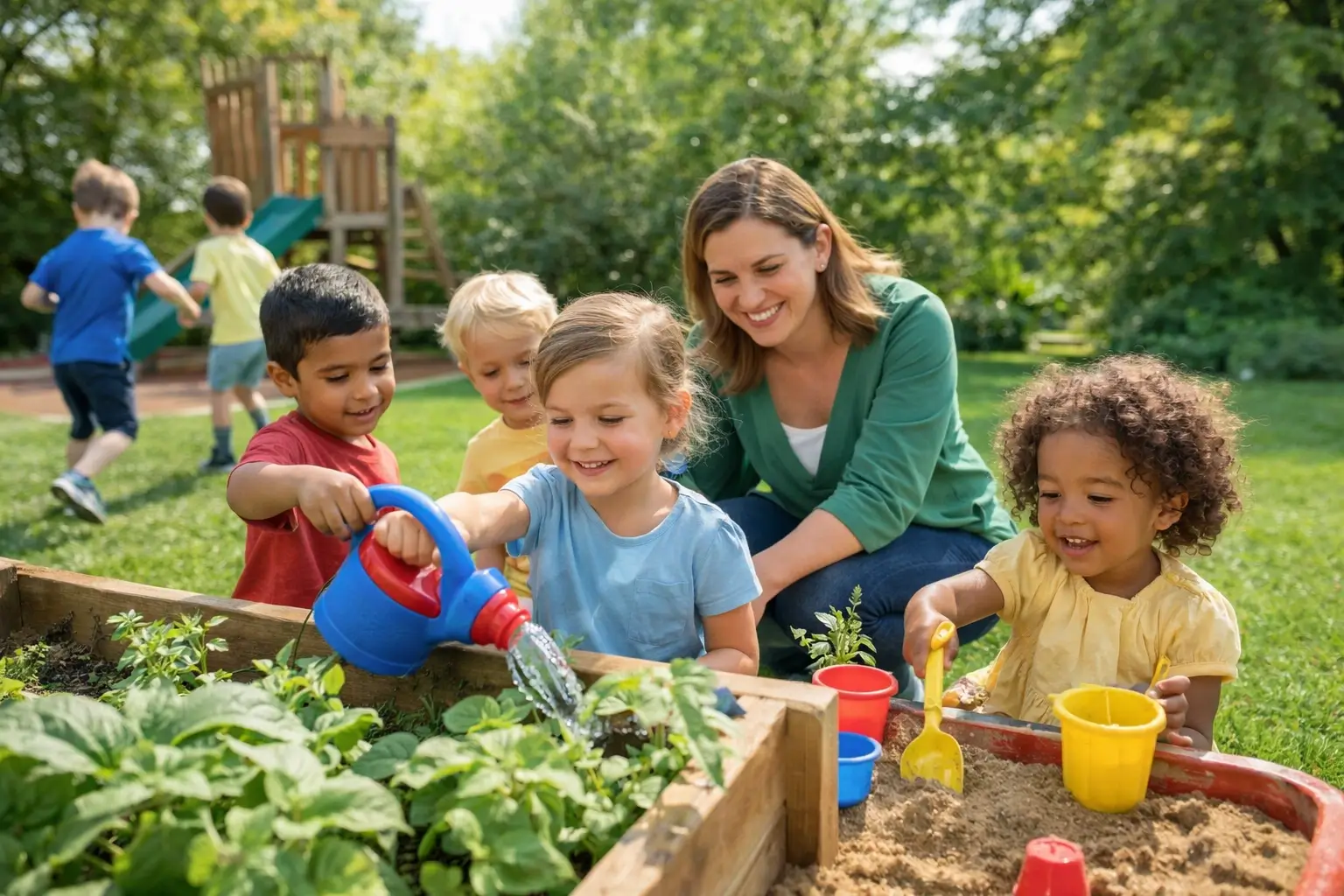
Outdoor activities for preschoolers are about much more than fresh air and fun. They play an important role in early childhood development by helping children build physical strength, social confidence, problem-solving skills, creativity, and independence. For many families, outdoor play is one of the most valuable parts of a strong preschool or daycare experience.
When children learn outside, everyday moments become meaningful learning opportunities. A walk can turn into a nature lesson. A game of hopscotch can support number recognition. A simple garden project can introduce patience, responsibility, and curiosity. That is why educational outdoor activities for preschoolers are such an important part of early learning.
For parents looking for ideas at home or searching for a preschool or daycare that values active learning, outdoor experiences matter. Below are 20 engaging preschool outdoor activities that support learning through movement, nature, imagination, and play.
Why Outdoor Activities Are Important For Preschoolers
Outdoor learning gives children the chance to explore the world in a hands-on, active way. While indoor learning has its place, outdoor activities for preschoolers often offer a broader range of developmental benefits.
Physical Development
Running, climbing, balancing, jumping, and throwing all help preschoolers strengthen large muscle groups and improve coordination. Many outdoor learning activities also build fine motor skills through actions like collecting leaves, planting seeds, or drawing with chalk. These experiences support healthy physical growth while helping children feel more confident in their bodies.
Cognitive Growth
Outdoor environments encourage children to ask questions, make observations, and solve problems. Whether they are comparing leaf shapes, following a scavenger hunt list, or watching shadows move, they are building attention, memory, and reasoning skills. Educational outdoor activities for preschoolers can support early math, literacy, science, and language development in a natural way.
Social And Emotional Learning
Outdoor group play helps children practice communication, sharing, teamwork, and patience. It also gives them more freedom to explore and make choices, which helps build independence and confidence. Preschoolers often regulate emotions better when they have enough time for active movement and open-ended play outside.
Connection With Nature
Children who spend time outdoors learn to notice plants, insects, weather, textures, and seasonal changes. These experiences build curiosity and a healthy respect for the natural world. Nature-based preschool activities can also feel calming and grounding, which is especially helpful in the early years.
20 Outdoor Activities For Preschoolers That Support Learning
These preschool outdoor activities are simple, engaging, and packed with educational value.
1. Nature Scavenger Hunt
A nature scavenger hunt is one of the best outdoor activities for preschoolers because it combines movement, observation, and vocabulary. Ask children to find items such as a leaf, flower, rock, feather, or stick. This activity helps build attention to detail and encourages exploration.
2. Bug Exploration
Give children a magnifying glass and let them safely observe insects in the grass, near flowers, or along a path. Talking about how bugs move, where they live, and what they look like introduces early science concepts in a way that feels exciting and hands-on.
3. Bird Watching
Bird watching is a simple but valuable outdoor learning activity for preschoolers. Children can look for birds, listen for calls, and notice colors or movements. It builds patience, listening, and observation skills while strengthening awareness of the natural world.
4. Cloud Storytelling
Have children lie on a blanket and look up at the clouds. Ask what shapes they see and what stories those shapes might tell. This activity supports language development, creativity, and imagination.
5. Weather Station
Set up a simple weather chart or rain gauge and track daily changes. Preschoolers can observe whether it is sunny, windy, cloudy, or rainy and begin to recognize patterns. This is a great preschool science activity that works well outdoors.
6. Sidewalk Chalk Letters
Write letters, words, or numbers on the pavement and let children trace them, jump to them, or spray them with water. This combines movement with early literacy and numeracy, making it one of the most effective educational outdoor activities for preschoolers.
7. Nature Pattern Making
Children can use leaves, sticks, flowers, and stones to make patterns on the ground. This supports early math skills such as sequencing, sorting, and pattern recognition while encouraging creativity.
8. Counting Garden
Draw circles on the ground and label them with numbers. Ask children to place the right number of petals, leaves, or stones in each one. This is a fun and active way to practice counting and number recognition outdoors.
9. Alphabet Obstacle Course
Create an obstacle course where children move from one letter to the next by hopping, crawling, or running. This activity supports gross motor development while making letter recognition more interactive and memorable.
10. Hopscotch Numbers
Hopscotch remains one of the classic outdoor activities for preschoolers because it supports balance, coordination, and counting all at once. You can use traditional numbers or even add shapes, letters, or colors for extra learning value.
11. Tree Bark Rubbing
Place paper on tree bark and rub over it with crayons to reveal the texture underneath. This sensory-rich activity helps children notice patterns in nature and supports fine motor development and artistic expression.
12. Leaf Printing
Collect leaves in different shapes and sizes, then paint and press them onto paper. This outdoor craft activity helps children explore plant shapes, textures, and symmetry while enjoying creative play.
13. Mud Kitchen
A mud kitchen is one of the most loved preschool outdoor activities because it encourages pretend play, sensory learning, and problem-solving. Children can mix mud, leaves, water, and natural items as they “cook” and create.
14. Rock Painting
Rock painting combines outdoor exploration with creativity. Children can collect smooth stones and decorate them with patterns, shapes, or colors. It supports imagination and fine motor skills while giving them a fun keepsake to take home.
15. Nature Sensory Bin
Fill a bin with pinecones, leaves, sand, acorns, and other natural materials. Preschoolers can sort, scoop, count, and explore textures. This type of outdoor sensory play is excellent for hands-on learning.
16. Gardening Activities
Gardening is one of the best educational outdoor activities for preschoolers because it teaches patience, responsibility, and science in a very real way. Children can plant seeds, water plants, and watch growth over time.
17. Shadow Play
Ask children to watch their shadows at different times of day or make shadow shapes with their bodies. This simple activity introduces early science ideas around sunlight, movement, and time.
18. Water Play Stations
Set up cups, funnels, buckets, and sponges for water play. Children can pour, squeeze, transfer, and compare amounts, which supports fine motor skills and early science concepts like volume and flow.
19. Animal Movement Game
Ask children to move like different animals by hopping like a frog, waddling like a duck, or crawling like a bear. This helps build coordination, balance, listening skills, and imagination.
20. Outdoor Picnic Learning
Prepare a snack together and enjoy it outside. Talk about fruits, vegetables, colors, textures, and where food comes from. This supports social development, language, and early nutrition awareness.
How Daycare Centers Can Use Outdoor Learning Effectively
A quality daycare or preschool should view outdoor play as more than free time. Outdoor learning works best when it is part of the daily rhythm and connected to a child’s stage of development. Activities should feel fun and natural, but they should also support learning goals around movement, language, early academics, social skills, and confidence.
For younger children, outdoor learning may focus more on sensory play, movement, and exploration. For older preschoolers, it can include early literacy games, counting activities, simple science projects, and collaborative outdoor play. When these experiences are age-appropriate and thoughtfully planned, children benefit in every area of development.
At Chapter1 Daycare, outdoor play and active learning are part of creating a balanced, engaging day for children. Our programs are designed to support curiosity, confidence, and development through play-based experiences, including outdoor movement, exploration, and hands-on activities that fit each age group.
Tips For Parents To Encourage Outdoor Learning At Home
Parents do not need a large backyard or complicated setup to support outdoor learning. Some of the best outdoor activities for preschoolers are simple and easy to do.
Start by making outdoor time part of the daily routine whenever possible. A short walk, a nature search, a chalk activity, or a few minutes of water play can all create valuable learning moments. You can also use natural materials like leaves, rocks, and sticks in play and art.
Ask open-ended questions while your child is outside. What do you notice? How does that feel? Why do you think that happened? These simple conversations help children think more deeply and build language skills through real experiences.
Common Mistakes To Avoid With Preschool Outdoor Activities
Outdoor learning works best when children have room to explore. One common mistake is over-controlling the activity so much that there is little room for creativity or independent thinking. Structure can be helpful, but preschoolers also need open-ended play.
Another mistake is choosing activities that are not age-appropriate. Preschool outdoor activities should be safe, simple, and matched to the child’s developmental level. The goal is not perfection. The goal is engagement, movement, and learning through play.
It is also important not to overlook the educational value of simple outdoor experiences. A walk, a puddle, a garden bed, or a patch of grass can all become meaningful learning spaces when children are given time and encouragement to explore.
Why Outdoor Activities Matter In Early Childhood Education
Outdoor activities for preschoolers support the whole child. They build stronger bodies, growing minds, social confidence, and everyday independence. They also help children connect learning with real life in a way that feels joyful and memorable.
For families looking for a daycare or preschool, outdoor learning is worth paying attention to. It often reflects a center’s broader approach to child development. A program that values movement, nature, exploration, and play is often a program that understands how young children learn best.
Educational outdoor activities for preschoolers do not need to be complicated. What matters most is that children have the chance to move, discover, imagine, and grow.
Why choose Chapter1 Daycare
Chapter1 Daycare is a warm, trusted childcare and preschool in Calgary, with convenient locations in Cedarbrae and Royal Oak, serving Infants, toddlers, preschoolers, and pre-kindergarten children through play-based learning and flexible care options. Families choose Chapter1 for its nurturing environment, experienced educators, transparent pricing, nutritious meals, daily activities, and real schedule support, including full-time, part-time, night, weekend, and extended-hour childcare designed for modern family needs.
FAQs
What Are Educational Outdoor Activities For Preschoolers?
Educational outdoor activities for preschoolers are play-based experiences that support learning outside. They can help with physical development, early literacy, math, science, sensory learning, and social skills.
Why Are Outdoor Activities Important For Preschoolers?
Outdoor activities help preschoolers build motor skills, confidence, creativity, problem-solving abilities, and social-emotional development. They also support healthier, more active daily routines.
What Are The Best Outdoor Activities For 3 To 5 Year Olds?
Some of the best outdoor activities for preschoolers include nature scavenger hunts, water play, gardening, chalk games, obstacle courses, bug exploration, and outdoor art activities.
How Do Outdoor Activities Help Child Development?
They support physical coordination, language growth, early academic learning, emotional regulation, teamwork, and independence through active, hands-on experiences.
How Long Should Preschoolers Play Outside Each Day?
Many children benefit from at least 60 to 90 minutes of outdoor play each day, depending on weather, age, and routine.
Can Outdoor Learning Improve Social Skills?
Yes. Outdoor learning often encourages sharing, communication, collaboration, turn-taking, and group problem-solving, all of which help strengthen social skills.
What Are Simple Outdoor Activities For Preschoolers At Home?
Easy options include nature walks, leaf collecting, sidewalk chalk, shadow games, cloud watching, water play, and simple gardening.
How Can A Daycare Use Outdoor Learning Better?
A daycare can make outdoor learning more meaningful by planning age-appropriate activities, balancing free play with guided learning, and using outdoor time to support movement, curiosity, and development.