



Mornings can shape the whole tone of the day. When everything feels rushed, even small things can turn into big struggles—getting dressed takes forever, breakfast gets skipped, shoes become a battle, and daycare drop-off feels emotional before you even leave the house. For young children, especially toddlers and preschoolers, those hectic starts can make separation feel even harder.
The good news is that smoother mornings usually do not require a complicated plan. In most families, what helps most is a simple, repeatable routine that feels calm, predictable, and realistic. Children feel safer when they know what comes next. Parents feel calmer when fewer decisions have to be made under pressure.
If daycare drop-off has been difficult lately, a few small routine changes can make a big difference. The goal is not a perfect morning. The goal is a steady one.
Why Morning Routines Matter So Much Before Daycare
Children do better when their day starts with predictability. A familiar morning routine helps them move from sleep to activity in a way that feels secure instead of stressful.
When the order of the morning stays mostly the same, children learn what to expect. That lowers anxiety and reduces resistance. They know that first they wake up, then get dressed, then eat breakfast, then brush teeth, then put on shoes, then head to daycare. That consistency becomes comforting.
Rushed mornings often create stress long before the actual drop-off. A child who feels hurried, confused, or disconnected may cling more at daycare because their nervous system already feels overloaded. A calm routine does not remove every tear, but it often makes transitions much easier.
Start the Night Before So the Morning Feels Lighter
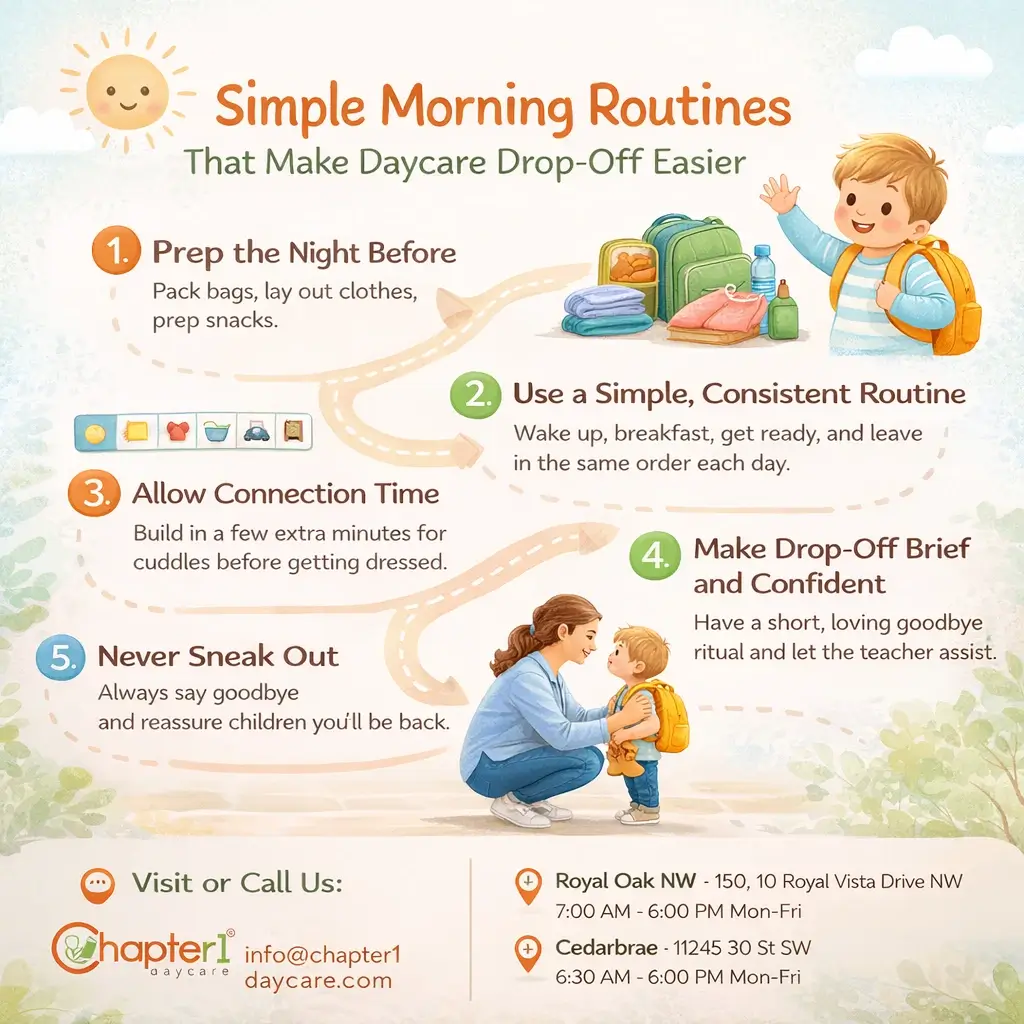
One of the best ways to make daycare drop-off easier happens before the morning even begins. Night-before prep removes pressure from the busiest part of the day.
Try setting up a simple “launch routine” the evening before. Pack the daycare bag, put lunch items or bottles where they are easy to grab, lay out clothes, and place shoes and jackets in one spot near the door. If your child uses a comfort item, make sure that is ready too.
This kind of preparation matters because early mornings are not the best time for decision-making. The fewer things you need to search for, remember, or debate, the more energy you have for staying connected and calm with your child.
It also helps children. When their clothes are ready and the sequence feels familiar, the whole routine moves with less friction.
Create a Simple Morning Order and Keep It the Same
A strong morning routine does not need lots of steps. In fact, fewer is usually better. What matters most is that the order feels steady.
A simple daycare morning might look like this:
-
Wake up
-
Cuddle or connect
-
Get dressed
-
Eat breakfast
-
Brush teeth and wash face
-
Shoes, coat, and bag
-
Out the door
This order works because it is easy to repeat and easy for children to learn. Once the routine becomes familiar, your child stops needing to wonder what happens next.
For younger children, you can even turn the routine into a visual flow. A few simple pictures taped on the wall—shirt, bowl, toothbrush, shoes—can help toddlers and preschoolers feel more involved and less dependent on constant reminders.
Build In a Gentle Wake-Up, Not an Instant Rush
How your child wakes up matters. A gentle start helps the whole morning go more smoothly.
Many children respond better when they have a few minutes to wake up slowly instead of being rushed into demands. Opening the curtains, offering a cuddle, singing a short wake-up song, or sitting together for a minute can create a much softer beginning.
This connection time is not wasted time. In many families, it is the exact thing that prevents later power struggles. Children often cooperate more easily when they feel emotionally “filled up” before the routine begins.
Even waking up just 10–15 minutes earlier can make a big difference. Those extra minutes create space for warmth instead of urgency.
Use Small Choices to Reduce Power Struggles
Children want some control over their day, especially in the toddler and preschool years. The easiest way to reduce morning resistance is to offer small choices that still keep the routine moving.
You might say:
“Do you want the blue shirt or the green one?”
“Do you want to walk to the car or have me carry you?”
“Backpack first or shoes first?”
These are good choices because they support independence without opening the door to endless negotiation. You are not asking whether they want to go to daycare. You are giving them a manageable sense of ownership inside the routine.
Too many choices can backfire, so keep it simple. Two options are usually enough.
Keep Breakfast and Morning Tasks Realistic
Busy mornings are not the time for complicated meals, too many transitions, or extra tasks that can wait. Realistic mornings are easier mornings.
Simple breakfasts often work best. Think of something familiar, easy to eat, and easy to clean up. When breakfast becomes too complicated, it adds stress for everyone.
The same goes for the rest of the routine. Try to avoid stacking too much into the morning. If something can be done the night before, do it then. If something is not essential, let it go.
Screen time can also make transitions harder for some children. Once a child becomes absorbed in a show or device, stopping it and leaving the house can create a second layer of resistance. Many families find that mornings are smoother when screens are saved for later.
Create a Calm Goodbye Ritual at Drop-Off
The drop-off moment itself matters just as much as the routine before it. Children often feel safest when goodbye happens the same way every day.
A good goodbye ritual is short, loving, and predictable. It might be:
one hug, one phrase, one high five
a kiss on the hand and a wave
a special handshake and “See you after snack”
a hug, “I love you,” and a teacher handoff
The ritual does not need to be elaborate. It just needs to be consistent.
The reason this works is simple: children stop wondering what goodbye will look like. It becomes familiar. Familiar things feel safer.
Try to keep your tone warm and confident. Even if your child is upset, your steady presence helps them feel that the situation is manageable.
Never Sneak Out
It can be tempting to slip away when your child is distracted, especially if you want to avoid tears. But sneaking out usually makes separation anxiety worse, not better.
Children need to trust that when you leave, you will say goodbye honestly—and that when you say you will come back, you really will. Sneaking away can make them more anxious the next day because they start watching for the moment you might disappear.
A loving goodbye builds trust over time. Even if your child cries, the consistency matters. It teaches them that goodbyes are safe, clear, and temporary.
Partner With the Teacher at Drop-Off
Daycare drop-off works best when parents and teachers act like a team. A quick update can help the educator support your child more effectively.
You do not need a long conversation every morning. A short note like, “He woke up early today,” or “She’s a little emotional this morning,” is often enough. That helps the teacher respond with extra warmth or a favourite transition activity.
It also helps to trust the teacher’s handoff routine. Many children settle faster once they are engaged by a familiar educator. Lingering too long can sometimes keep the child emotionally “stuck” in goodbye mode.
A confident handoff sends the message that daycare is a safe place and that the adults are working together.
Comfort Items and Small Connection Tools That Can Help
Some children benefit from having a little “bridge” between home and daycare. A comfort object or connection ritual can help make separation feel easier.
This could be:
a small family photo in the backpack
a tiny comfort item if the centre allows it
a heart drawn on your child’s hand and yours
a special phrase you repeat at goodbye
a “kiss in the pocket” or hand squeeze ritual
These tools work best when they are simple and comforting, not dramatic. The goal is not to create something your child cannot function without. The goal is to offer a little reassurance while they build confidence.
What to Do If Your Child Still Cries at Drop-Off
Even with a good routine, some children will still cry at daycare drop-off. That does not always mean the routine is failing. It may simply mean your child is still adjusting.
The most important thing is to stay calm and consistent. Crying can be emotionally hard for parents, but it is also a common part of separation. Many children calm down soon after the parent leaves and the classroom routine begins.
If your child cries, try this:
keep the goodbye short
use the same ritual
hand off to the teacher confidently
leave without sneaking or coming back for “one more hug”
What children need most is repetition. When the pattern stays the same, their nervous system begins to trust it.
If your child is having a particularly hard morning, stay warm but do not turn the goodbye into a long emotional event. Calm confidence is often more comforting than extra talking.
Morning Routine Mistakes That Make Drop-Off Harder
Sometimes the biggest improvements come from removing habits that increase morning stress.
One common mistake is doing too much in the morning. Too many tasks, too many decisions, and too many transitions can overwhelm children quickly.
Another is changing the routine every day. Children feel more secure when mornings follow a familiar pattern.
Lingering too long at drop-off can also make things harder. A long goodbye can accidentally tell a child that there is something to worry about.
Sneaking out, as mentioned earlier, breaks trust and often increases anxiety the next day.
And finally, skipping connection time can make the morning feel purely functional. Even a few minutes of warmth at the beginning of the day can change everything.
A calmer morning starts with a simpler one
Making daycare drop-off easier usually is not about finding one magic trick. It is about creating a morning that feels steady, familiar, and emotionally safe for your child.
Prep a little the night before. Keep the order simple. Build in connection. Offer small choices. Say goodbye clearly and confidently.
These small routines may seem ordinary, but for young children, ordinary is powerful. It is what helps them feel secure enough to separate, explore, and begin the day with more confidence.
Chapter1 Daycare: Supporting Smoother Transitions for Calgary Families
At Chapter1 Daycare, we understand that drop-off is not just a handoff—it is an emotional transition that sets the tone for a child’s day. That is why we work closely with families to create calm, predictable routines that help children feel safe, seen, and supported from the moment they arrive. In our Toddler Program (19 months to 3 years old), children benefit from consistent rhythms, nurturing educators, and gentle transition support that helps separation feel less overwhelming over time. As children grow into our Preschool Program (3–4.5 years old), we continue building confidence and independence through structured routines, warm teacher relationships, and a play-based environment that makes daily transitions feel more familiar and manageable.
FAQs
How do you make daycare drop-off easier?
The best way is to create a calm, predictable routine at home, prepare the night before, and use the same short goodbye ritual each day. Consistency helps children feel secure.
What is the best morning routine for toddlers before daycare?
A simple routine works best: wake up, connect, get dressed, eat breakfast, brush teeth, and head out. Keeping the order the same every day reduces stress.
Should I stay longer if my child cries at daycare drop-off?
Usually, no. A short, loving, confident goodbye often works better than lingering. Staying too long can make separation harder.
Why should parents never sneak out at daycare drop-off?
Sneaking out can increase anxiety because it makes children feel unsure about when a parent will leave. Honest goodbyes build trust and predictability.
What kind of goodbye ritual helps with separation anxiety?
Simple rituals work best, such as one hug, one phrase, and one wave or high five. The key is using the same ritual consistently.
How early should I wake my child for daycare?
Enough time to allow a calm start is ideal. Even waking 10–15 minutes earlier can create space for cuddles, a smoother routine, and less rushing.
Do visual schedules help toddlers in the morning?
Yes, many toddlers respond well to visual schedules because they can see what comes next. This reduces uncertainty and increases cooperation.
What should I tell the teacher at drop-off?
A quick update is enough. Mention if your child slept poorly, had a rough morning, or seems extra emotional. This helps the teacher support the transition.
How long does daycare drop-off anxiety usually last?
It varies. Some children adjust in a few days, while others need a few weeks. Consistency is usually what helps most over time.
What if mornings are still hard even with a routine?
That can still be normal. Keep the routine simple, stay consistent, and look for small improvements rather than perfection. If needed, talk with your daycare team about ways to support the handoff.