


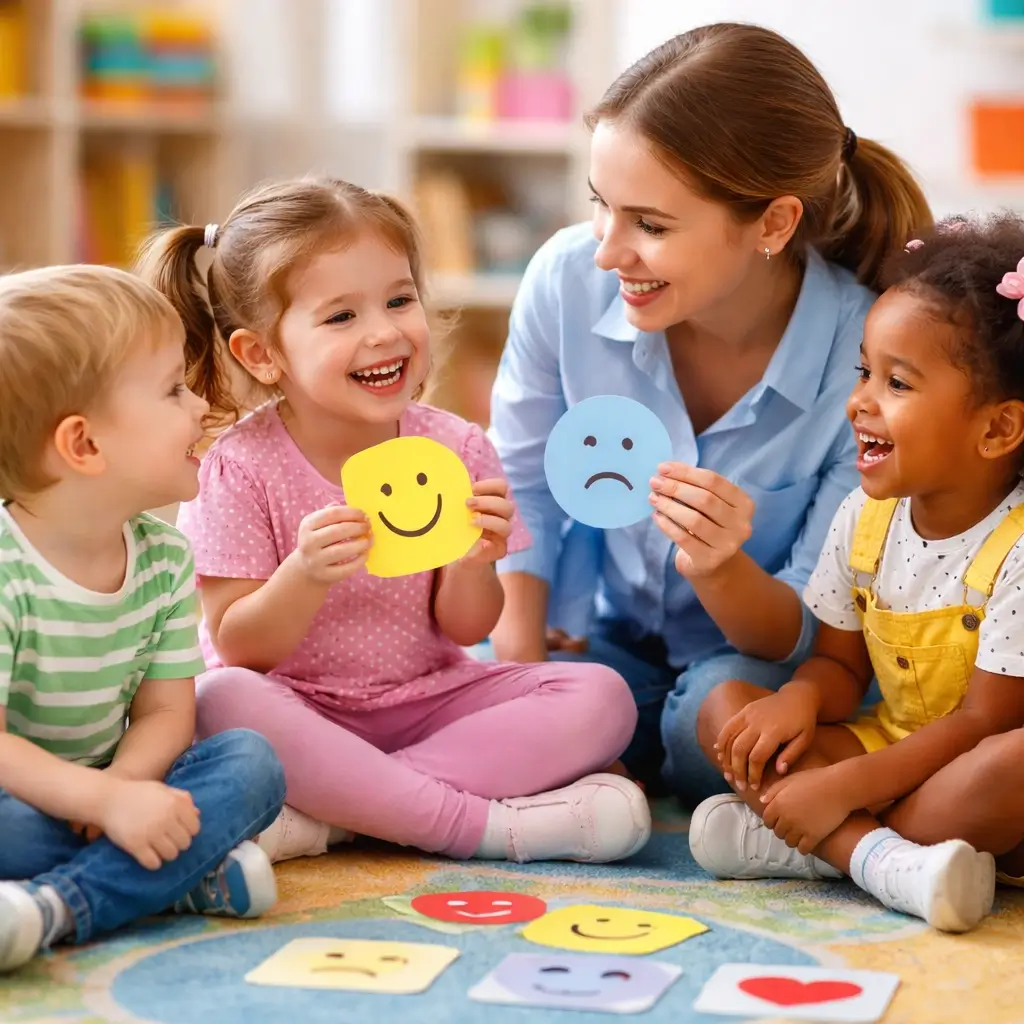
When parents hear the phrase social emotional learning in preschool, it can sound like a formal school subject. But in real life, it is much simpler—and much more important. Social emotional learning is how young children learn to understand feelings, manage frustration, build friendships, follow routines, and feel confident in a group setting.
In the preschool years, these skills matter just as much as early letters and numbers. A child who can calm down after disappointment, ask for help, wait for a turn, and connect with others is building a strong foundation for kindergarten and beyond. These are the skills that help children feel secure in their day, enjoy learning, and participate more fully in the classroom.
The good news is that preschool social emotional development does not require pressure or perfection. It grows through everyday play, caring relationships, routines, and repeated support from adults. This guide will help you understand what social emotional learning looks like, why it matters, and how you can support it at home in simple, practical ways.
What Is Social Emotional Learning in Preschool?
Social emotional learning, often shortened to SEL, is the process of helping children understand themselves, connect with others, and respond to everyday challenges in healthy ways.
For preschoolers, this includes learning how to:
-
name feelings
-
manage big emotions
-
follow simple routines
-
take turns
-
share and cooperate
-
solve small social problems
-
ask for help when needed
A preschooler does not need to do these things perfectly. Social emotional learning is not about having a “well-behaved” child every moment of the day. It is about steady growth.
A child may still cry, get frustrated, or struggle with sharing, but if they are slowly learning to recover, use more words, and accept support, that is social emotional learning in action.
Why Social Emotional Learning Matters So Much in Preschool
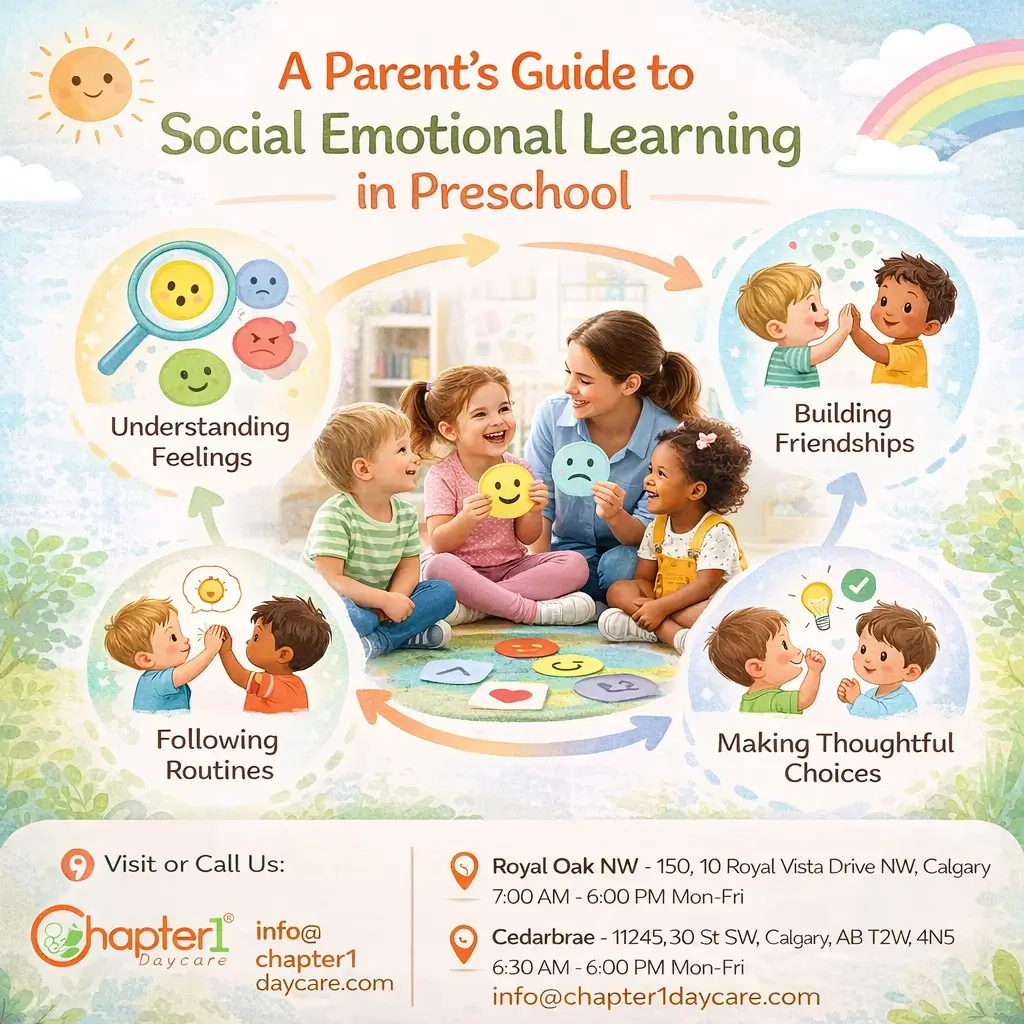
Preschool is often the first time children spend extended time in a group setting with new routines, new adults, and peer relationships that require patience and flexibility. That is why social emotional learning for preschoolers is so important.
It helps children handle feelings
Preschoolers have big emotions and still-developing self-control. Social emotional learning helps them begin to recognize what they feel and what to do with those feelings.
It supports friendships
Making friends is not just about being “nice.” It involves sharing, taking turns, reading social cues, and recovering from small conflicts. These are learned skills.
It builds classroom confidence
Children who understand routines, can separate from caregivers, and know how to ask for help often feel more secure in preschool environments. That security supports learning.
It strengthens kindergarten readiness
Kindergarten readiness is not only about academics. It also includes emotional regulation, independence, listening, group participation, and resilience.
In other words, social emotional learning is not extra. It is part of the foundation that helps everything else work.
What Social Emotional Learning Looks Like in Real Preschool Life
SEL can sound abstract until you picture it in real life. In a preschool setting, social emotional learning often looks like very ordinary moments.
It looks like a child taking a breath after a tower falls instead of immediately melting down. It looks like asking, “Can I have a turn next?” instead of grabbing. It looks like feeling shy at circle time but staying close enough to participate. It looks like moving from one activity to another without falling apart every time the schedule changes.
It also looks like a child beginning to use feeling words such as sad, mad, excited, nervous, frustrated, and proud. These words matter because they help children understand themselves instead of acting everything out physically.
A child learning SEL may still need lots of support. That is normal. The goal is not independence all at once. The goal is growth with guidance.
Key Social Emotional Skills for Preschoolers
Self-awareness
Self-awareness is a child’s growing ability to notice their own feelings, preferences, and reactions. This is where children begin to understand things like, “I feel upset,” “I don’t like loud noise,” or “I’m proud of what I made.”
This skill helps children build identity and confidence.
Self-regulation
Self-regulation is the ability to manage emotions, impulses, and energy levels with support. For preschoolers, this might mean waiting a little longer, calming down after frustration, or using words instead of hitting.
This skill takes time. It is one of the biggest areas of growth in the preschool years.
Relationship skills
These are the skills children use to connect with others. Sharing, turn-taking, listening, joining play, cooperating, and solving simple conflicts all live here.
Relationship skills do not develop automatically just because children are around peers. They grow through repeated practice and adult modeling.
Empathy and social awareness
This is the beginning of understanding that other people have feelings too. A child starts to notice when a friend is sad, when someone is left out, or when their actions affect someone else.
Empathy in preschool may look small at first, but it is an important step in social development.
Responsible decision-making
For young children, this means simple choices and understanding basic consequences. It may look like choosing to use gentle hands, asking before taking something, or deciding to get help instead of pushing.
These early choices lay the groundwork for stronger judgment later on.
How Preschool Helps Children Build SEL Skills
A strong preschool environment teaches social emotional learning through the structure of the day, not only through direct instruction. Children learn these skills because they are living them in real time.
Routines help children feel safe and predictable. Group activities help children practice listening and waiting. Play gives children opportunities to solve social problems, manage disappointment, and work together.
Teachers support SEL by modeling calm behavior, helping children name feelings, guiding conflict resolution, and creating an environment where emotions are understood rather than shamed.
Stories, songs, role-play, classroom routines, and transitions all become part of the learning process. For young children, emotional growth happens through repeated experience, not lectures.
Easy Ways Parents Can Support Social Emotional Learning at Home
Parents play a huge role in preschool social emotional development. The good news is that support at home does not need to be complicated.
One of the most effective things you can do is name feelings out loud. When your child is upset, excited, frustrated, or proud, help them put words to the experience.
You can also model calm problem-solving. If something goes wrong, let your child hear you think through it without panic. This teaches that problems can be handled.
Routines are another big support. Predictable mealtimes, bedtime, and transitions help children feel more secure, which makes emotional regulation easier.
Play is also powerful. Turn-taking games, pretend play, reading books about feelings, and simple family routines all help children practice empathy, flexibility, and patience.
One more important reminder: do not rush to remove every frustration. Small struggles are where children learn persistence, recovery, and confidence.
What Parents Can Say in the Moment
Many parents know SEL matters but are unsure what to say when emotions run high. Simple language works best.
You might say:
-
“You feel frustrated because that didn’t work.”
-
“You really wanted that turn.”
-
“It’s okay to feel mad. I won’t let you hit.”
-
“Let’s calm our body and try again.”
-
“You can ask for help.”
-
“You’re sad that it ended. That makes sense.”
This kind of language does two things at once: it validates the child’s feeling and holds the boundary.
Try to avoid dismissive phrases like “You’re fine” or “That’s nothing.” Even when the issue seems small to adults, it feels big to a preschooler. Feeling understood helps children calm down faster.
Signs Your Preschooler Is Building Strong Social Emotional Skills
Social emotional growth does not usually happen in one big leap. It often shows up in small changes over time.
You may notice your child:
-
recovers a bit faster after getting upset
-
uses more feeling words
-
asks for help more appropriately
-
handles routines with less resistance
-
plays with others more successfully
-
shows more empathy when someone is hurt or sad
-
accepts limits a little more easily
These small shifts matter. A child does not need to become perfectly calm or endlessly cooperative to show progress. Growth is often gradual and uneven—and that is completely normal.
When a Child May Need More Support
Every child develops at a different pace, but sometimes a parent may notice ongoing struggles that feel more intense or persistent than expected.
You may want extra guidance if your child regularly has very intense reactions that do not improve over time, struggles to participate in group settings at all, has ongoing difficulty connecting with peers, or seems overwhelmed by daily routines in a way that feels much bigger than normal preschool adjustment.
This does not mean something is wrong. It simply means your child may benefit from more support. Early support can be incredibly helpful, and it is always okay to ask questions if something feels off to you.
Common Parent Questions About SEL in Preschool
A lot of parents wonder whether social emotional learning takes time away from academics. In reality, it supports academics. Children learn better when they feel safe, regulated, and confident enough to participate.
Parents also often wonder if shy children are “behind” socially. Shyness is not the same as a lack of SEL. A shy child can still be building strong emotional awareness, empathy, and relationship skills in quieter ways.
Another common question is whether children can learn SEL at home. Absolutely. Preschool helps because it offers daily group practice, but home is where children learn through attachment, routines, and repeated support from caregivers.
Chapter1 Daycare and Social Emotional Growth
At Chapter1 Daycare, social emotional learning is part of how we help children feel safe, connected, and ready to grow each day. In our play-based environment, children build confidence through routines, warm teacher relationships, and everyday opportunities to practice friendship, communication, and emotional regulation. Whether children are moving through our toddler rooms or growing into preschool readiness, we support their ability to separate with more confidence, join group activities, express feelings, and develop the steady social-emotional foundation that helps them thrive in childcare and beyond.
A gentle takeaway for parents
Social emotional learning in preschool is not about expecting children to be calm, kind, and flexible all the time. It is about helping them build those skills slowly through safe relationships, repeated practice, and everyday support.
A child who learns to understand feelings, recover from frustration, ask for help, and connect with others is building something powerful. These skills matter in preschool, in kindergarten, and far beyond the classroom.
FAQs
What is social emotional learning in preschool?
Social emotional learning in preschool is how children learn to understand feelings, manage behavior, build relationships, and make simple, thoughtful choices in everyday situations.
Why is social emotional learning important for preschoolers?
It helps children handle frustration, build friendships, follow routines, and feel more confident in group settings. It also supports kindergarten readiness.
What are examples of social emotional skills in preschool?
Examples include naming feelings, taking turns, asking for help, sharing, calming down after disappointment, listening in group activities, and showing empathy for others.
How can parents support social emotional learning at home?
Parents can support SEL by naming feelings, keeping routines consistent, modeling calm behavior, reading books about emotions, and helping children work through small frustrations.
Does SEL help with kindergarten readiness?
Yes. Social emotional learning helps children with independence, self-regulation, transitions, group participation, and confidence—all of which are important for kindergarten.
What if my preschooler struggles with big emotions?
That is common. Preschoolers are still learning how to handle strong feelings. Stay calm, name the feeling, hold clear limits, and support your child through the moment.
How do preschool teachers teach SEL?
Teachers support SEL through routines, play, group activities, modeling calm behavior, helping children name emotions, and guiding them through peer interactions and conflicts.
Is social emotional learning the same as behavior management?
Not exactly. Behavior management focuses on responding to actions, while social emotional learning helps children build the inner skills that support better behavior over time.