


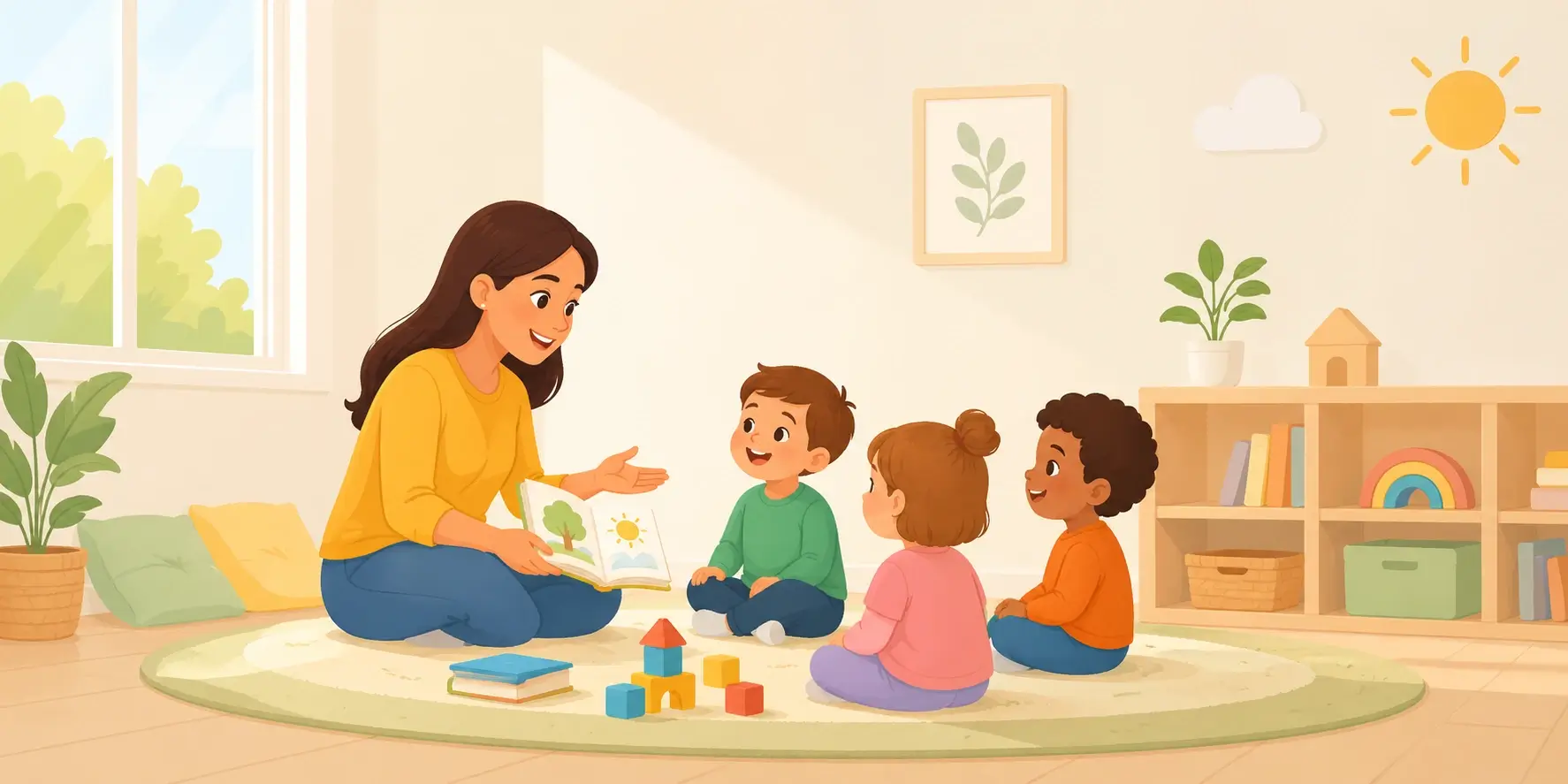
Benefits Of Small Daycare Class Sizes
Choosing a daycare is about much more than location or hours. For many parents, one of the biggest questions is what daily life will actually feel like for their child. Will they get enough attention? Will teachers notice when they are struggling, tired, excited, or ready for something new? Will the classroom feel calm and welcoming, or busy and overwhelming? One of the clearest factors that shapes that experience is class size.
Small daycare class sizes can make a meaningful difference in how children learn, connect, and feel throughout the day. In early childhood, growth happens through everyday interactions. A teacher helping a child name their feelings, guiding them through sharing, encouraging curiosity during play, or offering comfort at drop-off all play a major role in development. When the group is smaller, there is simply more room for those moments to happen.
For infants, toddlers, and preschoolers, that matters in a big way. Young children thrive when they feel seen, safe, and supported. A smaller class can create an environment where teachers build stronger relationships, routines run more smoothly, and children have more chances to participate with confidence. It can also help families feel more connected to what is happening each day.
If you are comparing childcare options, understanding the benefits of small daycare class sizes can help you look beyond the basics and focus on what truly supports your child’s experience.
Why Class Size Matters In Early Childhood
Early childhood is a time of rapid growth. Children are building language, social awareness, self-control, confidence, and the foundations for future learning. At this stage, they do not learn best through pressure or large, formal classroom settings. They learn through play, conversation, repetition, hands-on exploration, and secure relationships with trusted adults.
That is why class size matters so much. In a smaller group, educators can respond more quickly, observe more closely, and create a learning environment that feels manageable for young children. Instead of competing for attention in a crowded room, children are more likely to feel included and supported.
Small class sizes also make it easier to maintain a steady rhythm throughout the day. Transitions, meals, naps, bathroom routines, story time, and group activities tend to flow better when there are fewer children to guide at once. For young children who depend on routine and consistency, that can make a huge difference in how comfortable and settled they feel.
More Individual Attention For Every Child
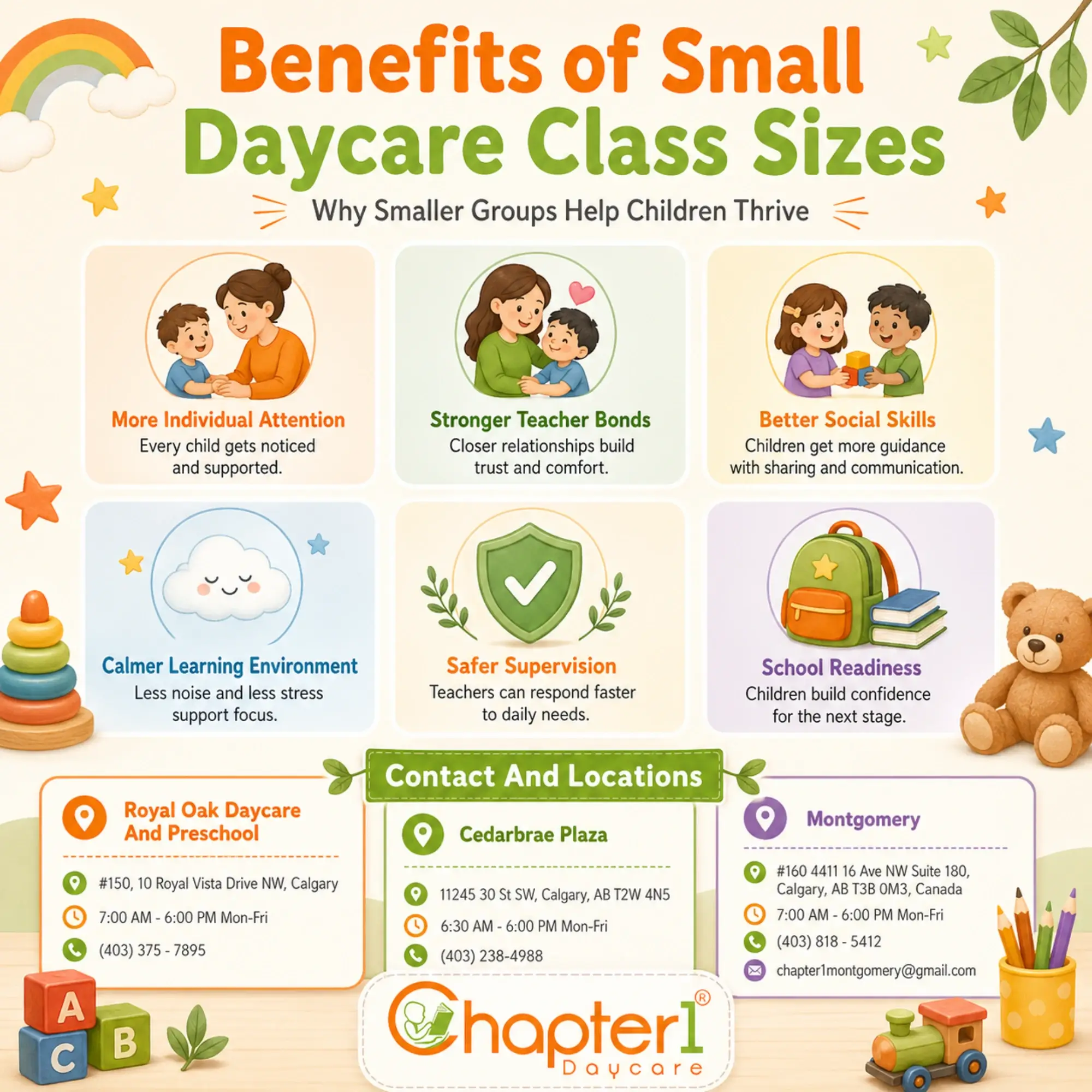
One of the biggest benefits of small daycare class sizes is the ability to give each child more personal attention. Every child is different. Some are naturally social and eager to join in. Others need more time to warm up, more reassurance during transitions, or more support with language and self-expression.
In a smaller class, teachers have more opportunities to notice those differences and respond in ways that fit the child. They can recognize when a toddler is ready for a little more independence, when a preschooler needs encouragement to join group activities, or when an infant needs extra comfort and one-on-one interaction.
That individual attention supports both emotional and developmental growth. It helps children feel important and understood. It also helps educators guide learning in a way that matches each child’s pace. Whether a child is building confidence with speech, exploring sensory play, or learning early literacy and number concepts, more personalized support can lead to a stronger and more positive experience.
For parents, this often means greater peace of mind. Knowing your child is not just part of a crowd, but is truly known by their caregivers, is one of the most valuable parts of quality childcare.
Stronger Teacher-Child Relationships
Young children need more than supervision. They need connection. A warm and trusting relationship with a caregiver helps children feel secure enough to explore, learn, and engage with the world around them.
Small daycare class sizes support stronger teacher-child relationships because educators have more time to interact with each child in meaningful ways. They can learn a child’s personality, understand their routines, and respond with more consistency. They get to know what helps a child settle at drop-off, what activities light them up, and what signs show they may be feeling tired, frustrated, or overwhelmed.
These strong relationships are especially important for children who are new to daycare. Starting childcare can be a big transition for both children and parents. In a smaller class, it is often easier for teachers to help children adjust gradually and build trust. That can make daily separations smoother and help children feel more comfortable in the new environment.
When children feel secure with their teachers, they are more likely to participate, communicate, and try new things. That sense of emotional safety is one of the foundations of healthy early learning.
Better Support For Social Skills And Behaviour
Social development starts early, and daycare plays a big role in helping children learn how to interact with others. Sharing, turn-taking, listening, waiting, using words to express feelings, and solving small conflicts are all skills that take time and guidance.
In smaller daycare classes, teachers are in a better position to coach children through these everyday social moments. Instead of managing constant noise or disruption, they can step in calmly and help children understand what happened and what to do next. That kind of guidance is harder to provide consistently in a larger, busier room.
Smaller groups can also reduce the number of overstimulating situations that lead to frustration. When children do not feel overwhelmed by noise, crowding, or too much competition for attention, they are often better able to regulate their emotions and engage positively with others.
This does not mean small classes eliminate challenges. Young children are still learning, and difficult moments are part of growth. But smaller settings can create better conditions for teaching those skills in a supportive and patient way.
Over time, that helps children build confidence in social situations. They learn that their voice matters, their feelings can be understood, and they can navigate relationships with support from caring adults.
A Calmer Environment With Less Stress
A busy room full of children can sometimes feel exciting, but for young children it can also feel overwhelming. Loud noise, constant movement, and too many simultaneous demands can make it harder for children to focus, settle, and enjoy the day.
Small daycare class sizes often create a calmer atmosphere. There is usually less noise, fewer interruptions, and more space for children to engage in activities without feeling lost in the crowd. That calmer setting can be especially helpful for infants and toddlers, who are still learning how to process the world around them.
When children feel less overwhelmed, they are often more open to learning and play. They may be more willing to participate in group activities, listen during story time, explore new materials, or communicate with teachers and classmates. A calm environment also supports smoother transitions, which is important because transitions are often some of the most challenging parts of the day for young children.
This kind of environment benefits educators too. Teachers who are not stretched across a very large group can stay more present and responsive. That creates a classroom tone that feels steadier, warmer, and more supportive for everyone.
Safer Supervision And Faster Response
Safety is always one of the top concerns for parents, and class size plays a role in that as well. In a smaller classroom, teachers can more easily monitor what is happening, respond to children’s needs, and maintain awareness during play, transitions, meals, and rest time.
That does not just matter in emergencies. It matters in the everyday moments too. A child may need help washing hands, using the bathroom, settling down for nap time, or moving safely from one activity to another. A teacher may need to notice a child who is unusually quiet, frustrated, or uncomfortable. These small moments are easier to catch and address when the group is more manageable.
Smaller class sizes also support better supervision outdoors and during active play. Children can move, explore, and build confidence while teachers remain attentive and engaged. This creates a safer environment where children have freedom to learn and play, but still receive the guidance they need.
For families, that stronger sense of supervision can bring reassurance. It helps parents feel that their child is in an environment where teachers can respond promptly, not just manage the room.
More Meaningful Learning Experiences
In early childhood, learning does not happen only during formal lessons. It happens during play, conversation, routines, art, movement, and exploration. Quality daycare programs understand that young children learn best when they are actively engaged and supported by responsive educators.
Small class sizes help make those learning experiences more meaningful. Teachers can ask more questions, encourage participation, and follow a child’s curiosity in the moment. Instead of rushing through activities or focusing only on group management, they can turn everyday moments into opportunities for language, problem-solving, and discovery.
A child stacking blocks can learn about balance and persistence. A shared story can lead to new vocabulary and imagination. A sensory activity can support focus, confidence, and fine motor development. In a smaller group, educators often have more time to extend those moments and adapt activities based on the children in front of them.
This is especially valuable in preschool and pre-kindergarten years, when children are developing early academic foundations. Small groups can support early literacy, number awareness, communication, independence, and curiosity without making learning feel pressured or impersonal.
Better Communication With Parents
Families want to know how their child is doing, not just in general, but in real and specific ways. They want to hear about new skills, friendships, routines, mood changes, and little milestones that show their child is growing.
Small daycare class sizes can improve parent communication because teachers often have more time to notice and share those details. Instead of offering only broad updates, they may be able to tell parents how a child joined circle time more confidently, tried a new food, enjoyed a craft activity, or handled a difficult moment with support.
That stronger communication helps build trust between families and educators. It gives parents a clearer picture of their child’s day and makes it easier to work together when support is needed. If a child is going through a transition, showing signs of stress, or working on a new skill, parents and teachers can stay more aligned.
For many families, that connection matters almost as much as the classroom itself. Good childcare is not only about what happens in the centre. It is also about the relationship between caregivers and families, and small class sizes can help strengthen that partnership.
Small Class Size vs Ratio: What Parents Should Know
When parents tour a daycare, they often hear about teacher-child ratios. Ratios are important, but they are not the whole picture. A ratio tells you how many children are assigned to each educator. Class size tells you how many children are in the room together overall.
That difference matters. A classroom may technically meet the required ratio and still feel busy or crowded if the total group size is large. A smaller class can feel calmer, more personal, and easier for children to navigate, even when both programs meet the same basic standards.
That is why parents should ask more than one question. Ask how many children are typically in the room. Ask how many teachers are present at different times of day. Ask how transitions are managed and how much individual support children receive. Ask how teachers communicate with families and how they help children settle into routines.
Looking at the full experience, not just the minimum numbers, can give you a much better sense of what your child’s day will actually feel like.
Why Families Choose Chapter1 Daycare
Chapter1 Daycare is a warm, trusted, community-focused childcare and preschool in Calgary, offering play-based learning and flexible care for infants, toddlers, preschoolers, and pre-kindergarten children. With two convenient locations in Cedarbrae and Royal Oak, Chapter1 Supports modern families with full-time and part-time options, nutritious meals, structured daily activities, and flexible schedules that include night, weekend, and extended-hour care. Families choose Chapter1 for its nurturing environment, caring educators, transparent pricing, and strong focus on helping every child feel safe, supported, and ready to grow.
Final Thoughts
Small daycare class sizes do more than make a classroom feel less crowded. They help create the kind of environment where children can build trust, receive more attention, learn with confidence, and move through the day with greater ease. For infants, toddlers, and preschoolers, those everyday benefits can shape how they feel about learning, relationships, and themselves.
When children are in a smaller, supportive setting, teachers have more opportunities to guide, encourage, and respond with care. Families often feel the difference too through stronger communication, smoother routines, and greater confidence in the quality of care.
If you are choosing a daycare, class size is worth looking at closely. It is one of the clearest signs of how much space there is for your child to be known, supported, and helped to thrive.
FAQs
What are the benefits of small daycare class sizes?
Small daycare class sizes can give children more individual attention, stronger relationships with teachers, calmer routines, better supervision, and more support for learning and social development.
Do small daycare class sizes help with behaviour?
They often do. Smaller groups can make it easier for teachers to guide sharing, problem-solving, emotional regulation, and positive social interaction in a calm and supportive way.
Are smaller daycare classes better for toddlers?
Smaller classes can be especially helpful for toddlers because they need close support, consistent routines, and responsive care during play, meals, naps, and daily transitions.
What is the difference between class size and teacher-child ratio?
Class size refers to the total number of children in the room. Teacher-child ratio refers to how many children are assigned to each adult. Both matter, but class size gives a better picture of how the room may actually feel day to day.
Do small class sizes improve school readiness?
They can support school readiness by giving children more chances to participate, build confidence, strengthen communication skills, and receive more personalized guidance during early learning activities.
What should parents ask about class size when touring a daycare?
Parents should ask how many children are in each room, how many teachers are present, how transitions are handled, how children are supported individually, and how teachers communicate daily progress with families.