


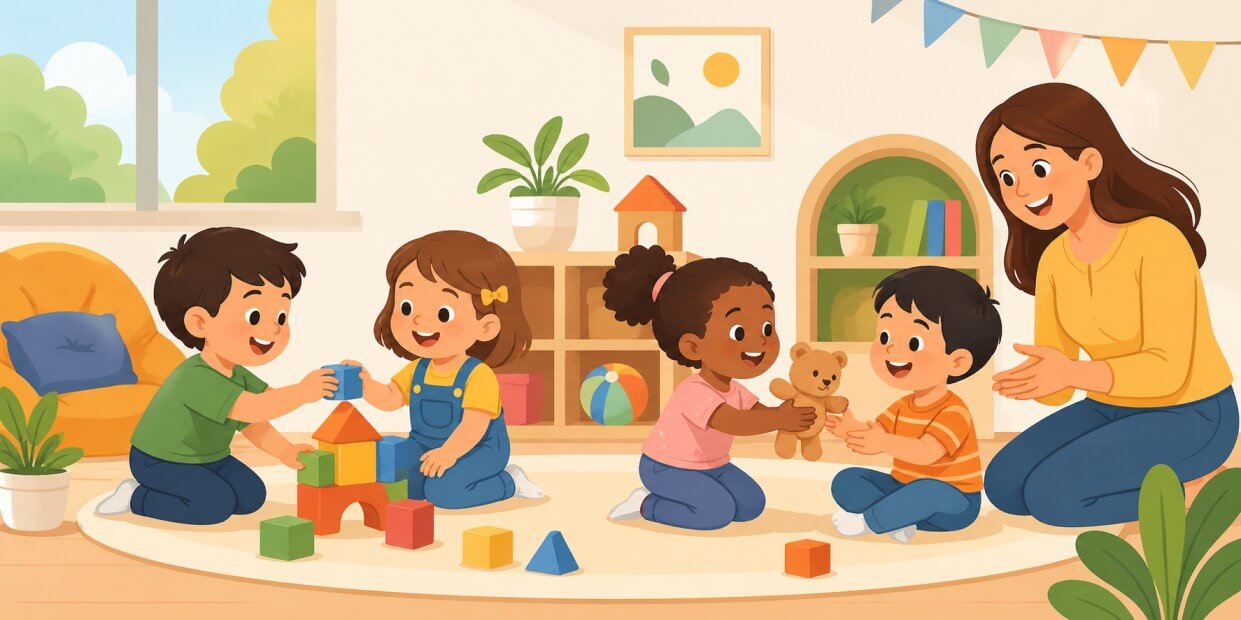
Strong social skills do not appear overnight. They grow little by little through daily experiences, caring guidance, and repeated interaction with other children and trusted adults. In the early years, children are learning how to express themselves, respond to emotions, take turns, work through frustration, and feel comfortable in group settings. These are all important parts of healthy development.
That is one reason daycare can play such an important role in a child’s growth. A high-quality daycare environment gives children regular opportunities to practice social behaviours in a safe, supportive, and structured setting. Through play, routines, and everyday interaction, children begin to build the confidence and communication skills they will carry into preschool, kindergarten, and beyond.
Why Social Skills Matter In Early Childhood
Social skills are part of how children understand the world around them. They affect how a child forms friendships, joins activities, expresses needs, and responds to challenges. When children begin to feel comfortable around others, they often become more confident, more independent, and more willing to try new things.
These early skills are also closely connected to emotional growth. A child who is learning how to wait, listen, and communicate is also learning how to manage feelings, cope with disappointment, and understand the emotions of others. That foundation matters not only in daycare, but later in school, family life, and everyday situations.
Many parents focus first on letters, numbers, and school readiness, but social development is just as important. A child who can follow routines, join group activities, and interact positively with others is often better prepared for classroom life and the social demands that come with it.
How Daycare Creates Daily Opportunities For Social Growth
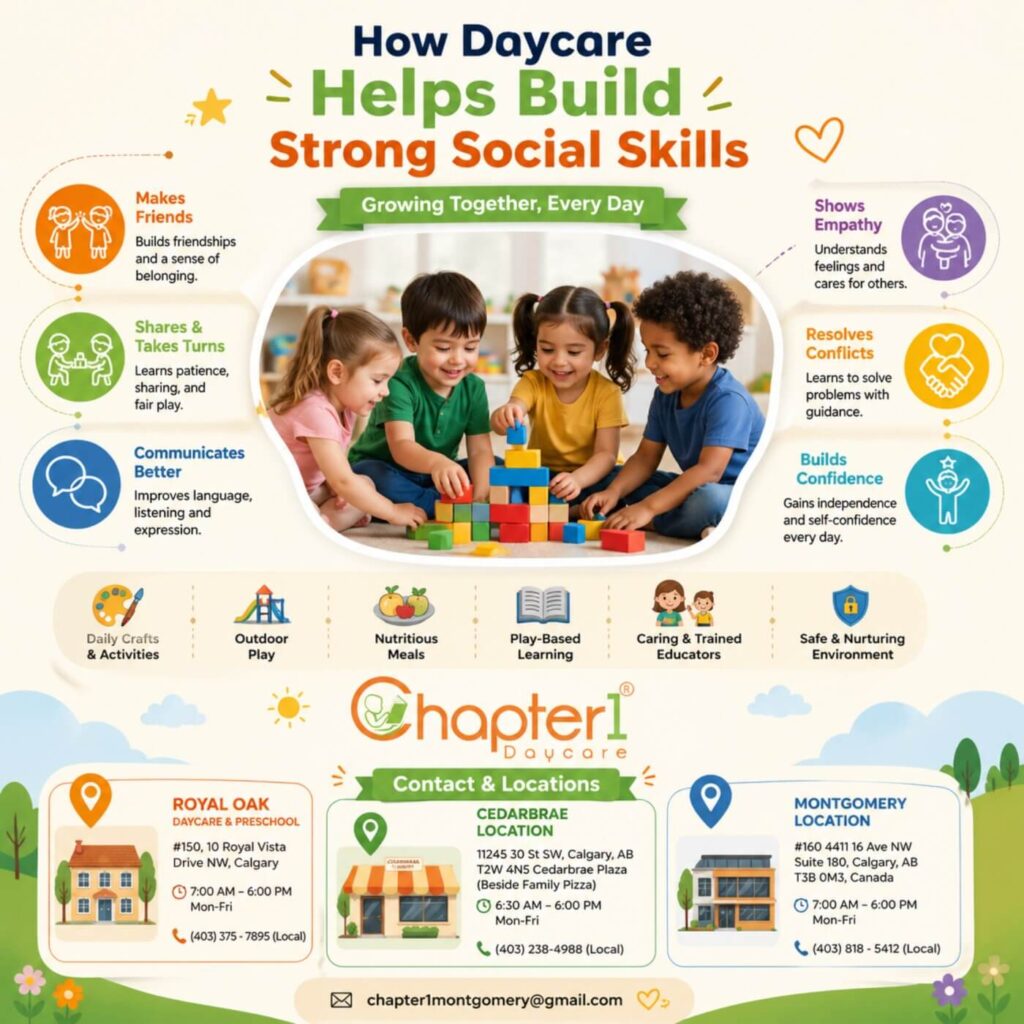
At home, children may have loving support and meaningful one-on-one time, but daycare offers something different. It creates a shared environment where children interact with peers throughout the day. Those repeated moments matter because social learning happens through practice, not just instruction.
From the time children arrive in the morning to the moment they head home, daycare naturally includes situations where they must engage with others. They wait for a turn during activities, sit with classmates at snack time, take part in group play, and learn how to move through transitions together. These moments may seem simple, but they build important habits over time.
Daycare also provides consistency. Children begin to understand what is expected, how routines work, and how to behave within a group. That structure helps them feel secure, and children who feel secure are often more open to connecting with others.
Learning To Share And Take Turns
Sharing and turn-taking are two of the earliest social skills children begin to develop in daycare. These behaviours do not always come naturally, especially for younger children who are still learning that other people have wants and needs too. Daycare gives them many natural chances to practice both.
Whether children are using toys, joining a game, sitting together during circle time, or waiting for a chance to speak, they are learning that they are part of a shared space. Over time, they begin to understand that waiting is part of group life and that taking turns can lead to more enjoyable play and stronger relationships.
This learning does not happen through pressure. It grows through repetition and gentle guidance. When educators calmly support children through these small moments, children begin to understand fairness, patience, and cooperation in ways that feel real and age appropriate.
Building Communication Skills Every Day
Social development and communication go hand in hand. Children need words, gestures, facial expressions, and listening skills to connect with others. Daycare supports this growth by giving children frequent opportunities to communicate throughout the day.
In a daycare setting, children learn how to ask for help, join play, express feelings, and respond to simple questions. They begin to hear language used in social settings and start practising how to use their own words more effectively. Even very young children benefit from hearing calm, consistent language modelled by caring adults.
As communication skills improve, children often become less frustrated. They are better able to explain what they want, tell others how they feel, and understand what is happening around them. That progress can make social interaction feel easier and more rewarding.
Developing Empathy And Emotional Awareness
One of the most meaningful parts of social growth is learning that other people have feelings too. In daycare, children are regularly surrounded by peers who may feel happy, sad, excited, frustrated, or upset. These shared experiences help children become more aware of emotions in themselves and others.
When a child sees a classmate crying, waiting for comfort, or needing help, that moment can become a chance to build empathy. With educator support, children begin to notice facial expressions, tone of voice, and emotional cues. They start to understand that their actions affect others.
This kind of emotional awareness builds slowly, but it is incredibly valuable. It helps children become kinder playmates, better listeners, and more thoughtful members of a group. It also supports healthier friendships as they grow older.
Practicing Conflict Resolution In A Safe Setting
Disagreements are a normal part of early childhood. Children may want the same toy, feel upset during play, or struggle with transitions. These moments can be challenging, but they are also important opportunities for social learning.
A quality daycare environment does not expect children to handle these situations alone. Instead, educators guide them through the process. Children begin to hear helpful language, learn how to pause, and understand that conflict can be managed calmly rather than with hitting, grabbing, or shouting.
Over time, children start to develop simple problem-solving skills. They may begin using words like “my turn next,” “can I have it after you,” or “I didn’t like that.” These small changes show real progress. Conflict resolution is not about perfection. It is about helping children move from impulse to understanding, one situation at a time.
How Play Supports Social Development
Play is one of the most powerful tools for building social skills. Through play, children practice cooperation, imagination, communication, and decision-making without feeling like they are in a lesson. Much of their social learning happens naturally during these moments.
Pretend play helps children explore roles, ideas, and emotions. Group games teach patience, teamwork, and flexibility. Outdoor play encourages movement, confidence, and interaction in a different setting. Even simple shared activities like building with blocks or working on a craft together can teach children how to collaborate.
Because play feels enjoyable and engaging, children often absorb social lessons more easily. They are not just being told how to interact. They are experiencing it in real time, with support nearby when they need it.
Confidence And Independence Grow Together
As children spend time in daycare, they often become more comfortable doing things on their own. This growing independence can have a strong effect on social development. A child who feels secure and capable is often more willing to join activities, talk to others, and explore new situations.
Being away from parents for part of the day can also help children build confidence in a gradual and healthy way. They begin to trust that they can adapt, connect with others, and feel safe in a new environment. That sense of confidence often carries into other parts of life as well.
When children successfully navigate routines, make small choices, and join in with peers, they start to see themselves as capable. That belief matters. It supports both emotional wellbeing and stronger social participation.
The Important Role Of Educators
Children do not build strong social skills through peer interaction alone. The role of educators is a major part of the process. Caring early childhood professionals help create the environment, routines, and support systems that make social learning possible.
Educators model respectful language, encourage cooperation, and step in with calm guidance when needed. They help children name emotions, use appropriate words, and understand group expectations. They also notice when a child may need more reassurance, more time, or a gentler introduction to social experiences.
This support is especially important because every child develops differently. Some children are naturally outgoing. Others are slower to warm up. Skilled educators understand how to support both, helping each child feel included without pressure.
Signs Your Child Is Building Social Skills In Daycare
Social growth can be easy to miss because it often happens in small, steady steps. Parents may notice that their child starts greeting others more confidently, talking more about friends, or showing greater comfort during drop-off and pick-up.
Other signs may include using more words during play, waiting more patiently, sharing more often, or recovering more quickly after frustration. A child may begin showing empathy, offering help, or expressing feelings in a clearer way. These changes may seem simple, but they reflect meaningful development.
Progress does not always look the same for every child. Some will show it through language. Others will show it through participation, independence, or improved emotional control. What matters most is steady growth and a supportive environment that encourages it.
What If Your Child Is Shy?
Many parents worry that a shy child may struggle in daycare. In reality, daycare can be a helpful setting for children who need time and support to feel comfortable around others. The key is a warm, structured environment where children are not rushed into social situations before they are ready.
Shy children often benefit from predictable routines, gentle encouragement, and repeated exposure to the same group of peers and educators. As familiarity grows, confidence often follows. A child who starts by watching from the side may gradually begin joining activities, speaking more, and forming connections.
It is also important to remember that being shy is not a weakness. Some children simply approach social situations more carefully. With patience and reassurance, daycare can help them build comfort at their own pace.
How Chapter1 Daycare Supports Healthy Social Development
At Chapter1 Daycare, social development is supported through a warm, caring environment where children feel safe, included, and encouraged to grow. Through play-based learning, structured daily routines, group activities, and attentive educator support, children have regular opportunities to practice sharing, communication, empathy, and independence. With programs for infants, toddlers, preschoolers, and pre-kindergarten children, Chapter1 helps each age group build social confidence in ways that feel natural and developmentally appropriate. Families also benefit from a welcoming community, flexible care options, and a nurturing setting that supports both learning and strong everyday relationships.
Why The Right Daycare Environment Matters
Not every childcare setting offers the same experience. A child’s social growth depends greatly on the environment around them. Safe spaces, caring educators, clear routines, and meaningful activities all make a difference in how children learn to interact with others.
When children feel supported, they are more likely to take social risks in healthy ways. They may be more willing to speak up, join a group, try something new, or work through a challenge. A strong daycare environment does not just supervise children. It helps shape how they relate to the world around them.
For parents, that means choosing a daycare is about more than scheduling and convenience. It is also about finding a place where children can build trust, confidence, and the social foundation they need for the years ahead.
Final Thoughts
Daycare helps build strong social skills because it gives children what they need most: regular interaction, supportive guidance, and everyday opportunities to grow. Through play, routines, friendships, and caring educator support, children begin to understand how to communicate, cooperate, manage feelings, and be part of a group.
These early lessons are not small. They shape confidence, school readiness, and emotional wellbeing in lasting ways. When children are given the right environment, they do more than spend time with others. They learn how to connect, how to care, and how to thrive.
FAQs
How does daycare help children build social skills?
Daycare helps children build social skills by giving them daily opportunities to interact with other children and trusted adults. Through group activities, play, routines, and guided support, they learn how to share, communicate, take turns, and work through small challenges with others.
What social skills do children learn in daycare?
Children in daycare often begin learning sharing, turn-taking, listening, cooperation, communication, empathy, friendship-building, and simple conflict resolution. These skills develop over time through everyday interaction and repeated practice.
Does daycare help shy children socialize?
Yes, daycare can help shy children socialize in a gentle and supportive way. With caring educators, predictable routines, and regular peer interaction, many children gradually become more comfortable joining activities, speaking up, and forming friendships.
Can daycare help with emotional development too?
Yes, daycare supports emotional development alongside social growth. Children begin learning how to express feelings, understand emotions, respond to frustration, and build confidence in a safe and encouraging setting.
Does daycare prepare children for kindergarten socially?
Daycare can help children feel more prepared for kindergarten by helping them get used to routines, group learning, listening to instructions, joining activities, and interacting positively with other children and adults.
At what age can children start building social skills in daycare?
Children start building early social skills from a very young age. Even infants and toddlers begin learning through eye contact, shared play, simple routines, and interaction with caregivers and other children.