


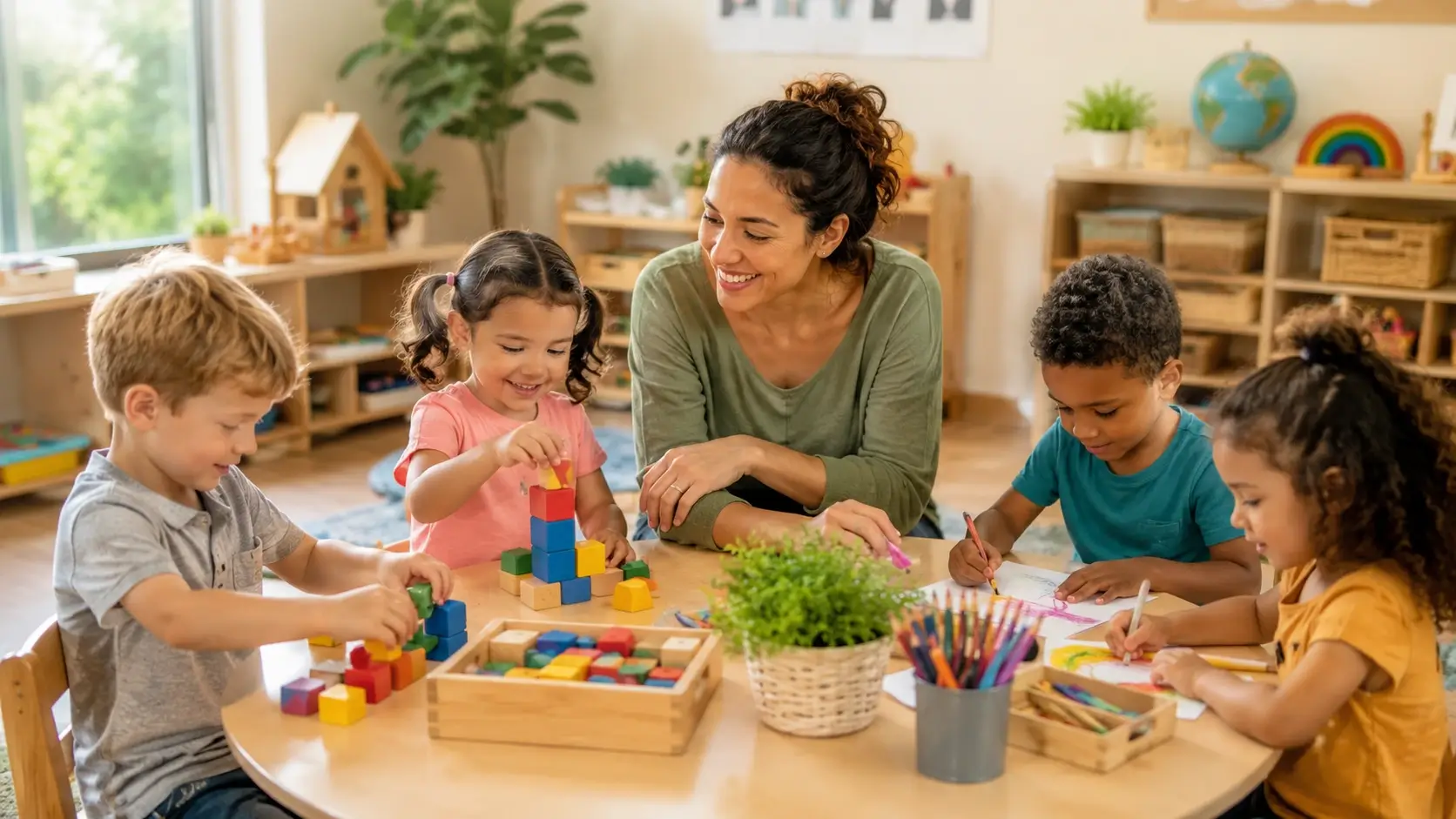
Choosing a preschool is a big decision for any family. Parents are not only looking for a safe place for their child to spend the day. They are looking for an environment where their child can build confidence, develop social skills, enjoy learning, and prepare for the next stage of life.
That is why curriculum matters so much. A high-quality preschool curriculum does more than introduce letters, numbers, and routines. It supports the whole child through meaningful experiences that encourage curiosity, independence, communication, and emotional growth. When parents understand what to look for, it becomes much easier to tell the difference between a program that simply fills time and one that truly helps children grow.
Why Preschool Curriculum Matters
A strong preschool curriculum shapes how children experience learning during some of the most important years of development. At this stage, children are building the foundation for how they communicate, solve problems, connect with others, and respond to new situations.
The best curriculum does not rush children into rigid academics too early. Instead, it introduces key early-learning concepts in a way that feels natural, engaging, and age-appropriate. Children learn best when they are active, involved, and encouraged to explore the world around them.
A preschool curriculum should help children grow in several ways at once. It should support early academic development, but it should also strengthen emotional security, creativity, movement, and social interaction. That balance is what makes a program truly high quality.
A High-Quality Curriculum Supports the Whole Child
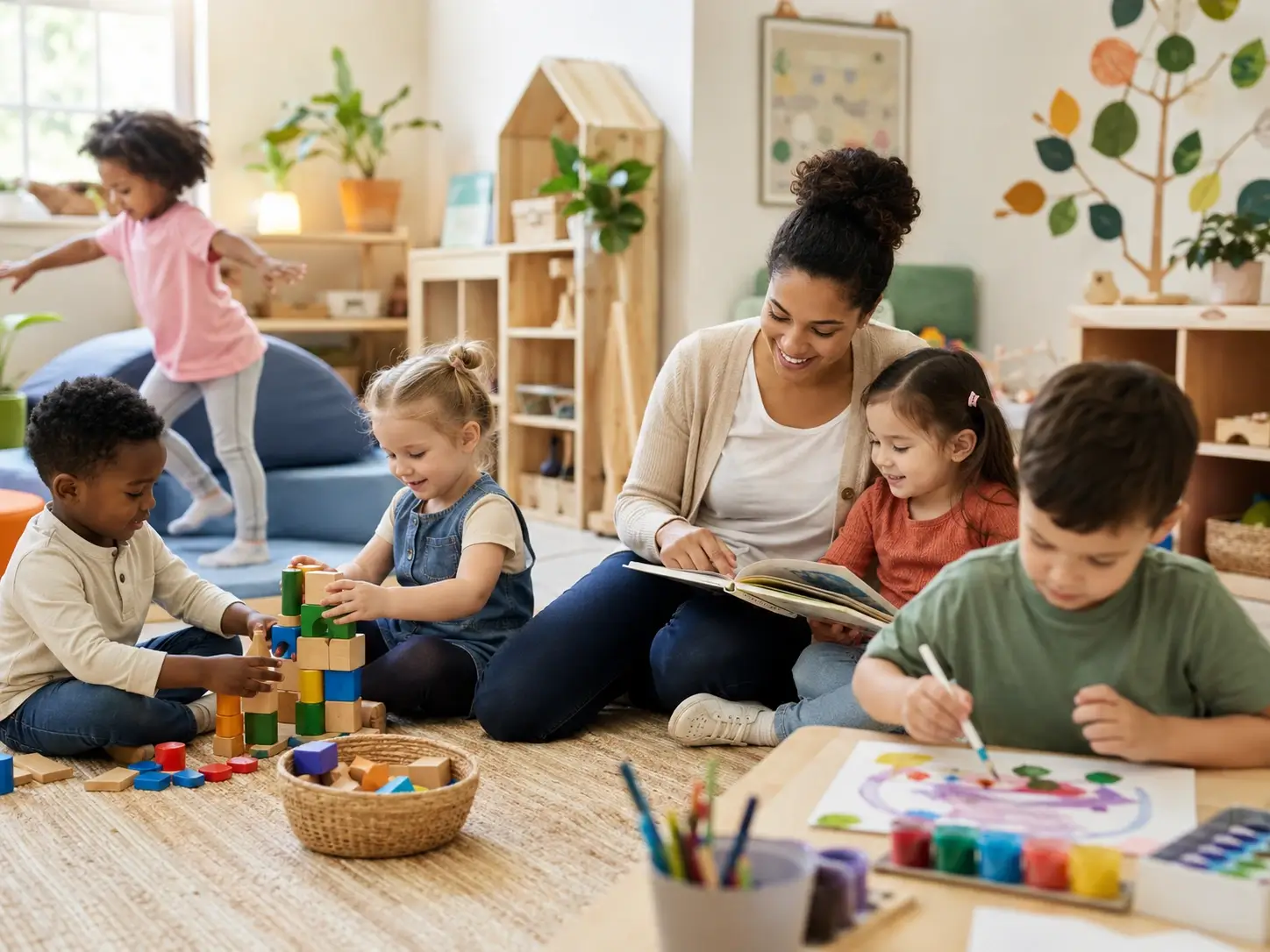
When parents hear the word curriculum, they often think about reading readiness or early math. While those skills matter, preschool should never focus on academics alone. A well-rounded curriculum supports every part of a child’s development.
Social and Emotional Development
Preschool is one of the first places where many children begin practicing group interaction every day. They learn how to take turns, express their feelings, listen to others, and solve simple conflicts. These moments may look small, but they build important life skills.
A high-quality curriculum creates daily opportunities for children to practice:
- sharing and cooperation
- emotional expression
- problem-solving with peers
- listening and following directions
- building confidence in group settings
Children who feel emotionally supported are more likely to participate, explore, and enjoy learning.
Language and Early Literacy
Strong preschool programs include plenty of language-rich experiences throughout the day. This does not mean children should spend long periods doing paper-based work. Instead, early literacy should come alive through conversation, storytelling, songs, books, and interactive group activities.
Children benefit from hearing new vocabulary, answering questions, talking about their ideas, and being exposed to print in a natural way. Circle time, read-alouds, dramatic play, and guided discussions all help strengthen communication skills.
Early Math and Science
A high-quality curriculum introduces math and science through everyday discovery. Children can count blocks, compare shapes, sort objects by color or size, observe weather changes, or ask questions about plants and animals. These activities build early reasoning skills without making learning feel forced.
Preschoolers are naturally curious. A good curriculum uses that curiosity as a starting point. Instead of memorization, children should be encouraged to explore, predict, notice patterns, and talk about what they see.
Creativity and Physical Development
Creative expression is another important part of a strong curriculum. Art, music, movement, and imaginative play help children process ideas, express emotions, and build confidence. These experiences also support cognitive growth in ways that traditional instruction cannot.
Physical development matters just as much. Preschool children need regular opportunities to run, climb, balance, paint, cut, stack, and manipulate objects with their hands. Gross motor and fine motor development should be part of the daily routine, not treated as an afterthought.
Play-Based Learning Should Be at the Center
One of the clearest signs of a high-quality preschool curriculum is a strong focus on play-based learning. Young children learn best through doing. They understand concepts more deeply when they can touch, move, build, imagine, and explore.
Play-based learning does not mean children are left without structure. It means learning experiences are designed in a way that matches how preschoolers naturally grow. A child building with blocks may be learning about balance, shapes, counting, and teamwork at the same time. A child in dramatic play may be building language, imagination, social understanding, and emotional awareness.
When visiting a preschool, parents should look for classrooms where play has purpose. Materials should invite exploration, and teachers should use play as a pathway for learning rather than replacing it with overly rigid instruction.
There Should Be a Balance Between Child-Led Exploration and Teacher Guidance
The best preschool curriculum finds the right balance between freedom and structure. Children need room to make choices, explore their interests, and move through activities in an engaged way. At the same time, they also need thoughtful guidance from experienced educators.
A strong teacher knows when to step in with a question, when to extend an activity, and when to allow a child to keep exploring independently. This balance creates a classroom where learning feels joyful but still intentional.
For example, a teacher might notice that several children are interested in animals and build activities around that topic. They may introduce books, songs, counting games, art projects, and outdoor observations connected to the children’s curiosity. This keeps learning meaningful while still meeting developmental goals.
Teacher Interaction Is a Major Sign of Curriculum Quality
Even the best written curriculum depends on the people delivering it. A classroom can have great materials and good plans, but if teacher interaction is limited, rushed, or disconnected, the learning experience will suffer.
That is why parents should pay close attention to how educators interact with children. A high-quality preschool teacher does more than supervise. They observe, encourage, guide, and respond with warmth and intention.
Look for teachers who:
- speak respectfully and kindly to children
- ask open-ended questions
- engage children in conversation
- support independence without pressure
- help children work through challenges calmly
The relationship between teacher and child is one of the most important parts of any early-learning environment. Children learn better when they feel seen, safe, and supported.
A Great Curriculum Is Developmentally Appropriate
A developmentally appropriate curriculum respects the age, stage, and needs of young children. That means expectations should match what preschoolers are realistically ready for, both emotionally and academically.
Children this age need movement, variety, repetition, hands-on activities, and time to process. They are not meant to sit for long stretches completing worksheets or memorizing information in a formal way. When a program feels too rigid or too focused on academic performance, it may not be supporting children in the right way.
A high-quality curriculum introduces school-readiness skills without removing the joy of early childhood. It helps children build attention, confidence, communication, and foundational knowledge in a way that feels natural and encouraging.
Family Communication Should Be Part of the Curriculum
Parents should not feel disconnected from what their child is learning. In a strong preschool program, family communication is part of the overall learning experience. Teachers share updates, talk about progress, and create opportunities for families to stay involved.
This kind of communication builds trust and creates consistency between home and school. It also helps parents better understand how their child is growing beyond simple milestones.
A high-quality program should value each family’s background, routines, and culture. Children benefit when their home life is respected and reflected in their learning environment. Inclusive, family-centered communication is a meaningful sign that a curriculum is thoughtful and well-rounded.
Assessment Should Be Supportive, Not Stressful
Assessment in preschool should look very different from testing in later school years. A high-quality curriculum uses observation, documentation, and ongoing teacher insight to understand how each child is progressing.
Teachers may notice how a child interacts with others, how they solve problems, how they communicate, or what kinds of activities capture their interest. These observations help educators adjust the classroom experience to better support each child.
The goal of assessment should be support, not pressure. It should guide learning, not create stress for children or families.
What Parents Should Look for During a Preschool Tour
A preschool tour can reveal a lot about the quality of a curriculum. Beyond the classroom décor or facility layout, parents should focus on what daily learning actually looks like.
Are Children Actively Engaged?
Children should look involved, curious, and comfortable. They should not appear bored, disconnected, or overly controlled.
Do Teachers Interact With Purpose?
Notice whether teachers are talking with children, guiding play, and encouraging conversation rather than simply watching from the side.
Is the Classroom Warm and Organized?
A high-quality classroom should feel welcoming, calm, and thoughtfully arranged. Materials should be accessible, and the environment should support both play and structure.
Is There Variety in the Day?
A strong routine includes group time, individual exploration, movement, outdoor play, creative activities, and quieter moments for rest or reset.
Warning Signs of a Weak Preschool Curriculum
Some signs are easy to miss at first, but they can reveal a lot about the quality of a program. Parents should pay attention if a classroom seems too focused on worksheets, long periods of sitting still, or one-size-fits-all activities.
Other red flags include limited teacher interaction, poor classroom organization, weak communication with families, or little room for imagination and child-led exploration. If children do not seem engaged or teachers appear distant, the curriculum may not be supporting meaningful development.
How a Strong Curriculum Builds School Readiness
Kindergarten readiness is about much more than knowing letters and numbers. A strong preschool curriculum helps children develop the habits and abilities that make future learning easier and more enjoyable.
School readiness includes the ability to listen, follow routines, work with others, communicate needs, solve simple problems, and approach new experiences with confidence. It also includes early exposure to literacy, math, and structured group learning in a way that fits a child’s stage of development.
When children leave preschool with confidence, curiosity, and a positive connection to learning, they are much better prepared for what comes next.
Why Choose Chapter1 Daycare
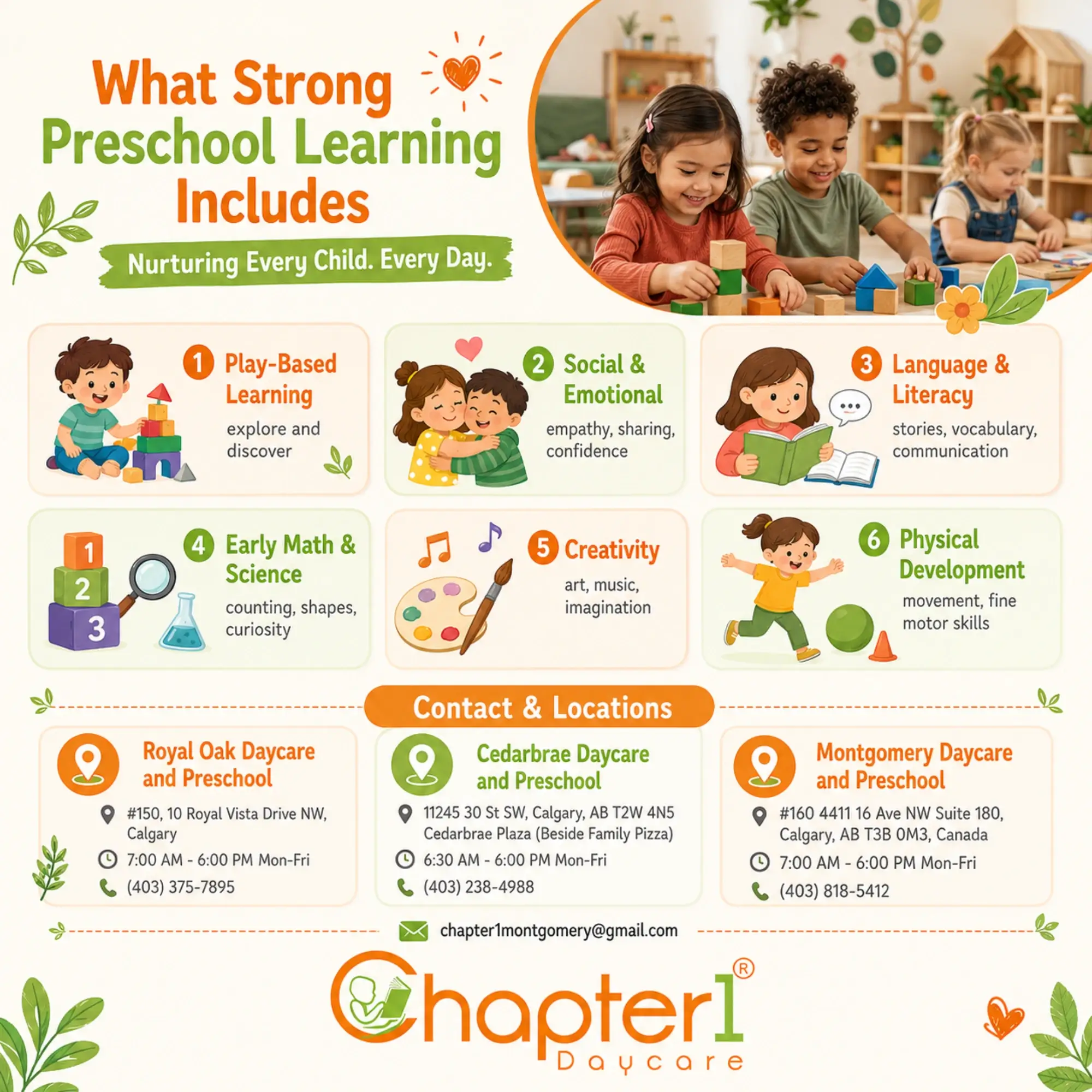
For families exploring preschool options in Calgary, this is often why a program like Chapter1 Daycare stands out naturally. Parents are not just looking for supervision. They want a nurturing environment where children can learn through play, build social confidence, and grow through age-appropriate routines and daily experiences. Programs such as preschool and pre-kindergarten are especially important for families who want a strong early-learning foundation along with the flexibility modern schedules often require. When a centre combines caring educators, structured activities, and a child-focused approach, it creates the kind of preschool experience families can feel good about.
Final Thoughts
A high-quality preschool curriculum should never feel like a race toward academics. It should feel like a thoughtful, balanced introduction to learning through play, connection, movement, creativity, and guided discovery.
When parents know what to look for, they can ask better questions, notice meaningful signs during tours, and choose a program with greater confidence. The right curriculum supports the whole child and helps create a strong beginning for everything that follows.
A great preschool experience is not only about preparing children for school. It is about helping them feel capable, curious, safe, and excited to learn. And that kind of beginning can shape far more than one school year.
FAQs
What makes a preschool curriculum high quality?
A high-quality preschool curriculum supports the whole child. It should include play-based learning, social-emotional development, early literacy, early math, creativity, movement, and age-appropriate routines. It should also be guided by caring teachers who know how to turn everyday activities into meaningful learning.
Is play-based learning important in preschool?
Yes. Play-based learning is one of the most important parts of a strong preschool curriculum. Young children learn best through hands-on exploration, imaginative play, movement, and interaction with others. Through play, they build language, confidence, problem-solving skills, and early academic foundations in a natural way.
How can I tell if a preschool curriculum is developmentally appropriate?
A developmentally appropriate curriculum matches a child’s age, attention span, and stage of growth. It should include active learning, short structured activities, creative play, and lots of teacher support. If a program feels too focused on worksheets, memorization, or long periods of sitting still, it may not be the right fit for preschool-aged children.
What should children learn in preschool?
Children in preschool should build skills across several areas, not just academics. A strong program should support social development, emotional growth, communication, early reading readiness, basic math concepts, creative expression, and physical coordination. Preschool should help children grow in confidence, curiosity, and independence.
What are the warning signs of a poor preschool curriculum?
Some common warning signs include too many worksheets, limited play, little teacher-child interaction, poor classroom organization, and weak communication with families. If children seem unengaged, teachers appear disconnected, or the classroom feels overly rigid, the curriculum may not be supporting healthy early development.
Does a high-quality preschool curriculum help with kindergarten readiness?
Yes. A high-quality preschool curriculum helps children prepare for kindergarten by building early literacy and math foundations, but it also supports listening, following routines, working with others, problem-solving, and emotional confidence. These skills are just as important for school readiness as early academics.