



Every parent knows the feeling. Your child wakes up warm, quieter than usual, or suddenly says their tummy hurts, and your mind starts racing. Is this a normal childhood bug that needs rest and fluids, or is it something more serious?
The truth is that many childhood symptoms are common, especially during the early years when children are building immunity and spending time around other children. Coughs, fevers, runny noses, stomach upsets, and rashes happen often. What matters most is knowing how to look at the full picture.
Instead of focusing on one symptom alone, it helps to notice your child’s breathing, energy level, hydration, behavior, and age. A mild fever in one child may be less concerning than unusual sleepiness, trouble breathing, or signs of dehydration in another. When parents know what to watch for, they can respond with more confidence and less panic.
Start With The Big Picture
When a child feels unwell, numbers and labels do not always tell the whole story. A cough may sound bad but improve with rest. A fever may look scary but pass within a day or two. On the other hand, a child with a lower fever who is hard to wake, breathing fast, or refusing fluids may need more urgent attention.
That is why it helps to step back and ask a few simple questions. Is your child alert? Are they breathing comfortably? Are they drinking fluids? Are they still urinating normally? Do they seem like themselves, even if they are tired and cranky?
Parents often feel pressure to make the “right” call immediately. In reality, watching how symptoms develop over a short period can often give useful clues. Mild symptoms that improve with comfort care are usually less concerning than symptoms that worsen, combine with other red flags, or make your child seem very different from normal.
Symptoms That Need Urgent Medical Attention
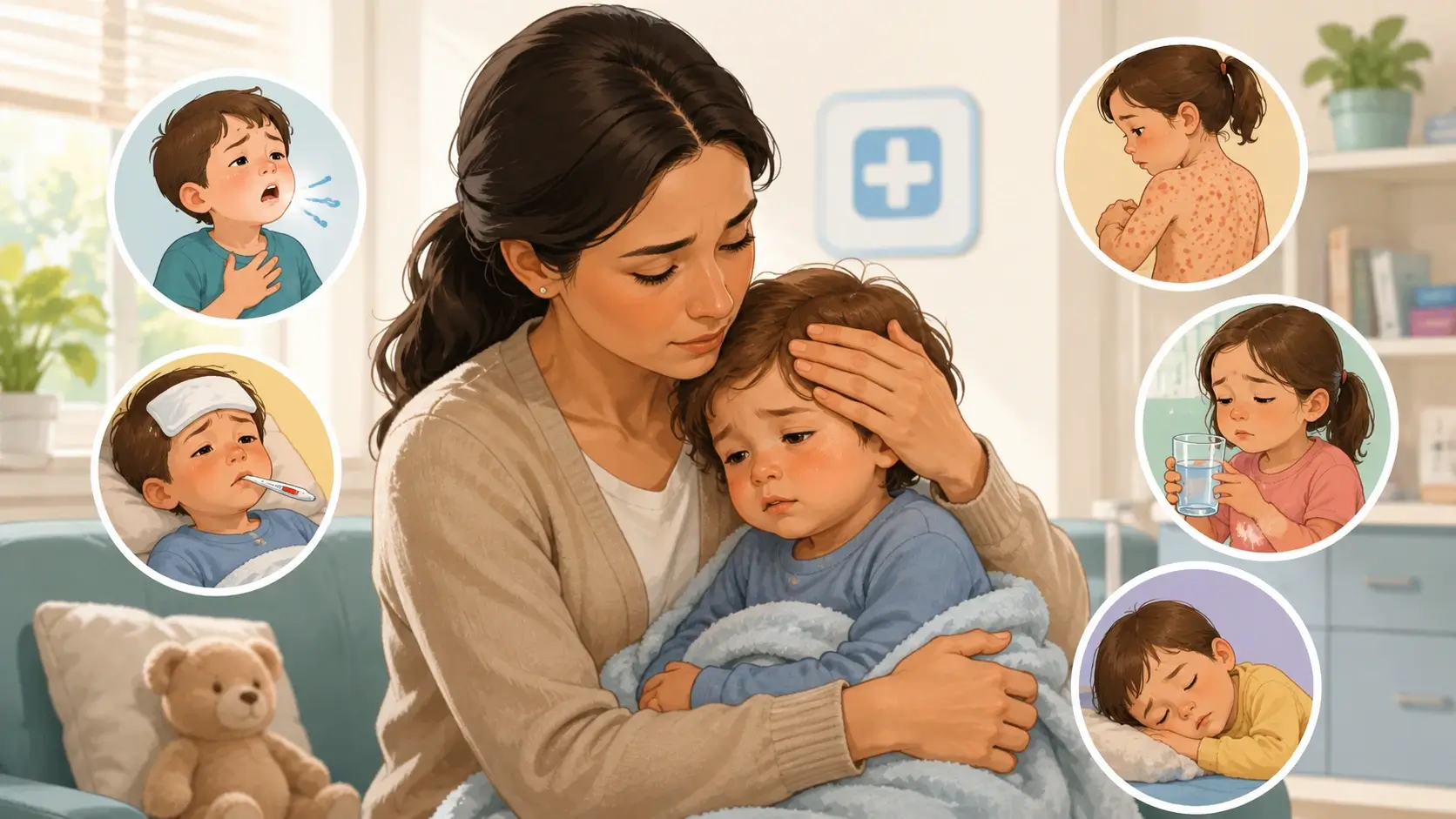
Some symptoms should never be brushed off or handled with a wait-and-see approach. These are the signs that call for urgent medical care.
Watch for:
- trouble breathing, fast breathing, wheezing, or visible effort when breathing
- blue, gray, or very pale lips or skin
- seizures or uncontrollable shaking
- extreme sleepiness, confusion, or difficulty waking
- signs of severe dehydration
- severe pain that does not ease
- a rash that does not fade when pressed
- an infant who is unusually floppy, weak, or unresponsive
These warning signs matter because they can point to serious illness or a condition that is getting worse quickly. Parents do not need to diagnose the cause. They only need to recognize that the symptom is outside the range of normal childhood sickness.
If your instincts are telling you something is not right, trust that feeling. Parents often notice dangerous changes before they can explain them clearly.
Fever: When Is It Normal, And When Is It Not?
Fever is one of the most common reasons parents worry. In many cases, fever is simply a sign that the body is fighting off an infection. By itself, a fever is not always dangerous. The child’s age and overall condition matter much more.
In older babies and children, a mild or moderate fever can often be managed at home with rest, fluids, and comfort. Some children will still want to play a little, watch a show, or ask for snacks. That is usually reassuring.
Fever becomes more concerning when it lasts too long, rises very high, or comes with other symptoms such as difficulty breathing, vomiting that will not stop, rash, dehydration, or unusual drowsiness. A child who is hot but still alert and drinking is different from a child who is feverish and hard to wake.
For very young babies, fever needs more caution. Infants under three months are in a different category because even a low-grade fever can require prompt medical attention. Younger babies can become unwell more quickly, and symptoms may be less obvious.
Parents should also pay attention to how the fever behaves. Does it improve with time and fluids, or does it keep returning with worsening symptoms? Is the child recovering between fever spikes, or becoming more drained and uncomfortable?
Coughs And Colds: Common, But Not Always Simple
Most children get many coughs and colds in the early years. Runny noses, mild coughs, and congestion are part of childhood, especially during colder months or when children are spending time in group settings.
A simple cold usually comes with mild tiredness, a stuffy or runny nose, a sore throat, and a cough that may be worse at night. In many cases, these symptoms improve gradually over several days. Rest, fluids, and a calm home routine can go a long way.
The bigger concern is not the cough itself, but how your child is breathing. A child who is breathing quickly, pulling in around the ribs, flaring the nostrils, wheezing, or struggling to speak or drink needs prompt attention. A barking cough, a very hoarse sound, or noisy breathing can also mean it is time to call a doctor.
Another sign to watch is how much the cough is affecting normal life. If your child cannot sleep, cannot eat or drink well, or seems exhausted from coughing, it may be more than a routine cold.
Vomiting And Diarrhea: Watch Hydration Closely
Vomiting and diarrhea are very common in children, and many cases improve with time and careful hydration. Still, the main risk is not always the stomach bug itself. It is dehydration.
A child who vomits once or twice and then starts sipping fluids may simply need time to recover. A child with mild diarrhea who is still drinking, urinating, and acting fairly normal may also recover well at home.
The situation changes when your child cannot keep fluids down, has a very dry mouth, produces fewer wet diapers or less urine, cries without tears, or becomes weak and sleepy. Those signs can mean the body is losing too much fluid.
It is also important to notice whether vomiting or diarrhea is paired with severe stomach pain, blood, green vomit, or increasing lethargy. Those symptoms deserve medical advice much sooner.
Small sips of fluid taken often are usually easier for children than drinking a lot at once. Parents should focus less on full meals in the early stage and more on preventing dehydration.
Stomach Pain: What Parents Should Notice
Tummy aches are common in children. Sometimes they come from gas, constipation, hunger, mild viral illness, or general discomfort. Many children complain of stomach pain even when the problem is short-lived and mild.
What matters is the pattern. Is the pain coming and going, or is it becoming stronger and more constant? Is your child still moving around, or are they curling up, refusing to walk, or crying in pain?
Stomach pain deserves closer attention when it is severe, focused in one area, or comes with vomiting, fever, swelling, or unusual weakness. If a child seems miserable, cannot settle, or looks much more ill than usual, parents should take that seriously.
A child’s behavior often tells you a lot. Mild tummy pain may not stop them from chatting, walking, or asking for comfort. More serious pain often changes the whole way they act.
Rashes: Many Are Mild, But Some Need Fast Action
Rashes can be frustrating because they vary so much. Some are minor skin irritation. Others are linked to viral illness, allergies, heat, or contact with something irritating. Many childhood rashes look dramatic but turn out to be mild.
A mild rash without other symptoms can often be watched closely at home. Parents should note whether it is itchy, spreading, or linked to a new soap, food, plant, or medication.
The concern rises when a rash appears along with fever, breathing changes, swelling, severe discomfort, or rapid spreading. A rash that does not fade when pressed is especially important to treat seriously.
Parents do not need to identify every rash perfectly. They just need to look for the signs that separate a simple rash from one that may point to something more urgent.
Behavior Changes Matter More Than Many Parents Realize
One of the most important things parents can track is not a thermometer reading or the sound of a cough. It is how their child is acting.
Children who are sick often become clingier, quieter, or more tired than usual. That alone is not always alarming. But if your child is much harder to wake, not making eye contact, not interested in comfort, or not responding as they normally would, those are stronger warning signs.
Parents often say things like, “He just isn’t himself,” or “She’s usually tired when sick, but this feels different.” Those observations matter. Children cannot always explain how bad they feel, so behavior becomes part of the symptom picture.
Look closely at energy, alertness, interest in drinking, and interaction. These clues often help parents decide whether to continue monitoring at home or call for help.
A Simple Way To Decide What To Do
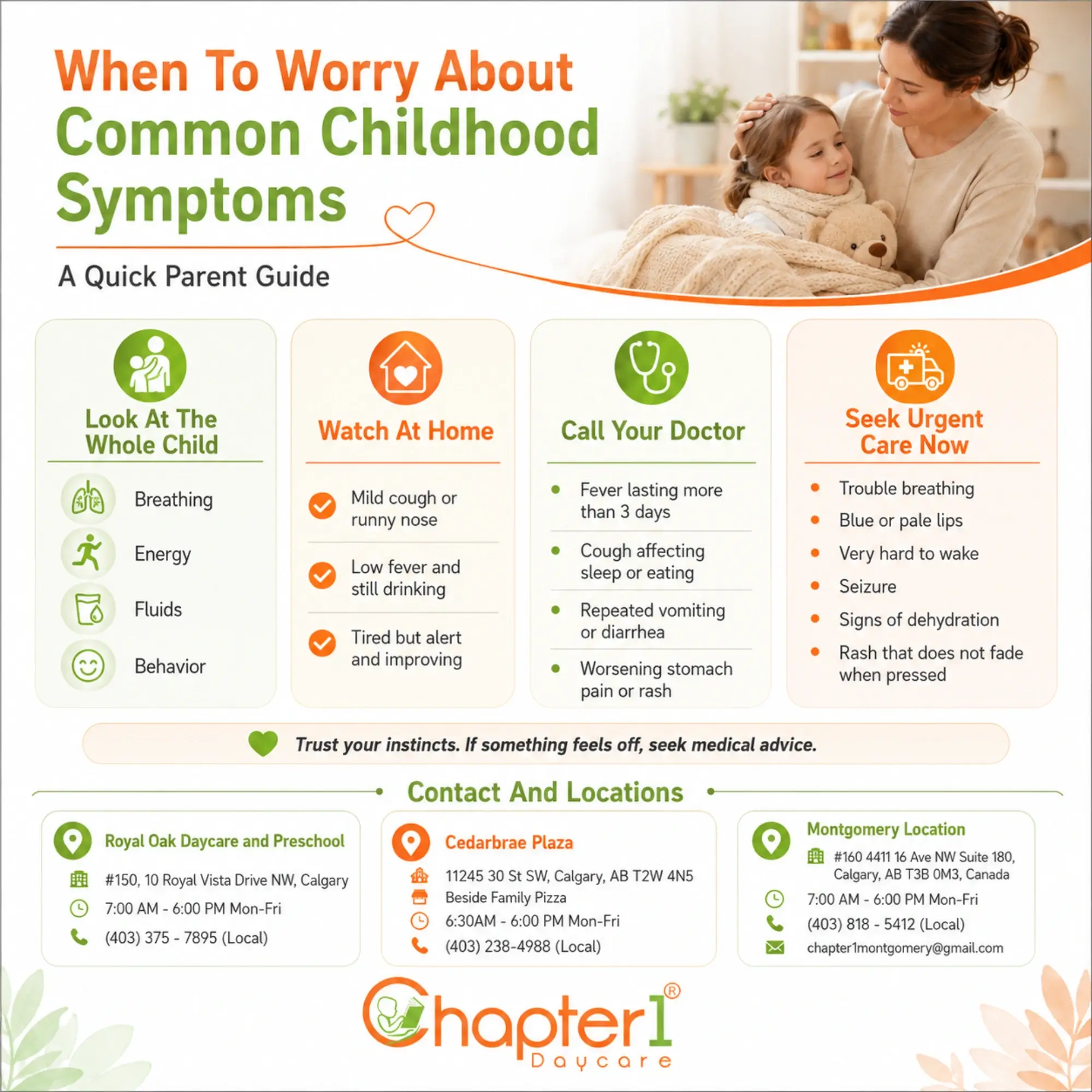
When symptoms show up, it helps to think in three levels rather than jumping straight to worst-case scenarios.
Watch At Home
Home care may be appropriate when symptoms are mild, your child is drinking fluids, breathing comfortably, staying alert, and gradually improving. This often includes routine colds, mild coughs, short fevers, temporary tummy upset, or a mild rash without other warning signs.
Call Your Doctor
Call your doctor when symptoms are not improving, when fever lasts longer than expected, when coughing disrupts sleep or eating, when vomiting or diarrhea raises dehydration concerns, or when your child seems more uncomfortable than usual. This is also the right step when you are unsure and need guidance.
Seek Urgent Care
Get urgent help when there is trouble breathing, seizure activity, severe dehydration, unresponsiveness, persistent severe pain, blue lips, or a rash that does not fade when pressed. These are not symptoms to monitor for long at home.
Why This Matters For Daycare-Age Children
In the daycare and preschool years, children are exposed to more routine illness than many parents expect. That can make it hard to know when a symptom is part of normal childhood exposure and when it deserves more concern.
At Chapter1 Daycare, we understand how stressful that uncertainty can feel for families. Parents are often balancing work, routines, and the emotional weight of deciding whether a child is well enough for a normal day or needs extra care at home. That is one reason families value a supportive early-learning environment with strong parent communication and staff who understand the daily rhythms of young children.
Trust Yourself, But Use A Clear Checklist
Worrying about your child does not mean you are overreacting. It means you care. The goal is not to panic over every cough or fever, but to understand which signs deserve closer attention.
Most childhood symptoms do improve with time, rest, fluids, and comfort. But some symptoms stand out because they affect breathing, hydration, responsiveness, or overall condition. Those are the moments when parents should act quickly.
When in doubt, take a breath and look at the whole child. Notice their breathing, energy, fluids, behavior, and whether they seem to be getting better or worse. A calm checklist can help you make a clearer decision, and your instincts still matter.
Parenting does not come with perfect certainty. But with the right guidance, it becomes much easier to tell the difference between a rough day and a symptom that should not wait.
FAQs
What are the general danger signs in a child?
Some of the biggest warning signs include trouble breathing, severe dehydration, extreme sleepiness or unresponsiveness, seizures, and unusual skin color such as blue or very pale lips. A rash that does not fade when pressed is also a serious sign.
When should parents worry about a fever?
Parents should worry more when a fever happens in a very young baby, lasts several days, becomes very high, or comes with other symptoms such as lethargy, breathing trouble, dehydration, vomiting, or rash.
How do I know if my child is dehydrated?
Watch for a dry mouth, fewer wet diapers, less urination, no tears when crying, sunken eyes, unusual tiredness, or trouble keeping fluids down. These are signs your child may need medical attention.
When should I worry about my child’s cough?
A cough becomes more concerning when it comes with wheezing, fast breathing, chest pulling in, poor sleep, trouble drinking, or a child who seems exhausted or distressed.
Is vomiting always a reason to call the doctor?
Not always. Short-lived vomiting can happen with common childhood illness. The bigger concern is when vomiting continues, fluids will not stay down, your child becomes dehydrated, or vomiting comes with severe pain, blood, or unusual sleepiness.
How do I stop worrying about my child’s health?
Worry is natural, but it helps to focus on clear signs instead of fear alone. Look at breathing, hydration, energy, and behavior. A simple plan for when to watch, when to call, and when to seek urgent care can make decisions feel more manageable.