


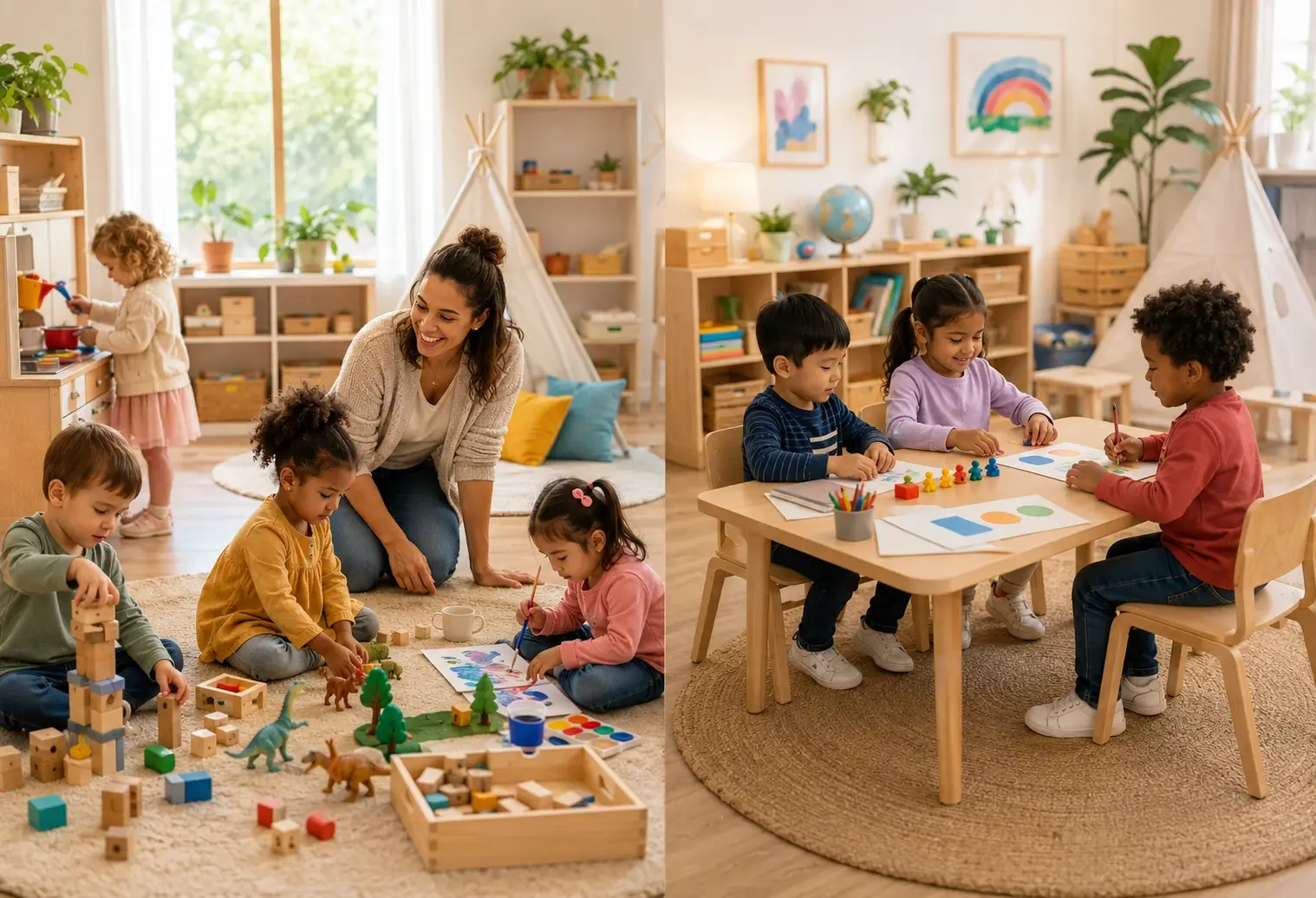
Choosing an early learning program can feel more confusing than many parents expect. You may hear the terms preschool and pre-K used almost interchangeably, which makes it hard to know which one is actually right for your child. While the two programs are closely connected, they are not always the same. They often serve different age groups, support different developmental stages, and prepare children for different next steps.
The good news is that this does not have to be a stressful decision. In many cases, both preschool and pre-K can play an important role in a child’s early learning journey. The key is understanding what each one offers and choosing the option that fits your child’s age, confidence, and readiness.
Why Parents Often Get Confused
Part of the confusion comes from the fact that different childcare centres may use these labels in slightly different ways. One centre may call a class preschool, while another may use pre-K for a similar age group. That is why parents should look beyond the name of the program and pay attention to the child’s age range, daily routine, learning style, and developmental goals.
For Calgary families, the choice is often about more than academics. Parents want an environment where their child feels safe, supported, and encouraged to grow. They also want a program that fits their family schedule and helps their child build confidence, independence, and school readiness at the right pace.
What Is Preschool?
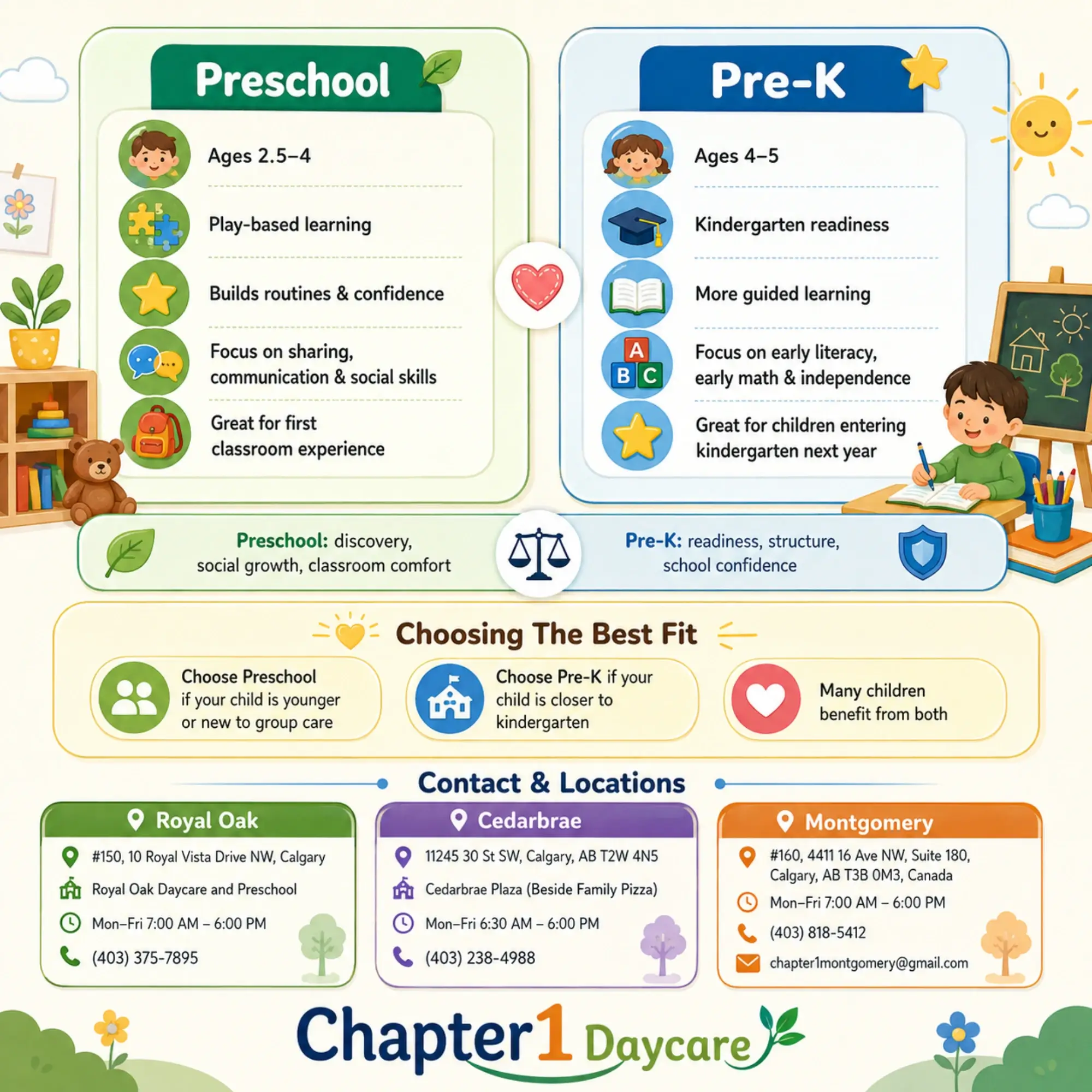
Preschool is usually the earlier stage of group learning. It is often designed for children around ages 2.5 to 4, although age ranges can vary by centre. At this stage, the focus is often on helping children become comfortable in a classroom environment, build relationships with peers, and learn the routines of a structured day.
A Gentle Introduction To Early Learning
For many children, preschool is the first step into learning outside the home. It introduces them to circle time, group activities, sharing, turn-taking, creative play, and simple daily routines. The goal is not to push children too quickly into academics. It is to help them feel secure, engaged, and ready to participate.
What Children Usually Learn In Preschool
Preschool programs often support growth in areas like:
- social skills
- communication
- emotional development
- fine motor skills
- independence
- confidence in group settings
A strong preschool program uses play as the foundation for learning. Through art, music, stories, movement, sensory play, and outdoor time, children begin building the skills they will continue using as they grow.
What Is Pre-K?
Pre-K, or pre-kindergarten, is usually the stage just before kindergarten. It is often intended for children around ages 4 to 5 who are getting ready for a school environment. While it still includes play and creative learning, pre-K usually has a stronger focus on kindergarten readiness.
A Bridge To Kindergarten
Pre-K helps children move from early childhood learning into a more school-ready mindset. That does not mean it should feel rigid or overly academic. Instead, it gives children more guided opportunities to practice the habits and foundational skills that support a smoother start in kindergarten.
What Children Usually Learn In Pre-K
Pre-K often helps children strengthen:
- letter recognition
- early literacy skills
- number awareness
- problem-solving
- listening skills
- longer attention span
- classroom participation
- independence in routines
The classroom may feel a little more structured than preschool, but the best pre-K programs still keep learning age-appropriate, active, and engaging.
Preschool Vs. Pre-K: The Biggest Differences
The easiest way to understand the difference is to think about developmental stage and next step. Preschool is often the starting point for younger children who are learning how to be part of a classroom community. Pre-K is often the next step for older children who are preparing for kindergarten.
Age Range
Preschool is generally for younger children, while pre-K is usually for children who are one year away from kindergarten. Age alone does not decide everything, but it is often the first difference parents notice.
Learning Style
Preschool tends to be more play-led and exploratory. Pre-K still uses play, but it often includes more teacher-guided activities and more consistent routines. Both are valuable, but they support children in slightly different ways.
Skill Focus
Preschool often focuses more on social-emotional growth, confidence, and comfort in a group setting. Pre-K usually adds more intentional school-readiness work, including early literacy, number concepts, following directions, and independent participation.
Daily Structure
A preschool day often feels like a gentle introduction to routine. A pre-K day may feel a little more organised around transitions, group learning, and readiness-based activities. The structure is still developmentally appropriate, but it begins to look a little more like the rhythm of a school day.
What Preschool And Pre-K Have In Common
Even though they are different, preschool and pre-K share many important goals. Both should provide a safe, nurturing environment where children can build confidence, learn with others, and develop essential early skills. Both can include circle time, storytelling, music, crafts, outdoor play, movement, and hands-on learning. Most importantly, both should support the whole child, not just academic growth.
That is an important point for parents to remember. Young children are not only learning numbers and letters. They are also learning how to manage emotions, express themselves, solve simple problems, follow routines, and feel comfortable away from home. A strong early learning program supports all of these areas together.
Is Pre-K The Same As Preschool?
Usually, no. They are related, but they are not always the same. Preschool is generally the broader early learning stage for younger children, while pre-K is usually the program that comes closer to kindergarten and focuses more directly on school readiness.
Still, the label alone does not tell the full story. Some childcare centres use the word preschool more broadly, while others clearly separate preschool and pre-K by age and curriculum. That is why parents should always ask about the actual goals of the program, the classroom routine, and the age group it serves.
Preschool Vs. Pre-K Vs. Kindergarten
Parents often compare all three stages, especially when they are planning ahead. Seeing them side by side can make the decision much easier.
Preschool
Preschool is often the first introduction to group learning. It helps children develop comfort with routines, teachers, and peers in a play-based setting.
Pre-K
Pre-K builds on that early foundation. It usually adds more structure and intentional readiness work to help children transition smoothly into kindergarten.
Kindergarten
Kindergarten is formal school entry. Expectations are typically higher in terms of classroom routine, independence, attention, and participation. That is why both preschool and pre-K can be so helpful. They prepare children step by step rather than expecting them to adjust all at once.
Which One Should You Choose?
The answer depends on your child, not just the program label. Age matters, but so do personality, confidence, previous childcare experience, and developmental readiness.
Choose Preschool If…
Preschool may be the better fit if your child is younger, new to group care, or still learning how to feel comfortable in a classroom setting. It can be a great choice for children who need time to build social confidence, communication skills, independence, and familiarity with daily routines.
Choose Pre-K If…
Pre-K may be the better fit if your child is closer to kindergarten age and already feels comfortable with classroom expectations. It is often a strong next step for children who are ready for more guided learning, stronger routines, and more focused school-readiness support.
Some Children Benefit From Both
Many children do best when they experience both stages. They begin in preschool, where they build emotional security and social confidence, then move into pre-K, where they strengthen readiness for school. This can create a smoother and more natural transition into kindergarten.
Questions To Ask Before Enrolling
The best way to compare programs is to ask clear, practical questions. These questions often tell you far more than the name of the class.
- What age group is this program designed for?
- Is the learning mostly play-based, teacher-guided, or a mix of both?
- How do you support social-emotional development?
- What does school readiness look like in this classroom?
- What does a typical day include?
- How do teachers communicate with parents?
- How do you help children adjust if they are new to care?
These questions can help you understand whether the environment truly matches your child’s current needs.
Why The Environment Matters So Much
The program itself matters, but the environment matters just as much. A strong preschool or pre-K classroom should feel warm, calm, and supportive. Children learn best when they feel safe, seen, and encouraged. Caring educators, consistent routines, and a well-balanced day can make a major difference in how children settle in and grow.
Parents are not just choosing a curriculum. They are choosing the people, the atmosphere, and the daily experience that will shape a big part of their child’s week. That is why the right fit should feel both developmentally appropriate and emotionally supportive.
A Natural Path From Preschool To Pre-K
At Chapter1 Daycare, families can find that kind of supportive early learning path in a warm, community-focused setting. With locations in Cedarbrae and Royal Oak, Chapter1 Daycare offers affordable childcare, flexible schedules, and nurturing programs that support children through key early stages of growth. For families comparing preschool and pre-K, this matters because the journey is not just about choosing one label over another. It is about finding a place where children can move from play-based exploration into stronger school readiness with confidence. Chapter1’s early learning approach supports social development, creativity, structured daily routines, and age-appropriate educational growth, helping children feel cared for as they build the skills they need for school and beyond.
Final Thoughts
Preschool and pre-K are both valuable, but they are designed for slightly different moments in a child’s development. Preschool often helps younger children build comfort, confidence, and social skills in a play-based setting. Pre-K often helps older children strengthen the routines, independence, and early academic foundations that support kindergarten readiness.
The best choice is the one that meets your child where they are right now. When children are in the right environment, they do not just get ready for school. They build confidence, curiosity, and the kind of strong beginning that supports everything that comes next.
FAQs
Is Preschool The Same As Pre-K?
No. Preschool and pre-K are closely related, but they are not usually the same. Preschool often focuses more on play-based learning, social development, and classroom routines for younger children, while pre-K is usually designed for older children who are getting ready for kindergarten.
What Age Is Best For Preschool?
Preschool is often a good fit for children around ages 2.5 to 4, depending on the program and the child’s readiness. It is usually the stage where children begin learning how to participate in group activities, follow routines, and build confidence outside the home.
What Age Is Pre-K For?
Pre-K is usually designed for children around ages 4 to 5 who will be entering kindergarten soon. It often focuses on school-readiness skills like listening, following directions, early literacy, number awareness, and greater independence.
Should My Child Go To Preschool Or Pre-K?
That depends on your child’s age, developmental stage, and comfort in a group setting. Preschool may be the better choice for younger children who are still building routines and confidence, while pre-K is often the better fit for children who are closer to kindergarten and ready for more structured learning.
Is Pre-K More Academic Than Preschool?
In most cases, yes. Pre-K often includes more intentional kindergarten-readiness activities, such as early reading, writing, counting, and structured group work. Preschool is usually more focused on play-based exploration, social-emotional development, and basic classroom habits.
Do Children Need Both Preschool And Pre-K?
Not always, but many children benefit from both. Preschool can help children develop confidence, independence, and comfort in a classroom setting, while pre-K can build on that foundation and prepare them more directly for kindergarten.
How Is Pre-K Different From Kindergarten?
Pre-K is still part of early childhood learning and usually keeps a strong play-based element, even when it becomes more structured. Kindergarten is formal school entry and often comes with greater expectations around routine, attention, participation, and academic learning.
How Do I Choose The Right Program For My Child?
Look at more than just the program name. Consider your child’s age, personality, confidence, and developmental needs. It also helps to ask about the daily schedule, teaching style, classroom environment, and how the program supports both emotional growth and school readiness.