


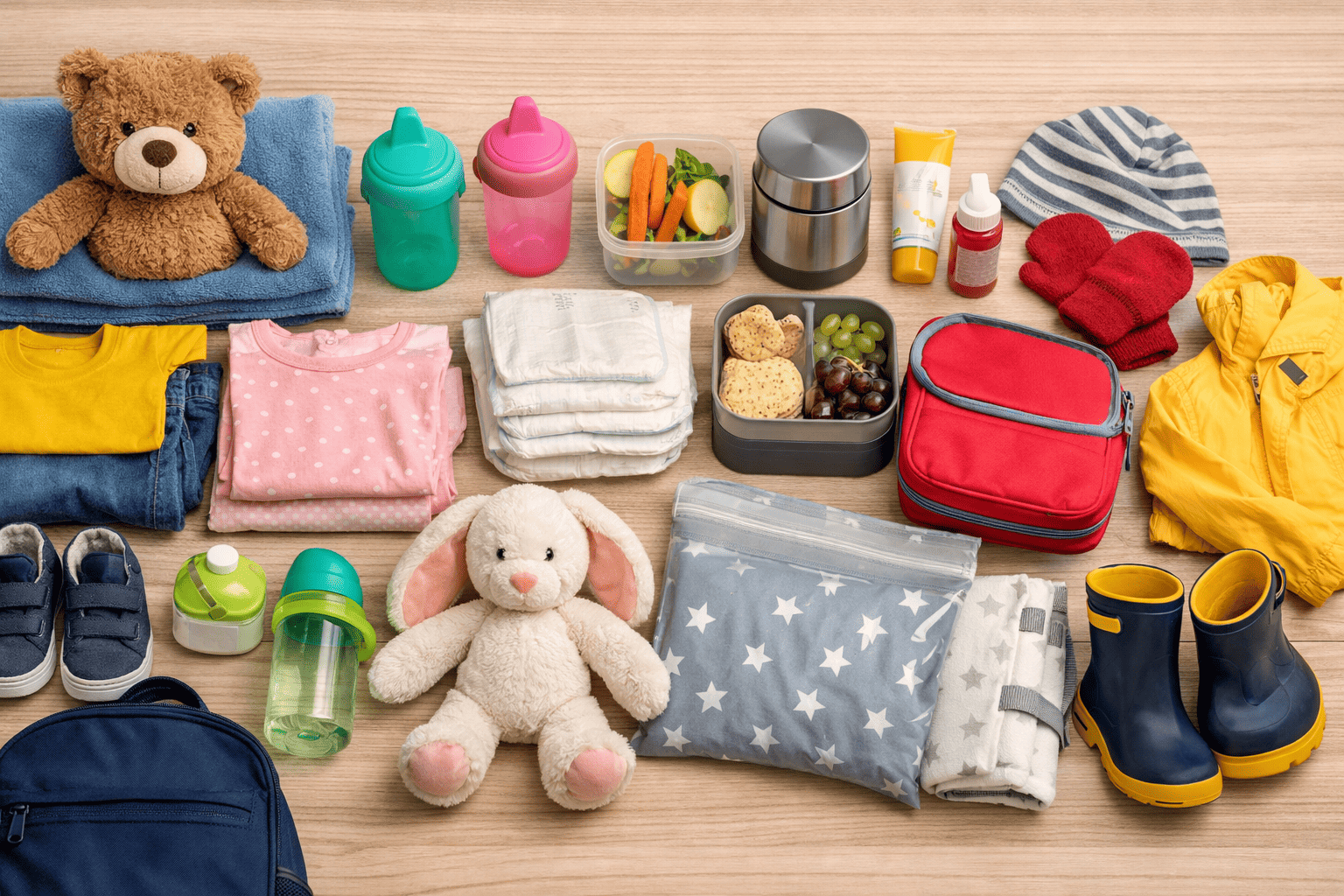
Packing for daycare can feel like a lot especially in the first few weeks. One day you remember everything, and the next day you’re at drop-off realising the spare clothes are still in the dryer. If that’s you, you’re not behind. You’re just living real life with a small child.
The goal isn’t to pack perfectly. It’s to pack consistently. When you have a simple system (and a couple of backups), daycare mornings get calmer, your child feels more settled, and you spend less time doing the “what did we forget?” mental checklist in the car.
Below is a parent-friendly guide to what to pack for daycare, what changes by age, and how to build an easy daily-and-weekly routine that actually sticks.
Start here: Ask your daycare for their list
Every daycare has slightly different policies and routines. Some provide snacks. Some ask families to send all meals. Some include bedding for naptime, while others request a crib sheet or nap blanket. Some have indoor-shoe rules. Some allow sunscreen to be applied; others need special forms.
Before you buy extra supplies or overpack, check your daycare’s specific list. If you don’t have one yet, ask for it and keep a copy in your phone notes. It helps you pack with confidence and avoid sending items that won’t be used.
What kind of bag should you send to daycare?
Most families do best with a small backpack or a simple daycare bag that your child can eventually carry. Choose something that’s lightweight, easy to wipe clean, and has one main compartment you can open quickly.
A few small details make a big difference. Look for a bag with sturdy zippers, a spot for a name label, and enough space for a spare outfit, a container or two, and seasonal gear. If your child still uses bottles or needs extra supplies, a backpack plus a small lunch bag can be easier than one overstuffed tote.
Whatever you choose, label the bag clearly. Daycare life involves lots of similar-looking bags and a visible name saves time for everyone.
The everyday essentials checklist
You don’t need to bring everything every day. The simplest approach is to keep the “core essentials” consistent, then adjust for weather and age.
Two full changes of clothes (minimum)
Spills, messy play, bathroom accidents, and sudden weather changes happen. Packing two complete outfits is a solid baseline for most children. A “full outfit” means top, bottoms, socks, and underwear (if your child wears it). If your child is potty training, add one extra outfit beyond your normal plan.
Choose comfy, easy-on clothes. Daycare days include movement, outdoor time, art, and snacks. Clothing that’s simple to change helps your child feel comfortable and helps educators support them quickly.
Diapers, wipes, and cream
If your child is in diapers or pull-ups, ask how your daycare prefers supplies. Some families send a daily amount. Others keep a bulk pack stored at the centre and restock when it runs low.
If your child uses diaper cream, send it only if your daycare allows it and you’ve filled out any required forms. A simple, labelled container is best.
Feeding supplies
Feeding needs vary widely by age and by centre. Some daycare provide snacks and meals. Others ask families to send everything. Either way, these items usually matter:
For babies: bottles labelled clearly, plus breast milk or formula prepared as your centre requests.
For toddlers and older kids: a water bottle or sippy cup, and any food containers needed for meals or snacks.
Try to keep the setup simple. Easy-open containers, a spill-resistant cup, and a small lunch kit that fits neatly in the bag reduce daily frustration.
A comfort item (especially in the first weeks)
A small comfort item can help children settle into daycare routines especially during drop-off, nap time, or early transitions. This might be a small blanket, a soft toy, a pacifier, or even a small family photo tucked into their bag.
Not every child needs this, and some centres have specific guidelines. But for many kids, having something familiar can make the early days feel safer and smoother.
A “dirty clothes plan”
This is the one thing parents are happiest they packed. Keep a large zip bag or wet bag in your child’s daycare bag at all times. That way, if clothes come home messy or wet, everything stays contained and the rest of the bag stays clean.
What to pack for naptime
Naptime policies vary. Some centres provide cots and ask families to send a small blanket. Some ask for a crib sheet for infants. Some request a nap mat or sleeping bag style blanket.
The simplest system is to keep naptime items at daycare during the week and take them home for washing on a set day (for example, every Friday). If you’re sending a blanket or sheet, label it clearly and choose something that’s easy to wash and not too bulky.
If your child has a favourite sleep item, ask your centre if it can be used during rest time only. That keeps it special and reduces the chance it gets lost during the busy parts of the day.
Outdoor time items
Outdoor play is a big part of healthy daycare routines, and Calgary weather changes fast. It helps to pack with the assumption that kids will go outside most days.
In warmer seasons, a sun hat and sunscreen (if allowed) can be essential. In cooler seasons, think layers, warm accessories, and weather-appropriate footwear.
A few items that often help:
A warm hat and mittens in winter
Rain gear or a light waterproof layer during wet seasons
Extra socks for puddle days
Closed-toe shoes for safe play
Boots when snow and slush are part of the day
If your child has indoor-shoe requirements at their daycare, keep a labelled pair that stays there. It keeps the morning routine simpler and helps your child transition indoors comfortably.
Age-by-age packing guide
Packing gets easier when you know what matters most for your child’s age and stage.
What to send with a baby to daycare (infants)
Infants have the most specific needs, so clarity is everything. Most families pack:
Bottles, clearly labelled
Breastmilk or formula prepared as requested
Diapers and wipes
Diaper cream (if approved)
At least two spare outfits
Bibs and burp cloths if your centre asks for them
Naptime items such as a crib sheet or sleep sack if required
Many parents also like sending a small comfort item. If your baby is using a pacifier, sending an extra can prevent a long day if one gets dropped or misplaced.
Toddlers (19 months–3 years)
Toddlers are active, curious, and often enthusiastic about messy play. For this age group, the “extra clothes” plan really pays off. It’s also helpful to pack:
Extra socks
A spill-resistant water bottle or cup
Weather gear that matches the season
Potty training items if your child is in that stage (extra underwear, extra pants, and a few pull-ups if needed)
Toddlers also benefit from predictable routines, so keeping their daycare bag consistent helps them feel safe and confident.
Preschool and pre-K (3–6 years)
Preschoolers and pre-K kids may need fewer diapering supplies, but they still benefit from a simple, reliable setup. Packing usually includes:
One to two spare outfits (more if potty training)
A water bottle
Seasonal outdoor layers
Indoor shoes if required
A small comfort item if rest time is new or challenging
At this stage, many kids enjoy being part of the routine carrying their own backpack, putting items in their cubby, and learning responsibility in a gentle way.
Label everything (and make it ridiculously easy)
If there’s one habit that saves the most time, it’s labelling. Daycare involves lots of similar items, and labels help staff keep everything organised while helping your child keep their belongings.
Label:
Clothes (especially jackets, sweaters, and hats)
Shoes and boots
Water bottles and cups
Food containers and lids
Blankets and sheets
Comfort items (if possible)
Your child’s bag and lunch kit
To make labeling easier, keep a small “label station” at home. Even something as simple as a drawer with labels and a marker helps you stay consistent especially when seasons change and suddenly your child has new gear.
Daily vs weekly: a simple packing system that works
The easiest daycare mornings usually come from a two-part system: a weekly base setup and a quick nightly reset.
Your weekly setup is what you “set and forget”:
A spare outfit or two that stays in the bag
A wet bag for dirty clothes
Seasonal gear that stays ready (extra mittens, spare socks, etc.)
Restocked diapers/wipes if you send bulk supplies
Your nightly reset is what you do in under two minutes:
Swap out any dirty clothes
Refill food or snacks if needed
Check the weather and add one seasonal item if required
Make sure the water bottle is clean and ready
This approach keeps you from repacking from scratch every day and it reduces the chance you’ll forget essentials.
First-day and first-week tips (what parents always forget)
The first week is a learning curve, even for experienced parents. A few reminders that help:
Pack one extra outfit more than you think you’ll need.
Bring the comfort item if your child is anxious about drop-off.
Send extra socks. They disappear faster than you expect.
Keep a wet bag in the backpack at all times.
Label everything before the first day, not on the first morning.
It also helps to keep drop-off short and predictable. A calm goodbye routine same words, same hug, same confident tone builds trust faster than long, emotional goodbyes (even though it’s hard).
Chapter1 Daycare: flexible care, play-based learning, and a true Calgary fit
At Chapter1 Daycare, we support Calgary families with warm, trusted childcare built around real schedules and real life. With two Calgary locations Cedarbrae and Royal Oak we offer age-specific programs for infants (3–18 months), toddlers (19 months–3 years), preschool (3–4.5 years), and pre-kindergarten (4–6 years). Our days include play-based learning, structured early education, daily crafts and activities, outdoor play, and nutritious meals in a safe, clean, nurturing environment plus flexible childcare options that include extended hours, night care, and weekend care. If you’re building your daycare routine right now, you may also find our blog on Benefits of Colouring for Kids helpful it’s a great read for families who want simple, screen-free activities that support fine motor skills and school readiness.
A warm next step for Calgary families
If you’re preparing for daycare and want a place that feels safe, supportive, and truly flexible, Chapter1 Daycare is here to help. We’re proud to offer affordable, high-quality childcare with transparent pricing, caring educators, and programs that help children learn and grow with confidence.
FAQs: What to pack for daycare
What to prepare for daycare?
Prepare a simple packing system: label everything, pack two spare outfits, set up a wet bag for dirty clothes, and follow your daycare’s specific list for food, nappies, and rest-time items.
What should my child bring to daycare?
Most children need spare clothes, any feeding items (water bottle, lunch kit, bottles), seasonal outdoor gear, and comfort or naptime items if required by the centre.
What to send with a baby to daycare?
Babies typically need labelled bottles, breastmilk or formula, diapers and wipes, extra outfits, diaper cream (if approved), and any crib sheet or sleep items requested by your daycare.
What kind of bag do you send to daycare?
A small backpack is usually the easiest choice. It should be lightweight, easy to clean, and big enough for spare clothes, a water bottle, and seasonal items. Label it clearly.
How many spare outfits should I pack?
Two full changes is a good baseline. Add one extra outfit if your child is potty training or tends to have messy days.
How do I handle dirty clothes coming home?
Keep a zip bag or wet bag in your child’s daycare bag at all times. It keeps everything contained and makes clean-up easier.