


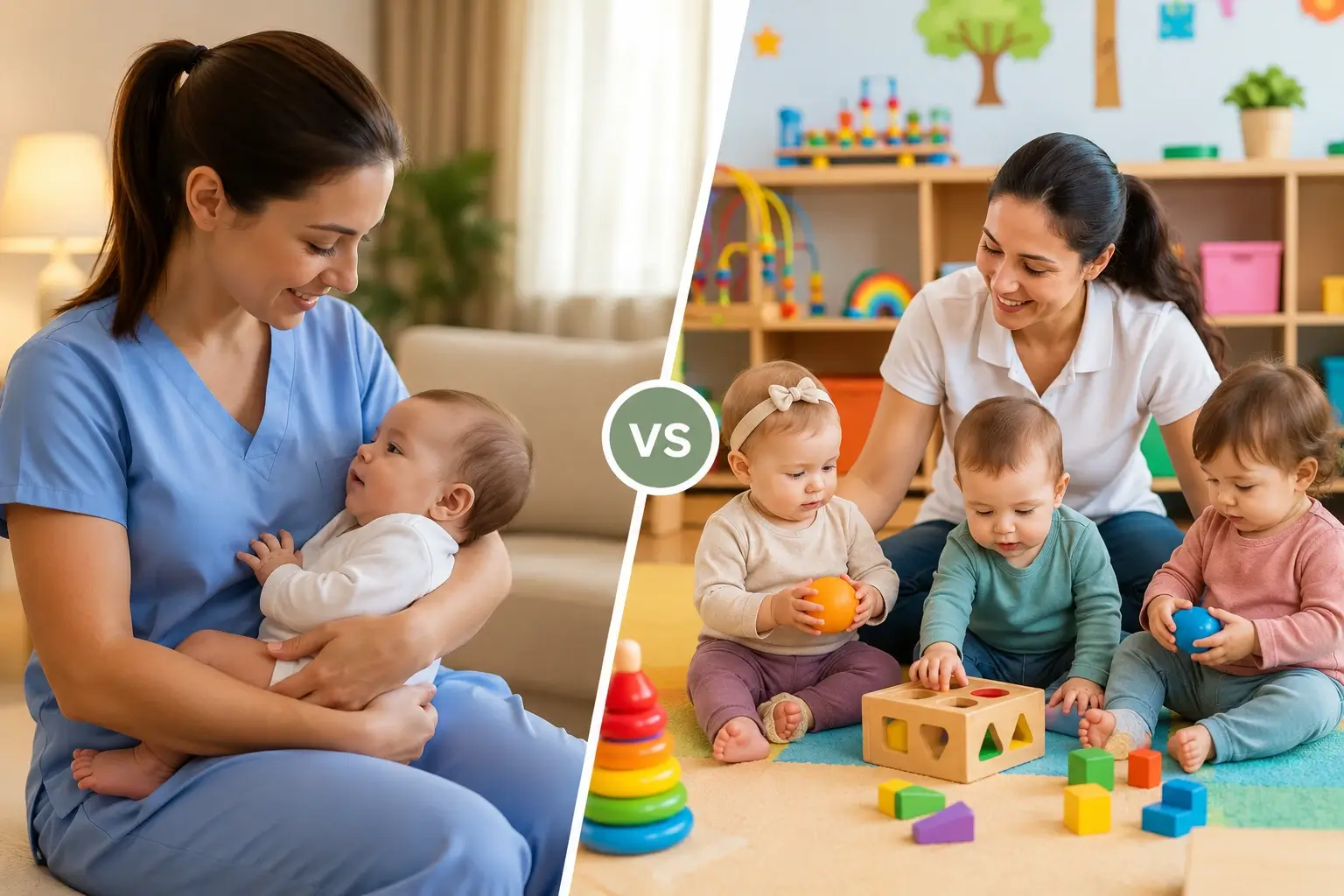
Choosing care for your baby is one of the biggest decisions you make in the early years. It can also feel deeply personal. Some parents feel more comfortable with one-on-one care at home, while others want the consistency and support of a daycare setting. Both options can work well. The right choice depends on your baby’s needs, your daily schedule, your comfort level, and the kind of environment you want your child to grow in each day.
For many families, this decision is not really about which option is “better.” It is about which option fits real life. You may need flexible hours, dependable routines, a nurturing environment, or help building your child’s confidence outside the home. You may also be balancing work, commuting, budget, and the emotional side of leaving your baby in someone else’s care.
If you are comparing a home nurse and daycare, it helps to look beyond general pros and cons. Think about how care will feel for your baby on an ordinary Monday morning, during nap time, at drop-off, during feeding routines, and through the small moments that shape a child’s sense of security. Those details often make the decision clearer.
Understanding The Difference Between A Home Nurse And Daycare
A home nurse or in-home caregiver usually provides care in your home. This can mean more individualized attention and a schedule that follows your baby’s natural rhythm more closely. Your baby stays in a familiar setting, and you may feel reassured knowing the care happens in your own space.
A daycare centre offers care in a structured group environment. Babies are supported by trained educators, daily routines, and a setting designed for early learning, play, rest, and development. In a quality daycare, the day follows a rhythm that helps children feel secure while also giving them new experiences, gentle stimulation, and social interaction as they grow.
The difference is not just location. It is also about how care is delivered. Home care is often more personalized moment to moment. Daycare tends to offer more structure, a team-based environment, and a stronger foundation for routine, early learning, and social development.
The Benefits Of A Home Nurse For Babies

One of the biggest advantages of a home nurse is individual attention. Your baby may receive care that is fully centered on their feeding schedule, sleep rhythm, mood, and comfort. For very young infants, this can feel especially appealing to parents who want quiet, consistent one-on-one support.
Home care also allows your baby to stay in a familiar environment. There is no commute, no change in surroundings, and no transition into a group setting. For some families, that familiarity reduces stress during the early months.
Flexibility is another reason parents consider home care. If your work hours change often or your family has an unpredictable routine, in-home care may feel easier to manage. It can also help parents who want to remain closely involved throughout the day.
For babies who are very young, highly sensitive, or still settling into regular sleep and feeding patterns, home care can feel calm and tailored. That can be a meaningful benefit in the first stage of life.
The Benefits Of Daycare For Babies
Daycare offers a different kind of strength. In a high-quality setting, babies benefit from consistency, trained caregivers, safe routines, and an environment built around their development. That structure can be incredibly helpful for both children and parents.
A good daycare also supports more than supervision. It creates opportunities for sensory play, language exposure, movement, music, outdoor time, and age-appropriate interaction. Even before babies fully “socialize” in the way older children do, they begin learning from the rhythm, sounds, faces, and routines around them.
Another benefit is dependability. Parents often need care they can count on each week, not care that depends on one person’s availability alone. In a daycare setting, the care system is usually more stable and supported by a team.
As babies grow into toddlers and preschoolers, daycare can also make transitions easier. A child who begins in a nurturing infant room often grows comfortably into a larger world of play-based learning, communication, routine, and early friendships. That long-term continuity matters to many families.
When A Home Nurse May Be The Better Fit
There are situations where home-based care may truly make more sense. If your baby is a newborn and you want the quietest possible environment, one-on-one care may feel like the right starting point. Some families also prefer home care when a baby needs a highly individualized schedule.
Home care may also work well if your household routine is unusual. Parents with changing shifts, travel needs, or an irregular workday sometimes find that in-home support fits more naturally.
Some babies are also slower to warm up to new environments. If your child is especially sensitive to noise, activity, or frequent transitions, a calm home setting may help them feel more settled during the earliest months.
For families who strongly value privacy and want their child to remain at home as long as possible, a home nurse can feel like the most comfortable choice.
When Daycare May Be The Better Fit
Daycare often becomes the better fit when parents want consistent, dependable care in an environment designed for child development. If your family needs a regular routine each week, daycare can offer a strong sense of rhythm and predictability.
It can also be a great option for babies who are ready for more stimulation. Gentle activities, songs, sensory experiences, outdoor play, and exposure to other children can all support healthy development in age-appropriate ways.
Families who want childcare that grows with their child often prefer daycare as a long-term solution. Instead of choosing one setup for infancy and another later, they can begin with a baby program and continue into toddler care, preschool, and pre-kindergarten.
For working parents, daycare can also reduce some of the uncertainty that comes with relying on one caregiver alone. The structure, communication, and consistency of a centre-based program can bring peace of mind.
Safety, Reliability, And Quality Matter Most
No matter which option you choose, quality should guide the decision. A calm home environment does not automatically mean high-quality care, just as a daycare setting does not automatically mean less personal attention. What matters most is how your baby is cared for each day.
Ask yourself how safety is handled. Think about sleep routines, feeding support, supervision, cleanliness, emergency procedures, and communication with parents. These are not small details. They shape your child’s daily experience and your trust in the caregiver.
Reliability matters too. If one caregiver becomes unavailable, what happens next? Is there backup support? Is the routine disrupted? In a daycare setting, the team structure often makes coverage more stable. That can be especially important for parents who need dependable care every week.
Warmth and responsiveness also matter. Babies need more than a schedule. They need people who respond to their cues, comfort them, talk to them, and make them feel safe. Whether at home or in daycare, nurturing care is the real foundation.
How Your Baby’s Age And Personality Can Influence The Choice
Every baby is different. Some settle easily into new routines and enjoy activity around them. Others need more time, more closeness, and a gentler pace. That is why the best care choice often depends not just on convenience, but on your baby’s temperament.
A very young infant may do well with quieter, one-on-one care, especially in the early months. As babies grow, many begin to benefit from more stimulation, movement, routine, and interaction. That does not mean every baby should start daycare at the same age. It means parents should look for the setting where their child seems most secure and supported.
It also helps to think ahead. Your baby’s needs today may not be the same six months from now. A family might begin with home care and later move to daycare. Another family may choose daycare early because the routine, environment, and support fit their life from the beginning.
The goal is not perfection. It is finding an environment where your baby feels safe, loved, and consistently cared for.
Questions To Ask Before Making Your Decision
As you compare options, ask practical questions. How will your baby’s naps be handled? How are feedings tracked? How will updates be shared with you during the day? What happens if your baby is having a hard morning or needs extra comfort?
Also think about your own needs. Do you need full-time care or part-time flexibility? Do you need extended hours, weekend support, or care that can adapt to a working parent’s schedule? Does the cost feel sustainable over time?
When touring or interviewing, pay attention to how the environment feels. Is it calm, clean, organized, and welcoming? Do caregivers speak warmly to children? Do routines seem thoughtful rather than rushed? Parents often sense a lot in those first impressions.
A Simple Way To Decide
Sometimes the clearest answer comes from asking a few honest questions. Does your baby thrive with quiet and one-on-one support, or do they seem energized by a structured, engaging environment? Does your family need maximum flexibility, or do you need dependable care with a clear daily routine? Are you looking for short-term infant support, or a longer-term childcare path that can grow with your child?
When you look at the decision through the lens of daily life, it often becomes easier. The right choice is the one that supports your child’s wellbeing and helps your family function with more calm, confidence, and consistency.
Why Many Families Eventually Choose Daycare
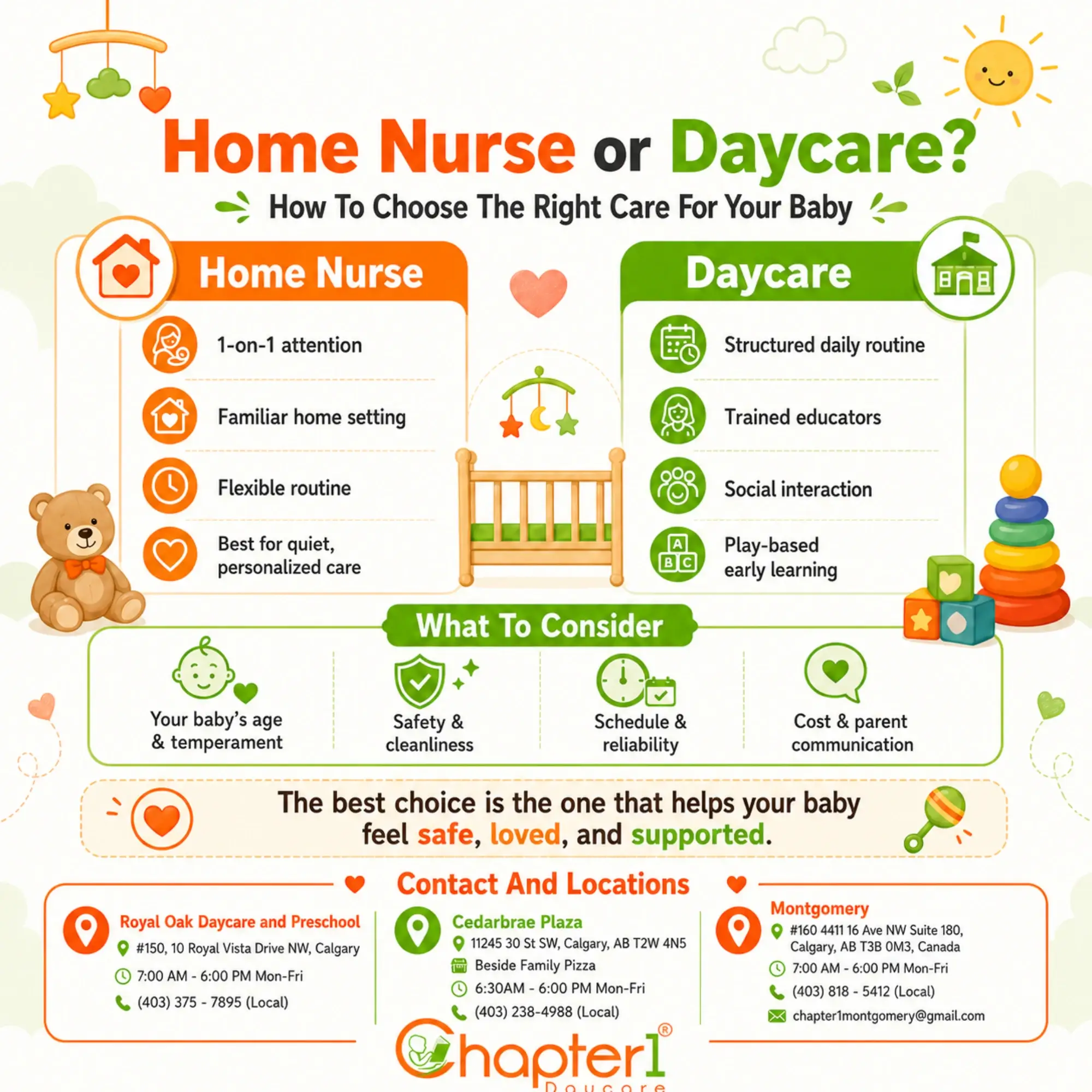
Many parents begin this process assuming home care will always feel more personal. But over time, they realize that a high-quality daycare can also feel deeply nurturing. Babies can form strong bonds with caring educators. They can enjoy familiar routines, safe play spaces, regular communication, and a learning environment designed around their development.
That is often what parents are really looking for. Not just someone to watch their baby, but a place where their child is known, supported, and encouraged each day.
For families exploring childcare in Calgary, Chapter1 Daycare offers a warm, structured environment where babies and young children can feel safe, supported, and engaged each day. Parents looking for flexible, family-focused support often value the centre’s infant care program and other age-based options, which can grow with their child while helping make everyday routines more manageable for the whole family.
Final Thoughts
Choosing between a home nurse and daycare is not about picking the “right” answer for everyone. It is about choosing the right fit for your baby and your family. Both options can work. What matters is the quality of care, the consistency of the routine, and the sense of safety and trust you feel.
If your baby needs calm, one-on-one attention in a familiar setting, home care may be a good place to begin. If your family values structure, reliability, social exposure, and a development-focused environment, daycare may be the stronger long-term fit.
In the end, the best care choice is the one that helps your child feel secure and helps you move through your day with confidence. When care feels supportive for both parent and baby, that is usually a very good sign.
FAQs
Is A Home Nurse Better Than Daycare For A Newborn?
For some families, yes. A home nurse can offer quiet, one-on-one care in a familiar environment, which may feel ideal during the newborn stage. However, a high-quality daycare with nurturing infant care can also be a strong option depending on your family’s needs.
Are Babies In Daycare More Likely To Get Sick?
Group settings can increase exposure to common illnesses, especially in the beginning. At the same time, quality daycare centres follow hygiene and cleaning routines that help reduce risk and support a healthy environment.
Can Daycare Still Offer Personalized Care For Babies?
Yes. A strong infant daycare program should still feel warm, responsive, and attentive. Babies benefit from caregivers who follow their cues, track routines, and build trusting relationships over time.
What Age Is Best To Start Daycare For A Baby?
There is no single best age for every child. Some families start earlier because they need dependable care, while others wait until their baby is older. The best timing depends on your child’s temperament, your family routine, and the quality of the daycare setting.
How Do I Know If My Baby Is Ready For Daycare?
Look at how your baby handles new environments, routines, and caregivers. Some babies adjust quickly, while others need a slower transition. A good daycare will work with parents to make that adjustment more comfortable.
What Should I Look For When Touring A Daycare Centre?
Pay attention to cleanliness, safety, caregiver warmth, communication, daily routines, and how calm the environment feels. It also helps to ask about feeding, naps, supervision, and how the centre supports each baby’s development.