



Starting daycare is a big milestone for your child, and for you as a parent too. Even when you know it is the right next step, it is completely normal to feel a mix of relief, worry, excitement, and guilt. Many families wonder how to make the transition easier and what they can do before that first day arrives.
The good news is that preparing your child for daycare does not mean making everything perfect. It means helping your child feel safe, familiar, and supported as they step into a new routine. With a little planning, a calm approach, and the right expectations, the start of daycare can feel much smoother for everyone involved.
Why Starting Daycare Can Feel Like Such a Big Change
For young children, daycare introduces a lot of new experiences at once. They are meeting new adults, hearing different voices, seeing unfamiliar spaces, following a new schedule, and learning how to separate from home for part of the day. Even children who are naturally social may need time to adjust.
That is why the first days or weeks can come with clinginess, tears at drop-off, disrupted naps, extra tiredness, or mood changes in the evening. These responses do not always mean something is wrong. In many cases, they are a normal part of adjusting to a new environment.
The goal is not to avoid every emotion. The goal is to help your child build trust in the new routine and learn that daycare is a safe place where they are cared for, comforted, and welcomed.
Start Preparing Before the First Day
One of the best things you can do is begin a little early. Small steps taken a couple of weeks before daycare starts can make the change feel less sudden for your child.
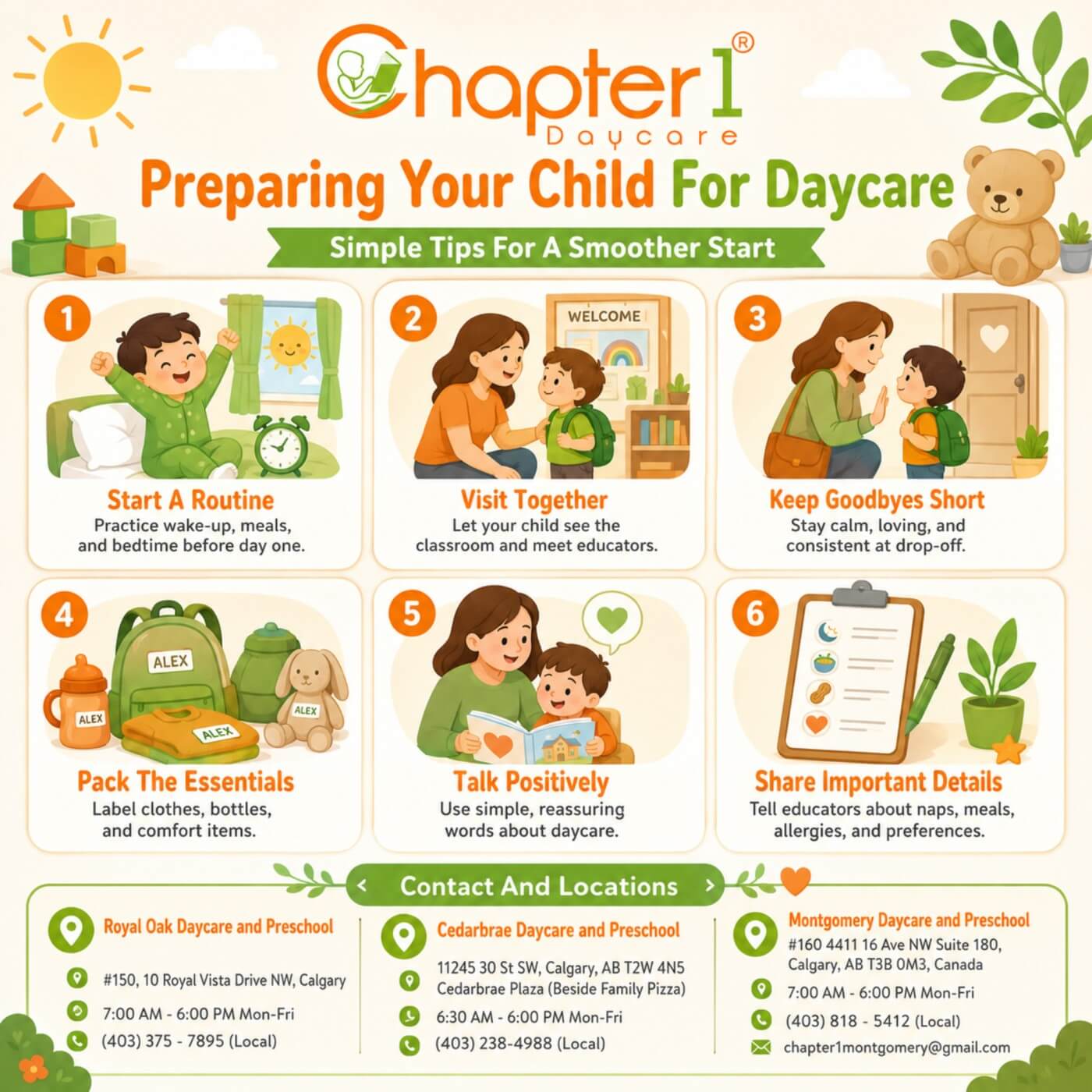
Try shifting your child’s wake-up time, mealtimes, naps, and bedtime closer to the daycare schedule. A predictable rhythm helps children feel secure, and it can reduce some of the stress that comes with early mornings and unfamiliar transitions.
This is also a good time to begin talking about daycare in a simple and positive way. Younger children do not need a long explanation. Short, warm phrases usually work best. You might say that they will play, eat, listen to stories, and spend time with caring teachers before coming home again. Keeping the message clear and reassuring helps the experience feel easier to understand.
Practice Short Separations
If your child is not used to being away from you, short separations can help build confidence before daycare begins. This does not need to be complicated. Leaving your child with a trusted grandparent, relative, or family friend for a brief period can help them learn an important lesson: you go, and you come back.
For toddlers and preschoolers, these small experiences can make daycare feel less overwhelming. For infants, the value is often more about helping parents feel comfortable with the separation process and learning how their child responds to another caregiver.
Keep these practice separations low-pressure. A calm goodbye and a calm return matter more than the length of time.
Make the New Environment Feel Familiar
Children often cope better when something feels known instead of completely new. If possible, visit the daycare centre before the official start date. Even one short visit can help your child begin to recognize the classroom, toys, entryway, and teachers.
You can also make daycare feel more familiar through conversation and play at home. Talk about what the day may look like. Pretend to pack a bag. Role-play saying goodbye and coming back later. Read books about starting daycare or preschool if your child enjoys stories.
These simple moments help take some of the mystery out of the experience. Children may not always show it right away, but familiarity often builds comfort.
Create a Calm Goodbye Routine
Drop-off is one of the biggest concerns for parents, and for good reason. A difficult goodbye can make the whole day feel heavy. But one of the most helpful things you can do is create a short, loving, repeatable goodbye routine.
This might be a hug, a kiss, a cheerful phrase, or a special wave at the door. The key is consistency. When children know what to expect, transitions often become easier over time.
It can be tempting to stay longer if your child is upset, but long goodbyes sometimes make separation harder. A calm, confident, and brief goodbye usually sends a stronger message that your child is safe and that you trust the environment.
That does not mean you need to ignore your child’s feelings. You can acknowledge them warmly while still keeping the routine steady. Children need comfort, but they also need the reassurance of your confidence.
Get the Practical Details Ready in Advance
Preparation is not only emotional. The practical side matters too. Packing ahead of time and organizing your child’s belongings can make the first days feel less rushed and more manageable.
Make sure essentials are ready, clearly labelled, and easy for staff to identify. Depending on your child’s age, that may include extra clothes, diapers, wipes, bottles, soothers, sleep items, indoor shoes, weather-appropriate outerwear, and any approved comfort item.
It also helps to share useful details with the daycare team before your child starts. Let them know about nap preferences, feeding routines, allergies, favourite calming methods, toileting progress, and anything else that helps them understand your child better. Strong communication between parents and educators creates trust and supports a more consistent experience for your child.
Prepare for the First Week, Not Just the First Day
Many parents focus all their energy on day one, but the first week is often the more important adjustment period. Even if the first drop-off goes better than expected, your child may still need time to settle into the rhythm of daycare.
Try to keep the rest of the week as calm as possible. Simpler evenings, earlier bedtimes, and lower expectations at home can help. Children are often mentally and physically tired as they adjust to new stimulation, new social interactions, and a more active routine.
You may also notice changes in appetite, clinginess after pick-up, or a stronger need for quiet time at home. These responses are common. Extra patience and connection at home can make a big difference.
Tips for Infants Starting Daycare
When an infant starts daycare, the focus is usually on comfort, routine, and communication. Babies may not understand the change in the same way older children do, but they still benefit from consistency and responsive care.
If your baby takes bottles, it helps to make sure that routine is already familiar before daycare begins. Share details about feeding times, sleep cues, soothing methods, and any sensitivities with the caregivers. If your baby uses a pacifier, sleep sack, or another approved comfort item, include that too if the centre allows it.
It is also helpful to remember that infant adjustment is not only about the baby. It is often emotional for parents as well. Give yourself grace during this stage. Trust tends to grow over time through communication, daily updates, and seeing your child settle in.
Tips for Toddlers Starting Daycare
Toddlers are often old enough to notice the change clearly, but not always old enough to express what they are feeling. That is why preparation should be simple, repetitive, and reassuring.
Talk about daycare often in short, positive ways. Mention the teachers, toys, songs, snacks, and activities. If your toddler has a favourite comfort item that is allowed, it may help during the transition. Practice routines at home, especially morning transitions and short separations.
Toddlers often respond well to confidence and consistency. Even if they cry at drop-off, they are learning through repetition that daycare is part of their normal routine and that you will always return.
Tips for Preschoolers Getting Ready for Daycare
Preschoolers usually benefit from feeling involved in the process. You can build excitement by letting them help choose their backpack, lunch bag, or extra clothes. Talk through what their day may include and give them small, realistic things to look forward to.
At this age, children may ask more questions or express worries in direct ways. Keep your answers honest and calm. Let them know who will care for them, what they will do, and when you will come back. The more secure they feel in the plan, the more confident they can become.
Preschool-aged children also benefit from daycare environments that support both play and early learning. A strong preschool program can help children grow in independence, routine, social confidence, and school-readiness skills while still feeling nurtured and supported.
Watch for Signs That Your Child Is Adjusting
Adjustment does not always happen in a straight line. Some children seem fine at first and struggle later. Others cry at the start and settle in beautifully after a short time. What matters most is the overall pattern over time.
Positive signs of adjustment may include becoming more familiar with the teachers, showing interest in activities, having easier drop-offs, returning to normal eating or napping, or talking about daycare in a relaxed way. Small progress still counts.
If the transition is taking longer, keep communicating with the educators. Parents and caregivers working together can often identify what is helping, what is triggering stress, and how to support a gentler settling-in process.
A Supportive Daycare Makes All the Difference
The transition into daycare feels easier when families feel supported by the centre itself. A nurturing environment, experienced educators, strong parent communication, and a predictable daily routine all play a major role in helping children settle in.
At Chapter1 Daycare, families are welcomed into a warm, community-focused environment where children are encouraged to learn, play, and grow at their own pace. From infants to pre-kindergarten children, the focus stays on creating a safe, caring space that supports both emotional comfort and early learning. For parents looking for flexible, reliable care, programs such as infant care, toddler care, preschool, and extended-hour options can make the transition into daycare feel more manageable and more aligned with real family needs.
Final Thoughts
Preparing your child for daycare is not about removing every tear or every uncertain moment. It is about building familiarity, creating routines, and helping your child feel secure as they enter a new chapter.
Start early where you can. Keep your approach calm and consistent. Focus on connection, not perfection. Over time, what feels unfamiliar today can become a place where your child feels safe, happy, and confident.
For many families, daycare begins with questions and emotions. But with the right preparation and the right support, it can also begin with trust, growth, and a strong new sense of independence.
FAQs
How do I prepare my child emotionally for daycare?
Start by talking about daycare in a calm and positive way. Practice short separations, visit the centre if possible, and create a simple goodbye routine your child can rely on.
How long does it take a child to adjust to daycare?
Every child is different. Some adjust within a few days, while others may take a few weeks. Consistency, reassurance, and strong communication with educators usually help the process.
What should I pack for my child’s first day of daycare?
Most children need labelled essentials such as extra clothes, diapers, wipes, bottles, comfort items, lunch or snacks if required, and weather-appropriate outdoor gear. Your daycare can provide a specific checklist.
What if my child cries at drop-off?
Crying at drop-off can be a normal part of the transition. Keep your goodbye brief, warm, and consistent. Many children settle shortly after the parent leaves and begin to adjust with time.
How can I prepare my baby for daycare?
Focus on bottle feeding if needed, sleep routines, and sharing detailed information with caregivers. Make sure comfort items and feeding supplies are ready and clearly labelled.
Is it normal for my child to be extra tired after starting daycare?
Yes, many children are more tired in the first days or weeks. Daycare brings new activity, stimulation, and social interaction, so earlier bedtimes and quieter evenings can help.