


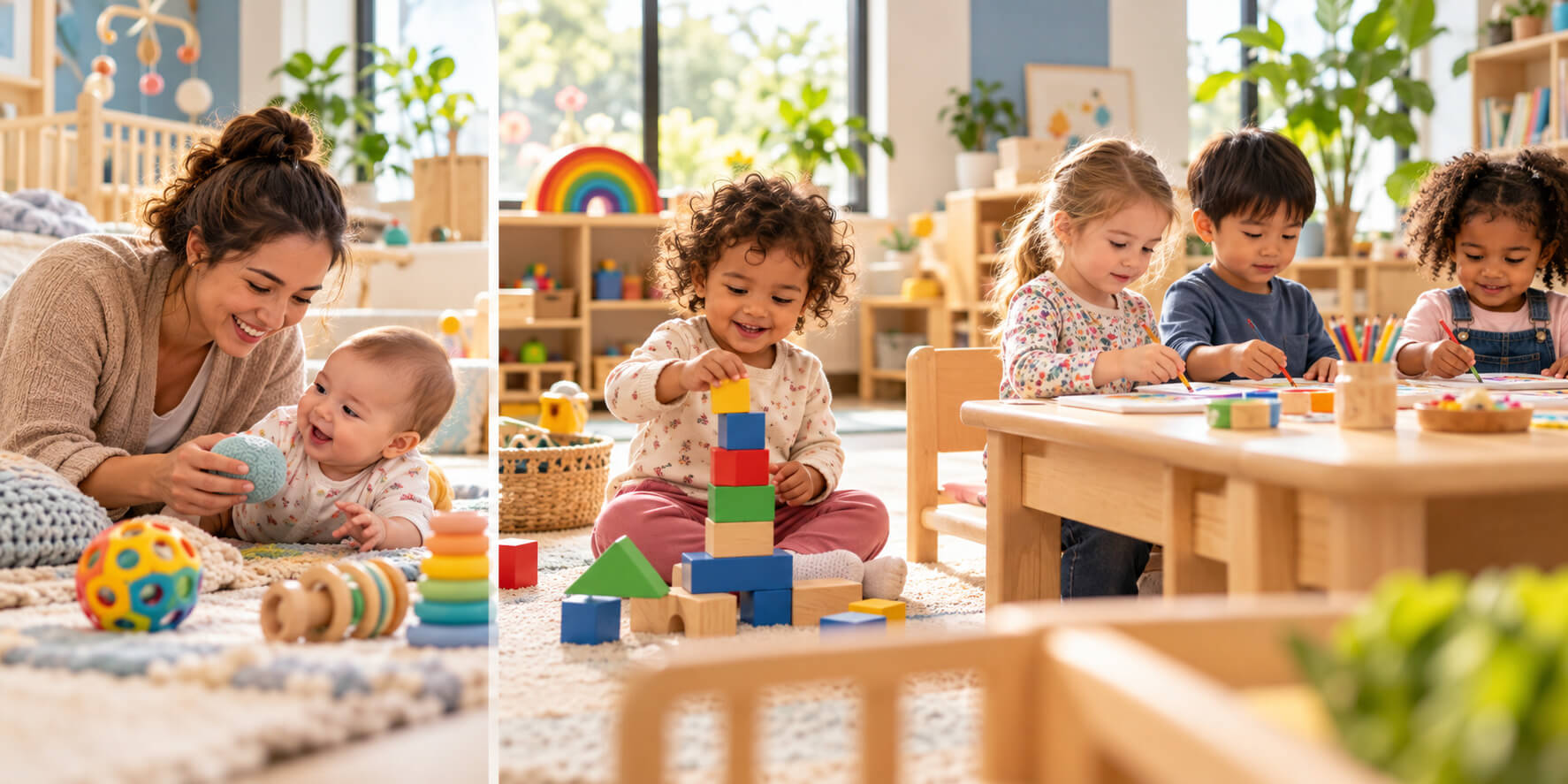
A predictable daycare schedule helps children know what comes next while giving educators enough flexibility to respond to individual needs. Meals, naps, play, outdoor time, learning, and transitions all work together to create a balanced day.
Infants need individualized care, toddlers benefit from a familiar rhythm, and preschoolers are ready for longer group activities. These sample schedules show what a typical day can look like for each age group.
What Does a Typical Daycare Schedule Look Like?
Most full-day daycare schedules include arrival, free play, meals or snacks, indoor and outdoor activities, lunch, rest, afternoon play, and pickup. The timing changes according to children’s ages and the program.
A typical daycare day may include:
- Arrival and free-choice play
- Meals and snacks
- Outdoor and active play
- Stories, songs, art, and sensory activities
- Nap or quiet rest
- Toileting, diapering, handwashing, and transitions
Children also practise communication, independence, coordination, and social skills during everyday routines and transitions.
Why Is a Consistent Daycare Routine Important?
Young children may not understand the clock, but they quickly recognize patterns. When meals, play, rest, and pickup follow a familiar rhythm, children know more about what to expect and get repeated opportunities to practise everyday skills.
Consistency should still leave room for weather, special activities, children’s interests, and individual needs. Parents can also explore Chapter1’s guidance on the importance of routine for toddlers when creating similar patterns at home.
Sample Infant Daycare Schedule
Infant daycare schedules need the greatest flexibility. Babies may need feeding, naps, diaper changes, comfort, and movement at different times depending on their individual rhythm.
A quality infant daycare program should use the daily schedule as a guide while responding to each baby’s hunger, sleep, comfort, and developmental cues.
Example Infant Daily Schedule
| Time | Example Activity |
|---|---|
| 7:00–8:00 AM | Arrival, check-in, gentle play |
| 8:00–9:00 AM | Bottle or breakfast |
| 9:00–9:30 AM | Songs, books, interaction |
| 9:30–10:00 AM | Diapering and care |
| 10:00–10:30 AM | Tummy time and movement |
| 10:30–11:30 AM | Nap as needed |
| 11:30 AM–12:00 PM | Bottle or lunch |
| 12:00–1:00 PM | Sensory and floor play |
| 1:00–1:30 PM | Diapering and transition |
| 1:30–3:00 PM | Afternoon nap |
| 3:00–3:30 PM | Bottle or snack |
| 3:30–4:30 PM | Outdoor time or stroller walk |
| 4:30–5:30 PM | Gentle play and pickup |
This is an example, not a timetable every infant should follow exactly. Responsive care is more important than keeping every baby on the same clock.
Sample Toddler Daycare Schedule
Toddlers usually begin moving toward a more predictable group routine. Their day often includes one longer rest period, regular meals and snacks, movement, stories, sensory experiences, and time to explore.
Chapter1’s toddler daycare program combines structured routines with play, social interaction, movement, and opportunities for growing independence.
Example Toddler Daily Schedule
| Time | Example Activity |
|---|---|
| 7:00–8:30 AM | Arrival and free-choice play |
| 8:30–9:00 AM | Morning snack |
| 9:00–9:30 AM | Circle time and stories |
| 9:30–10:30 AM | Outdoor active play |
| 10:30–11:00 AM | Toileting or diapering |
| 11:00–11:45 AM | Art or sensory play |
| 11:45 AM–12:30 PM | Lunch |
| 12:30–2:30 PM | Nap or quiet rest |
| 2:30–3:00 PM | Afternoon snack |
| 3:00–4:00 PM | Centres or group play |
| 4:00–5:30 PM | Free play and pickup |
A one-year-old may need more flexibility than an older two-year-old. As toddlers grow, they can usually handle longer group activities and more self-help skills.
Sample Preschool Daycare Schedule
Preschoolers are ready for longer periods of cooperative play, creative projects, early literacy and numeracy experiences, outdoor exploration, and independent choices. Play should still remain central to the day.
A balanced preschool schedule supports school readiness without making the environment feel like an elementary classroom.
Example Preschool Daily Schedule
| Time | Example Activity |
|---|---|
| 7:00–8:30 AM | Arrival and activity centres |
| 8:30–9:00 AM | Breakfast or snack |
| 9:00–9:30 AM | Morning meeting and stories |
| 9:30–10:15 AM | Learning centres |
| 10:15–11:15 AM | Outdoor and gross motor play |
| 11:15–11:45 AM | Language activities |
| 11:45 AM–12:30 PM | Lunch |
| 12:30–1:00 PM | Washroom and transition |
| 1:00–2:30 PM | Nap, rest, or quiet activities |
| 2:30–3:00 PM | Afternoon snack |
| 3:00–4:00 PM | Art, STEM, or dramatic play |
| 4:00–5:30 PM | Free play and pickup |
Not every preschooler will sleep during rest time. Books, puzzles, drawing, or another quiet activity may be suitable instead.
What Should a Good Daycare Schedule Include?
A good daycare schedule should give children opportunities to move, rest, connect, explore, eat, communicate, and make choices. It should include both active and quiet experiences without making every moment adult-directed.
Meals, toileting, handwashing, dressing, and clean-up matter too because they help children practise independence. Parents can explore Chapter1’s age-based childcare programs to see how activities and developmental goals change from infancy through preschool.
What If Your Child’s Home Schedule Is Different From Daycare?
It is normal for home and daycare routines to differ somewhat. A child may nap at a different time or sleep for a shorter period because the environment, activities, and stimulation are different.
Small differences are not automatically a problem. What matters is whether your child has appropriate opportunities to eat, rest, play, and settle into the routine.
Should You Follow the Daycare Schedule at Home?
You do not need to copy the daycare schedule minute by minute. Keeping major routines such as wake-up time, meals, naps, and bedtime reasonably consistent can make weekday transitions easier.
Before care begins, gradual changes can help. Chapter1’s guide to preparing your child for their first day of daycare offers practical ways to make the new routine feel more familiar.
Give Your Child Time to Adjust
Starting daycare means adapting to more than a timetable. Children are also meeting new educators and children, learning a new environment, and becoming comfortable with separation from parents.
Adjustment looks different for every child. Focus on gradual progress rather than expecting a perfect routine immediately. Parents can also read about how children adjust to daycare and signs that they are beginning to settle.
A Balanced Day at Chapter1 Daycare

At Chapter1 Daycare in Calgary, routines are designed around age-appropriate care, play, learning, movement, rest, and social experiences. Because infants, toddlers, preschoolers, and pre-kindergarten children have different needs, the rhythm of the day changes as children grow.
Our educators combine familiar routines with responsive care and engaging experiences, giving children structure while leaving room to explore. Families considering childcare in Calgary can explore Chapter1’s programs to see how daily experiences support confidence, independence, learning, and social development.
Creating a Routine That Helps Children Thrive
The best daycare schedule gives children a dependable rhythm while respecting their age, development, and individual needs. A balanced routine combines learning with play, activity with rest, and consistency with the flexibility young children need.
Frequently Asked Questions About Daycare Schedules
Parents often have questions about naps and age-specific routines. These answers cover some common concerns.
What Is a Typical Daycare Schedule?
A typical schedule includes arrival and play, meals or snacks, learning activities, outdoor play, lunch, rest, afternoon activities, and pickup. Exact times vary by age and program.
What Is a Good Daycare Schedule for a 1-Year-Old?
A one-year-old’s schedule should include meals or bottles as appropriate, sensory and active play, outdoor time, diapering, rest, and caregiver interaction. Younger children may still need individualized feeding and nap times.
What Is a Typical Daycare Schedule for a 2-Year-Old?
Many two-year-olds follow a predictable routine with morning play, snacks, outdoor time, lunch, one afternoon nap or rest period, and afternoon activities. Flexibility is still important.
What Is a Good Daycare Schedule for 3- and 4-Year-Olds?
Preschool schedules can include learning centres, stories, art, music, outdoor play, imaginative activities, meals, quiet rest, and cooperative play. A balance of guided experiences and free choice is ideal.
What If My Child Does Not Nap at Daycare?
Some children need time to become comfortable sleeping in a new environment, while older preschoolers may be moving away from naps. Ask how quiet rest is handled and what calm alternatives are available.