


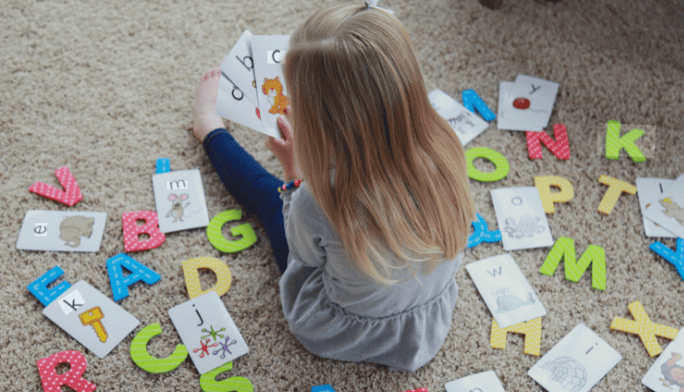
If you’ve ever wondered, “Should my child already know the alphabet?” or “When do kids start counting to 10?” you’re not alone. Letters and numbers are a big part of early learning, and it’s natural for parents to want to support their child’s development without missing something important.
Here’s the reassuring truth: children can start learning letters and numbers through play much earlier than most people think, but that doesn’t mean they need to master them early. In the early years, the goal is simple exposure, curiosity, and confidence not memorisation or pressure. Kids learn best when it feels like a game, not a test.
This guide will walk you through what’s normal at different ages, what “learning” actually looks like in real life, and easy ways to build letter and number skills into your day without worksheets or stress.
The big idea: Exposure first, mastery later
When parents ask how early children should start learning letters and numbers, they’re often picturing formal “lessons.” But young children don’t learn best through sit-down instruction. They learn through play, repetition, and everyday moments.
So what matters most in the early years?
-
Seeing letters and numbers often
-
Hearing them in songs and conversation
-
Connecting them to real-life meaning (your name, your age, “two shoes,” “three apples”)
-
Feeling confident and curious instead of pressured
Formal mastery like recognising all letters, matching letter sounds reliably, or counting higher numbers with accuracy usually becomes more important closer to kindergarten. Before that, playful exposure is plenty.
Letters and numbers: what counts as a skill
It helps to know that “learning” comes in layers. Some abilities look impressive but don’t always mean deep understanding yet and that’s okay.
The alphabet song vs. recognising letters
Many children learn to sing or recite the alphabet before they can actually recognise letters on a page. Singing the ABCs is a great start, but it’s more like a memorised song than a reading skill.
Letter recognition comes later and develops gradually often starting with a child’s name.
Counting to 10 vs. counting objects
A child might count to 10 early, but that doesn’t necessarily mean they understand quantity. Rote counting is like reciting a rhyme. True counting skill is when a child can point to objects one-by-one and count them accurately.
Both are valuable just different stages of learning.
The “name advantage”
One of the easiest, most natural ways children learn letters is through their own name. Your child’s name is meaningful. They see it on labels, artwork, shoes, backpacks, and cubbies. That repeated exposure makes name letters stick before other letters do.
Age-by-age guide: when kids start learning letters and numbers
Every child develops at their own pace, but these general patterns can help you know what’s typical and what to focus on.
18 months to 2 years: early exposure and playful “copying”
At this age, children are learning through imitation. They might “read” a book by babbling, point at letters on signs, or try to repeat parts of songs.
What learning often looks like:
They enjoy songs like the ABC song and counting songs
They may “count” by saying numbers in a mixed-up order
They notice symbols and point at letters in books
They can understand simple ideas like “one more” or “two hands”
If you have an 18-month-old who can count to 10, it’s not harmful it’s just usually rote memorisation. It’s still a positive sign that they’re tuned into language and patterns, but there’s no need to push for accuracy.
What to do at this age:
Sing songs, read picture books, and count real-life objects casually. Keep it light and joyful.
Age 2: first familiar letters and early number awareness
Two-year-olds often start showing stronger interest in “naming” things. They might ask, “What’s that?” about letters in a book or on packaging.
What learning often looks like:
They may recognize a few letters (especially the first letter of their name)
They might “count” to 5 or 10 like a song
They may start using number words correctly in context (two cookies, three cars)
They begin noticing shapes and patterns in books and toys
How high should a 2-year-old be able to count? There’s a wide range. Some can count to 10 by memory, others only count to 3, and both can be completely normal. Understanding matters more than the highest number.
What to focus on:
Keep using counting in daily routines and start pointing out name letters. There’s no need to teach the entire alphabet.
Age 3: stronger recognition and one-to-one counting starts to emerge
Three is often a big jump year. Many children become more interested in books, pretend play, and “doing what big kids do,” including letters and numbers.
Letters at age 3:
Many children recognise several letters, especially in their name
They begin noticing letters in the environment (stop signs, labels, cereal boxes)
They may start connecting letters to simple sounds, especially the first sound of familiar words
Numbers at age 3:
This is the age when one-to-one counting often begins to make more sense
They may start counting objects correctly up to small amounts (like 3–5)
They may understand “more” and “less” in simple ways
How many letters should a 3-year-old know? There isn’t one correct number. Some recognise only a few; others recognise many. What matters is steady exposure and interest, not speed.
What to do now:
Make letters and numbers visible and playful name puzzles, magnetic letters, counting games with snacks or toys. Avoid drills.
Age 4 to 5: building confidence and school readiness
By ages 4–5, many children are ready for more structured early-learning activities but it should still feel playful and positive.
Letters at age 4–5:
Many children recognize most letters
They often know letters in their name and can spot them in words
They begin learning letter sounds more consistently
They may start writing or tracing some letters
Numbers at age 4–5:
Many children can count to 10 consistently and start counting higher
They often understand counting objects with more accuracy
They may begin recognising written numbers and simple quantity concepts
When do kids learn to count to 20? Some will by 4, many by 5, and some closer to kindergarten. Again, a wide range is normal.
What to focus on:
Confidence matters more than perfection. Let them explore letters and numbers through games, books, and everyday routines.
What age should a child know the alphabet song?
Many kids learn the alphabet song around age 2–3 simply because it’s catchy and repeated often. But singing it doesn’t mean they can identify letters, and that’s perfectly okay.
If your child loves the song, enjoy it. If they’re not interested yet, don’t force it. They will learn it in time.
How to teach letters and numbers through play (no worksheets needed)
The best learning happens when it’s woven into your real day.
Use daily routines for counting
Count what already exists in their world:
Steps going upstairs
Blueberries on the plate
Shoes by the door
Blocks in a tower
Cars on the road
Keep it casual. The goal is familiarity and confidence.
Start with their name
Your child’s name is a natural doorway into letters.
Point to it on drawings
Use a name puzzle
Write it on a whiteboard and trace it with a finger
Highlight the first letter and find it in books or signs
Name letters are meaningful, so kids remember them faster.
Make letters part of play
Use magnetic letters on the fridge
Letter puzzles
Alphabet books with big, clear print
“Letter hunt” games (“Can you find an A?”)
For younger kids, even noticing letters is a win.
Introduce letter sounds gently (around 3–4)
Sounds are more important than memorizing the alphabet order for early reading readiness. But it should feel playful, not like drilling.
Try simple sound games:
“B says /b/ like ball!”
“Can you think of something that starts with /s/?”
Keep it short and fun. If your child loses interest, stop and try another day.
When to relax: normal variation vs. true concern
It’s normal for children to develop in bursts. They may be fascinated by letters for two weeks, then ignore them for a month. That’s typical.
If you’re worried, consider the whole picture:
Are they communicating in ways that make sense for their age?
Do they enjoy interacting, playing, and learning in general?
Are they progressing over time, even slowly?
If you have broader concerns like persistent difficulty with communication, frustration that seems intense, or delays across multiple areas it’s okay to talk with your pediatric provider or an early childhood professional. Most of the time, though, letter-and-number timelines vary widely and even out over time.
Chapter1 Daycare: play-based learning that supports real readiness
At Chapter1 Daycare in Calgary, we support early learning in a way that feels safe, playful, and confidence-building because school readiness is about more than memorising letters. In our Toddlers (19 months to 3 years old) rooms, children build early number sense through songs, movement, and hands-on play, while early print awareness often starts with name recognition and simple letter games.
Our Preschoolers (3 – 4.5 years old) continue that growth with more structured activities that introduce letter recognition, counting skills, and early learning routines without pressure. And in our Pre-Kindergarten Program, we focus on the full picture of readiness: language development, social-emotional skills, early literacy and numeracy, and the confidence children need to transition into kindergarten successfully.
If you’re currently weighing childcare options and what’s best for your family schedule and goals, choosing the right childcare solution can feel overwhelming, and the debate around Daycare VS Nanny depends on factors like cost, flexibility, and the level of personalised care your child requires.
A calm takeaway for parents
Children can start learning letters and numbers early through play often as young as 2 but there’s no need to rush mastery. The healthiest approach is consistent exposure, playful practice, and a focus on readiness skills that truly matter: language, confidence, curiosity, and routine.
FAQs: letters and numbers in early childhood
How many letters should a 2 year old know?
Some two-year-olds recognise a couple letters (often from their name), and others recognise none yet. Both can be normal. Focus on playful exposure rather than a target number.
How many letters should a 3 year old know?
Three-year-olds vary widely. Many recognise some letters, especially name letters, and start noticing letters in books and signs. Consistent exposure is more important than a specific number.
How many letters should a 4 year old know?
Many four-year-olds recognise a large portion of the alphabet, especially letters they see often. Some know most letters and are beginning to connect sounds, while others are still building recognition.
My 18 month old can count to 10—is that normal?
Yes. Many children can recite numbers like a song early. It usually reflects strong imitation and memory. Understanding quantity typically develops later.
How high should a 2 year old be able to count?
There’s no set number. Some can recite to 10; others count to 3 or 5. What matters is whether counting is showing up naturally in play and routines.
When do kids start counting to 10?
Many begin rote counting to 10 around ages 2–3. Counting objects accurately (one-to-one counting) often strengthens around age 3 and beyond.
When do kids learn to count to 20?
Some children start counting to 20 around ages 4–5, while others do it closer to kindergarten. It’s a common progression, not a strict milestone.
What age should a child know the alphabet song?
Many children learn the alphabet song around age 2–3, but it varies. Singing it is a great exposure tool, not a measure of letter recognition.
When should I start teaching letter sounds?
Around ages 3–4, you can gently introduce sounds through play. Keep it light, short, and connected to real words your child cares about.
What if my child isn’t interested in letters or numbers?
That’s common. Keep exposure low-pressure: read together, sing songs, count daily objects, and point out name letters. Interest often comes in waves.