


Choosing a preschool is one of the biggest early decisions parents make. For many families, one question comes up again and again: should preschool be focused on play, or should it feel more academic from the start?
It is an understandable concern. Parents want their children to be happy, confident, and ready for kindergarten, but they also do not want them to fall behind. When one preschool talks about play-based learning and another highlights letters, numbers, and structured lessons, it can feel difficult to know which path is better.
The good news is that this does not have to be a confusing choice. For most preschoolers, play-based learning is one of the most effective ways to support healthy development. It gives children the space to explore, imagine, move, communicate, and build important early skills in a way that feels natural and engaging.
That does not mean academics do not matter. Preschoolers absolutely benefit from early exposure to literacy, math, routines, and school readiness skills. The difference is how those skills are introduced. Young children tend to learn best when early academics are woven into meaningful, hands-on experiences instead of pushed through pressure or repetition alone.
What Is Play-Based Learning?
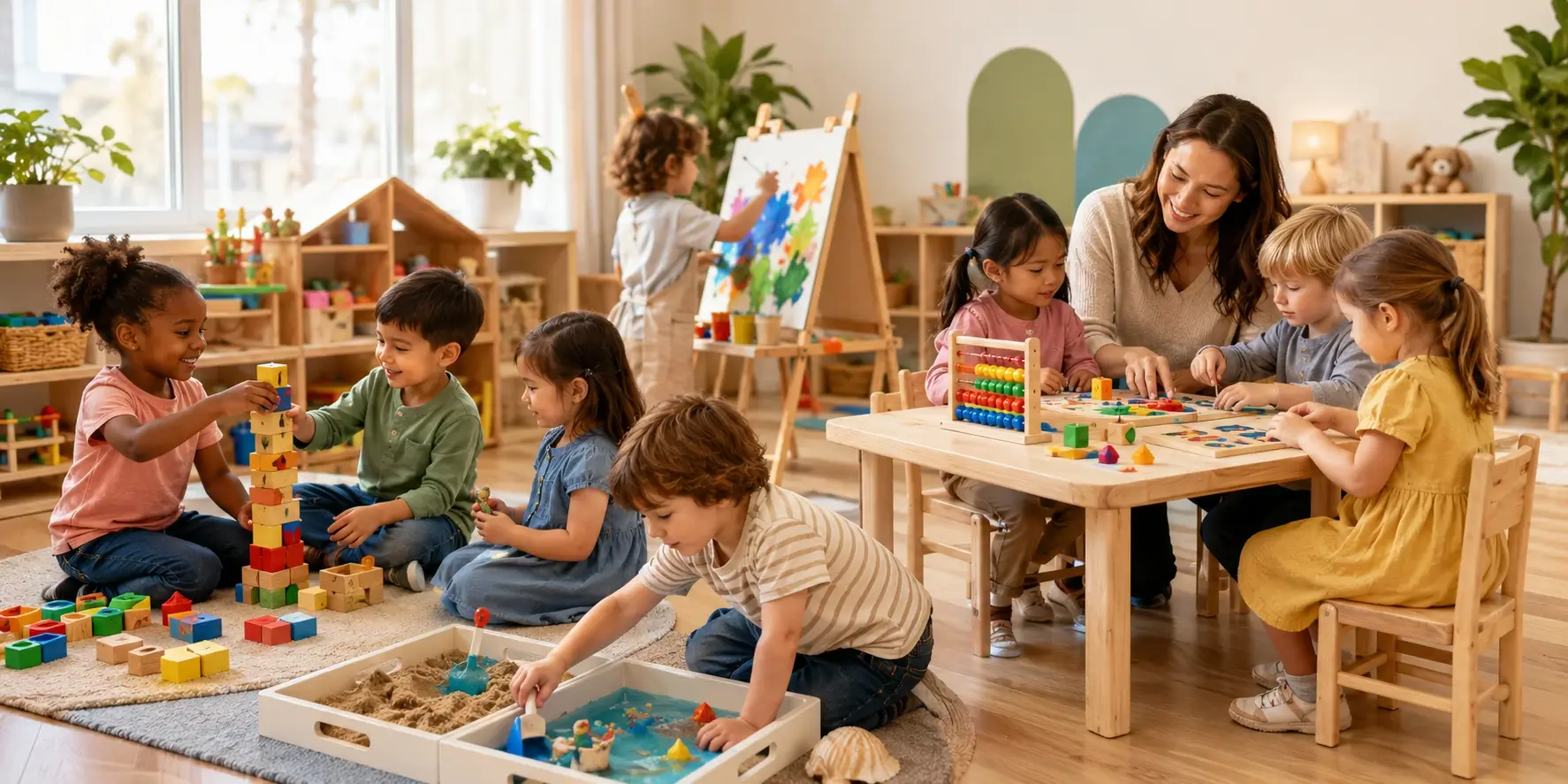
Play-based learning is an approach where play becomes the foundation for growth and discovery. Instead of sitting at desks for long periods or relying heavily on worksheets, children learn through exploration, conversation, movement, creativity, and guided activities.
In a play-based classroom, a child might learn counting while building with blocks, practice early writing while making pretend grocery lists, or develop language skills through storytelling and dramatic play. These experiences may look simple on the surface, but they are full of meaningful learning.
Play-based learning is not the same as unstructured free time all day. Skilled educators carefully design the environment, introduce materials, ask thoughtful questions, and guide children toward important developmental goals. The result is a classroom where learning feels joyful, active, and age-appropriate.
What Is Academic Learning In Preschool?
Academic preschool programs usually place a stronger focus on direct instruction and measurable outcomes. These classrooms may include more teacher-led lessons, more repetition, and a stronger emphasis on early reading, writing, handwriting, number recognition, and structured group tasks.
Some parents are drawn to this model because it feels clear and reassuring. When families hear about alphabet practice, sight words, or structured math activities, it can sound like a faster route to kindergarten readiness. It may also feel closer to what they imagine school should look like.
There is nothing wrong with structure or intentional teaching. The concern appears when preschool becomes too focused on performance, seatwork, or expectations that do not match how young children naturally learn. At this age, development is about much more than memorizing facts.
Why Play Matters So Much In The Preschool Years
Preschoolers are in a stage of rapid growth. They are learning how to express feelings, solve problems, share space, communicate with others, and make sense of the world around them. Play gives them the chance to practice all of that in real time.
When children engage in pretend play, they make decisions, negotiate roles, take turns, and use language creatively. When they build towers, sort objects, or explore sensory materials, they develop concentration, coordination, and early problem-solving skills. These are not side benefits. They are part of the core foundation for future learning.
Play also helps children stay curious. Instead of feeling pressured to produce the right answer every time, they are encouraged to ask questions, test ideas, and learn through experience. That mindset can support confidence and a genuine love of learning as they grow.
Play-Based Learning Builds More Than Academic Skills
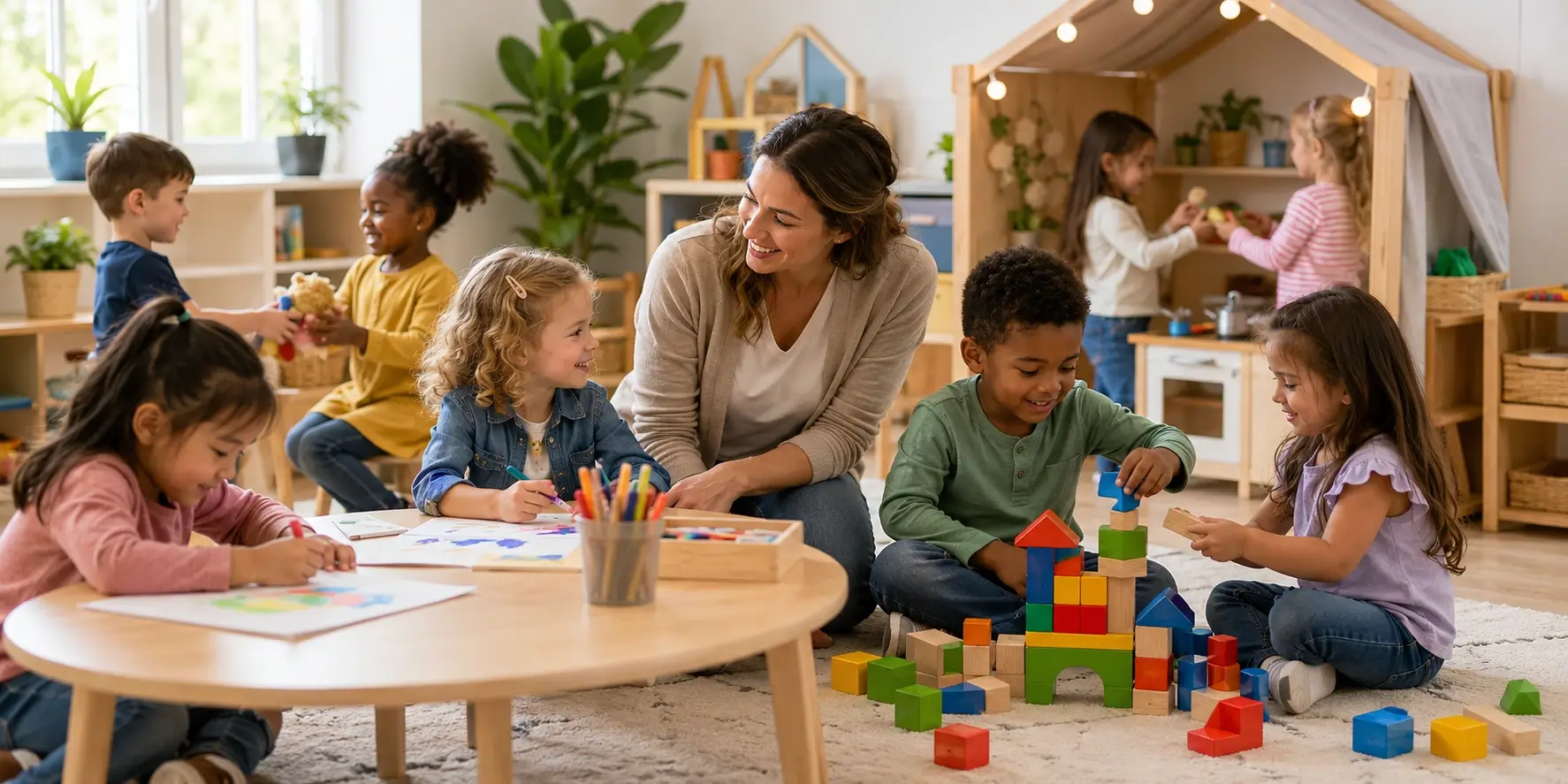
One of the strongest benefits of play-based preschool is that it supports the whole child. Rather than focusing only on letters and numbers, it strengthens the skills children need in every area of life.
These include:
- communication and vocabulary
- social skills and cooperation
- emotional regulation
- confidence and independence
- creativity and imagination
- early literacy and numeracy
- attention, memory, and problem-solving
These skills matter deeply in kindergarten and beyond. A child who can listen, adapt, manage emotions, follow routines, and interact positively with others often has a stronger overall school experience than a child who only enters with early worksheet practice.
Can Children Still Learn Academics Through Play?
Yes, absolutely. In fact, this is one of the biggest misunderstandings about play-based preschool. Some families hear the word “play” and worry that children are simply passing time. In reality, strong play-based programs teach early academic concepts throughout the day in ways that make sense for young learners.
How Literacy Develops Through Play
Children begin building literacy long before formal reading lessons. They develop language through songs, conversations, books, rhymes, storytelling, and pretend play. They begin to recognize print when they see labels, signs, name cards, and classroom materials used in meaningful ways.
A child playing restaurant may write down an order with pretend scribbles or letter-like marks. Another child may listen to a story and retell parts of it using their own words. These moments support vocabulary, comprehension, sequencing, and print awareness in a way that feels natural and memorable.
How Math Develops Through Play
Early math also grows beautifully through play. Preschoolers compare sizes, count objects, notice patterns, sort by color or shape, and explore measurement while building, pouring, stacking, and organizing materials.
When a child says one tower is taller than another, shares toy plates between friends, or counts steps while climbing outdoors, math is already happening. These hands-on experiences help children understand concepts, not just repeat them.
This is one reason play-based learning can be so powerful. It connects skills to real experiences instead of separating them into abstract drills that may not yet feel meaningful to young children.
Why Too Much Pressure Can Backfire
It is easy to assume that earlier academics automatically lead to better results later. But preschoolers are still developing attention spans, emotional regulation, fine motor control, and social confidence. When learning feels too rigid or demanding too soon, it can create frustration instead of growth.
Children may begin to associate learning with pressure rather than curiosity. They may focus on getting the answer right rather than exploring, asking questions, or trying again. For some children, that can reduce confidence and take some of the joy out of the preschool experience.
A preschool classroom should feel safe, engaging, and supportive. Young children learn best when they are actively involved, emotionally secure, and encouraged to discover rather than constantly perform.
Does Play-Based Preschool Prepare Children For Kindergarten?
This is often the biggest question parents ask, and the answer is yes. A strong play-based preschool can absolutely prepare children for kindergarten in meaningful and lasting ways.
Kindergarten readiness is about more than knowing the alphabet or counting to a certain number. It also includes social development, emotional readiness, independence, communication, and the ability to follow routines. These are all areas where play-based programs can shine.
Children who learn through play often enter school with stronger confidence, curiosity, and self-regulation. They are more likely to know how to participate in group settings, solve simple problems, express needs, and adapt to transitions. Those skills support learning in every subject area.
What The Best Preschool Programs Usually Do
The strongest preschool environments do not force parents to choose between play and learning. Instead, they create a thoughtful balance. Children get the freedom to explore while also receiving guidance, routine, and intentional support from experienced educators.
That might look like a classroom where children enjoy dramatic play, art, sensory stations, and outdoor discovery, while teachers also introduce early literacy, number concepts, fine motor practice, and structured group moments throughout the day.
This balanced approach respects childhood while still supporting school readiness. It understands that preschoolers need movement, imagination, connection, and hands-on learning just as much as they need exposure to early academic concepts.
What Parents Should Look For During A Preschool Tour
When visiting a preschool, it helps to look beyond the words used on the website. A school may call itself academic or play-based, but the real question is what learning looks like in the classroom every day.
Signs Of A Healthy Play-Based Environment
You may notice children actively engaged in different areas of the room, choosing materials, interacting with one another, and moving between activities with support from teachers. You may hear open-ended questions, rich conversation, and encouraging guidance instead of constant correction.
The space may include books, sensory materials, dramatic play areas, art supplies, blocks, and hands-on learning tools. There should also be clear routines, thoughtful supervision, and a calm structure that helps children feel safe and supported.
Questions Worth Asking
When touring a preschool, families may want to ask:
- How do teachers guide learning during play?
- How do you support kindergarten readiness?
- What does a typical day look like?
- How do you help children build social and emotional skills?
- How much outdoor play and movement do children get?
- How do you communicate progress with parents?
These questions often reveal far more than a simple label ever could.
Which Works Best For Most Preschoolers?
For most preschoolers, play-based learning works best because it supports both school readiness and healthy child development in a natural, engaging way. It helps children build confidence, curiosity, social skills, and early academic foundations without too much pressure too soon.
For Calgary families, the best preschool is one that blends play, routine, and caring guidance. At Chapter1 Daycare, children learn in a safe, nurturing environment designed to support confidence, curiosity, and kindergarten readiness.
Final Thoughts
The preschool years are not a race. They are the beginning of a child’s learning story, and that beginning should feel secure, meaningful, and full of discovery. When children are given the chance to learn through play, they are not missing out on important skills. They are building them in the way young minds often need most.
If you are comparing preschools, it can help to shift the question slightly. Instead of asking whether a program is playful or academic, ask whether it helps children learn in a way that is engaging, age-appropriate, and emotionally supportive.
For most preschoolers, that is exactly where play-based learning stands out. It does not ignore school readiness. It builds the deeper foundation beneath it, helping children grow into capable, curious, and confident learners.
Frequently Asked Questions
Is Play-Based Learning Better Than Academic Learning For Preschoolers?
For most preschoolers, yes. Play-based learning tends to support stronger social, emotional, cognitive, and early academic development because it matches how young children naturally learn.
Does Play-Based Preschool Prepare Children For Kindergarten?
Yes. A strong play-based preschool helps children build important kindergarten readiness skills, including communication, self-regulation, independence, early literacy, and early math understanding.
Can Preschoolers Learn Reading And Math Through Play?
Yes. Children can begin developing literacy and math skills through books, songs, counting games, building activities, pretend play, sorting, patterns, and teacher-guided exploration.
Is Structure Still Important In Preschool?
Yes. Preschoolers benefit from clear routines, teacher guidance, and intentional activities. The goal is not to remove structure, but to make learning age-appropriate and engaging.
What Is The Main Difference Between Play-Based And Academic Preschool?
Play-based preschool uses exploration, creativity, and guided activities as the main path to learning. Academic preschool usually relies more on direct instruction, repetition, and structured lessons.