


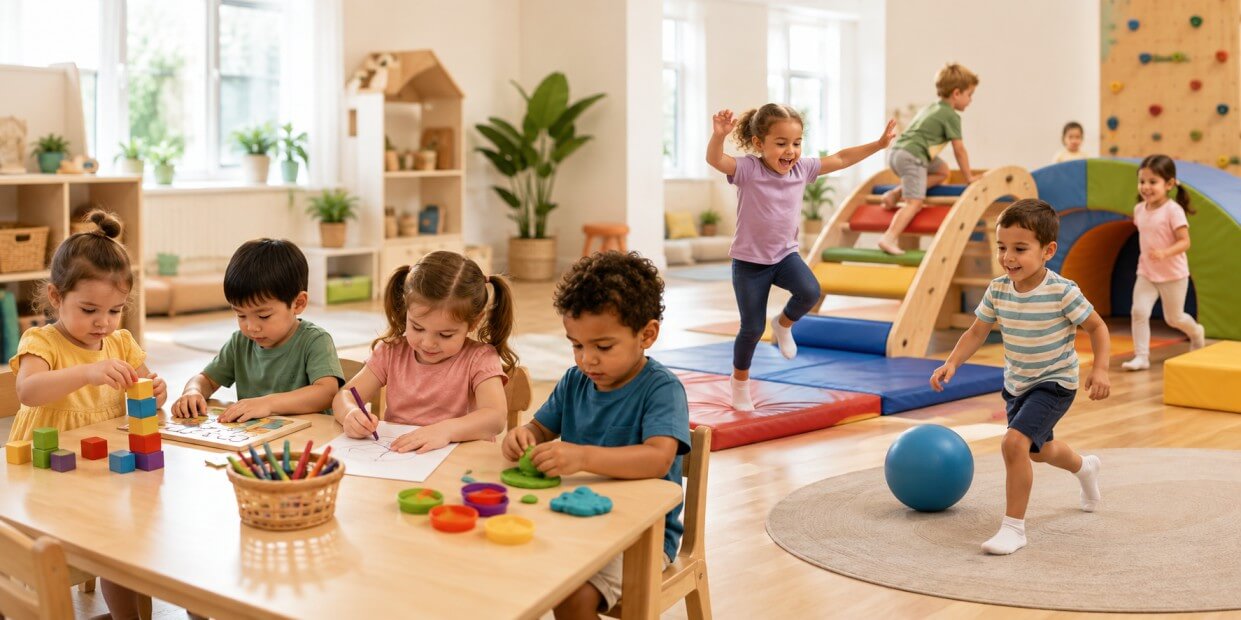
A child may use gross motor skills to climb onto a chair, then use fine motor skills to hold a spoon and eat independently. Both actions involve movement, but they depend on different muscle groups and different levels of control.
Fine and gross motor skills are essential parts of early childhood development. They help children explore their surroundings, participate in play, care for themselves, and prepare for future classroom activities. Although these skills are often discussed separately, they develop together and support nearly everything a young child does.
What Are Motor Skills?
Motor skills are the coordinated movements children use to interact with people, objects, and their environment. These abilities begin developing in infancy and continue becoming stronger and more refined throughout childhood.
Motor development is generally divided into two categories. Fine motor skills involve small, controlled movements, while gross motor skills involve larger movements of the body. Children need both to become active, confident, and increasingly independent.
What Are Fine Motor Skills?
Fine motor skills involve the smaller muscles in the hands, fingers, and wrists. These movements usually require precision, control, finger strength, and hand-eye coordination.
Young children use fine motor skills during many everyday tasks. Picking up a small toy, turning a book page, using a spoon, stacking blocks, and holding a crayon all depend on controlled hand and finger movements.
Fine motor abilities become more refined through repeated hands-on experiences. Children are not born knowing how to fasten a button or control a pencil. They gradually build the strength and coordination required through play, creative activities, and daily routines.
Common Examples of Fine Motor Skills
Fine motor development can be seen in activities such as:
- Grasping and transferring objects
- Stacking blocks
- Completing simple puzzles
- Turning book pages
- Pinching and rolling playdough
- Holding crayons and paintbrushes
- Using spoons, forks, and cups
- Cutting with child-safe scissors
- Fastening buttons and zippers
Activities like drawing and colouring are especially valuable because they combine grip strength, visual attention, and controlled movement. The many benefits of colouring for children include stronger hand control, better concentration, and greater confidence with creative tasks.
Why Fine Motor Skills Matter
Fine motor skills help children become more independent. They use them when eating, dressing, washing their hands, opening containers, tidying materials, and completing classroom activities.
These abilities also support school readiness. Before a child can comfortably write letters, they need hand strength, finger control, shoulder stability, and coordination. Building with blocks, manipulating playdough, painting, and completing puzzles all create a foundation for later pencil control.
What Are Gross Motor Skills?
Gross motor skills involve the larger muscles in the arms, legs, shoulders, back, and torso. They allow children to control their posture, move through space, maintain balance, and participate in energetic physical activities.
Crawling, walking, running, jumping, climbing, throwing, and kicking are all examples of gross motor movement. These skills help children develop strength, endurance, coordination, and body awareness.
Gross motor development often becomes noticeable before more precise fine motor control. Babies usually learn to hold up their heads, roll, sit, and crawl before they can perform detailed hand movements. However, both types of skills begin developing early and continue improving together.
Common Examples of Gross Motor Skills
Gross motor development includes abilities such as:
- Sitting without support
- Crawling and standing
- Walking and running
- Jumping with both feet
- Climbing playground equipment
- Kicking a ball
- Throwing and catching
- Dancing to music
- Balancing on one foot
- Riding a tricycle
Children strengthen these abilities through regular active play. A thoughtful daycare curriculum for physical development includes both guided movement and opportunities for children to run, climb, explore, and create their own physical challenges.
Why Gross Motor Skills Matter
Gross motor skills allow children to participate fully in daily life. A child needs them to walk across a room, sit upright during a meal, play outdoors, climb stairs, and keep up with peers.
Large-body movement also supports confidence. As children learn to balance, jump, catch, and climb, they become more comfortable using their bodies and trying new challenges. These experiences support physical health while also encouraging persistence and independence.
Fine and Gross Motor Skills: Key Differences
The main difference between fine and gross motor skills is the size of the muscles and movements involved.
| Comparison Point | Fine Motor Skills | Gross Motor Skills |
|---|---|---|
| Muscles used | Hands, fingers, and wrists | Arms, legs, torso, and back |
| Type of movement | Small, precise, and controlled | Large, powerful, and whole-body |
| Main abilities | Grip, dexterity, and accuracy | Strength, balance, and coordination |
| Common examples | Drawing, buttoning, and grasping | Running, jumping, and climbing |
| Space required | Usually a small activity area | Often benefits from open space |
| Everyday purpose | Eating, dressing, and classroom tasks | Mobility, posture, and active play |
| Development pattern | Becomes more precise over time | Major foundations often emerge earlier |
Neither category is more important than the other. Children use both throughout the day, and strength in one area can support development in the other.
How Fine and Gross Motor Skills Work Together
Fine and gross motor skills are closely connected. Many activities that look like fine motor tasks depend on larger muscles providing stability and control.
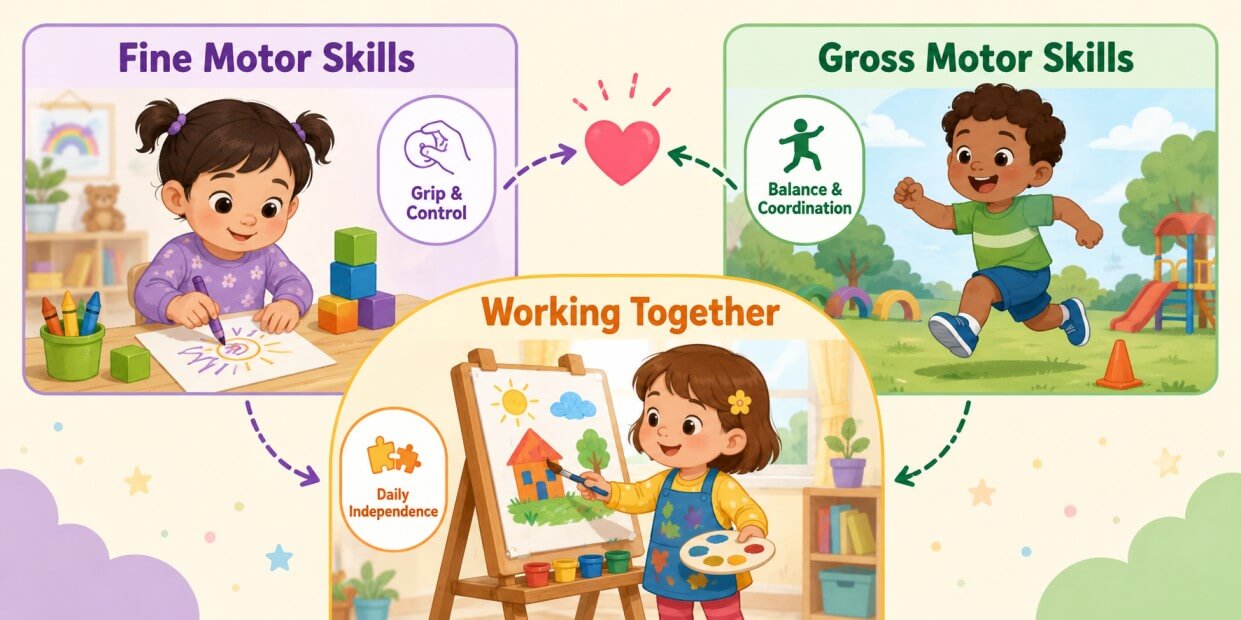
For example, a child needs core strength and steady posture to sit comfortably while drawing. Shoulder stability helps the hand control a crayon, while balance allows a child to stand at an easel and paint. Catching a ball requires large arm movements, but it also depends on the hands closing around the ball at the right moment.
Getting dressed is another good example. A child uses gross motor skills to balance and move their arms and legs into clothing. Fine motor control is then needed to pull a zipper, fasten a button, or secure a shoe.
This connection is why play-based learning supports early development so effectively. Play allows children to combine movement, thinking, coordination, and problem-solving rather than practising each ability in isolation.
How Motor Skills Develop by Age
Children develop at different rates, so age ranges should be treated as general guidance rather than strict deadlines. Opportunities, interests, temperament, and individual development can all influence when a skill appears.
Infants
Infants begin developing gross motor control through lifting their heads, rolling, sitting, crawling, and pulling themselves upright. Their fine motor development includes reaching, grasping, transferring toys between hands, and picking up smaller objects.
A nurturing infant care program can support these early abilities with safe floor time, sensory experiences, age-appropriate toys, and caring adult interaction.
Toddlers
Toddlers make rapid progress in both areas. They become more confident walking, running, climbing, kicking, and navigating simple obstacles. At the same time, they begin stacking blocks, scribbling, using utensils, turning pages, and manipulating toys with greater control.
A well-designed toddler program gives children regular opportunities to move, build, create, and practise everyday independence without unnecessary pressure.
Preschool and Pre-Kindergarten Children
Preschoolers often become more coordinated in running, hopping, balancing, throwing, catching, and pedalling. Fine motor skills also become more precise through drawing, cutting, completing puzzles, threading, fastening clothing, and using classroom materials.
These abilities contribute to school readiness, but readiness involves more than holding a pencil. A strong preschool curriculum also supports communication, confidence, emotional growth, social skills, and independence.
How Play Builds Both Types of Motor Skills
Young children do not usually need formal lessons to build motor skills. They need safe, varied, and enjoyable opportunities to practise movements repeatedly.
Fine motor activities may include playdough, puzzles, painting, sorting, threading, building with blocks, scooping sensory materials, and tearing or folding paper. Gross motor activities may include obstacle courses, dancing, climbing, outdoor exploration, ball games, jumping, and action songs.
Some experiences build both types at once. Gardening requires digging, carrying, grasping, and pouring. Water play involves reaching, lifting, squeezing, and controlling small containers. Large-block construction combines whole-body movement with careful placement and problem-solving.
A balance of structured and unstructured play gives children guided practice while preserving the freedom to explore, make choices, and create their own challenges.
How Daycare Supports Motor Development
A quality daycare environment gives children access to age-appropriate materials, safe indoor and outdoor spaces, creative experiences, and regular active play. Educators can adapt activities so children are challenged without feeling pressured or discouraged.
Daily routines also provide valuable practice. Children strengthen hand control while using utensils, washing their hands, opening containers, and putting away toys. They build balance and coordination while moving between activity areas, carrying materials, and participating in outdoor play.
Chapter1 Daycare supports physical development through hands-on experiences that encourage children to move, create, explore, and become more independent. Caring educators combine sensory play, outdoor activities, crafts, music, movement, and developmentally appropriate materials to help infants, toddlers, preschoolers, and pre-kindergarten children strengthen both fine and gross motor abilities in a safe, nurturing environment.
When Should Parents Seek Guidance?
Every child follows an individual developmental path. Some children may become confident runners before showing interest in drawing, while others may enjoy detailed hand activities but approach climbing more cautiously.
Parents may consider speaking with a healthcare professional when a child consistently struggles with movements expected for their age, loses an ability they previously had, avoids using one side of the body, or has difficulty participating in everyday activities.
Communication with childcare educators can also be helpful. Educators observe children across many routines and activities and may provide useful information about the child’s comfort, strengths, and progress in a group environment.
Helping Children Develop Without Pressure
Motor development grows through encouragement, repetition, and positive experiences. Children benefit when adults offer safe challenges, allow time for practice, and recognise effort rather than expecting perfect performance.
Comparing one child with another can create unnecessary worry. A more helpful approach is to notice gradual progress. A block tower that becomes taller, a jump that becomes steadier, or a zipper that requires less help are all meaningful signs of growth.
The goal is not to rush children through a checklist. It is to help them feel capable, curious, active, and confident as they learn to use their bodies in increasingly complex ways.
Frequently Asked Questions
What are the key differences between fine and gross motor skills?
Fine motor skills involve small, precise movements using the hands, fingers, and wrists. Gross motor skills involve larger muscles and whole-body movements such as running, climbing, jumping, and throwing.
What are five examples of fine motor skills?
Five examples are holding a crayon, stacking blocks, using utensils, turning book pages, and fastening buttons.
What are five examples of gross motor skills?
Five examples are walking, running, jumping, climbing, and throwing a ball.
Do gross motor skills develop before fine motor skills?
Many major gross motor foundations appear earlier, but both types begin developing during infancy and continue becoming stronger and more coordinated throughout childhood.
How do gross motor skills support fine motor development?
Core strength, shoulder stability, posture, balance, and body control provide the stable foundation children need to make precise movements with their hands and fingers.
How can daycare help children develop motor skills?
Daycare provides regular opportunities for outdoor movement, sensory exploration, crafts, building, drawing, music, active games, and everyday self-care routines in a safe and supportive environment.
Are developmental norms the same for every child?
No. Developmental norms describe common patterns across groups of children, but individual children may reach particular abilities at different times.