


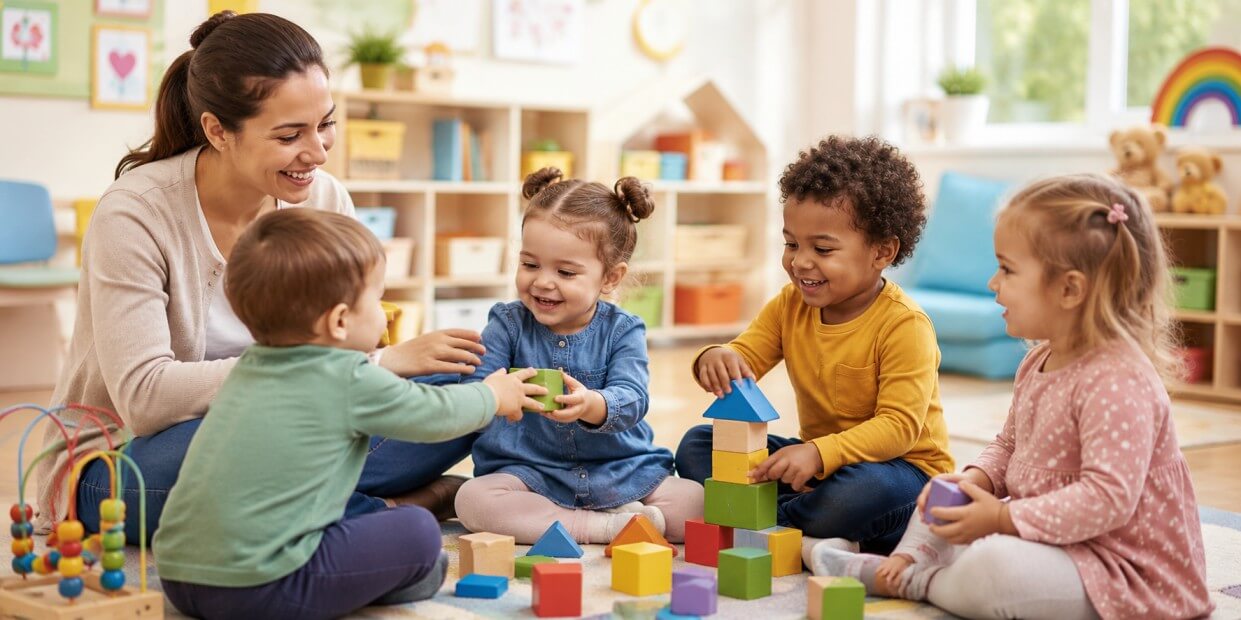
Many parents wonder whether daycare really helps toddlers socialize, or whether children this young are still too little for group learning. It is a fair question. Toddlerhood is a big stage of growth, and social development does not happen all at once.
The good news is that quality daycare gives toddlers something they cannot get from occasional playdates alone. It gives them steady, guided practice with other children and caring adults in a safe, predictable setting. Over time, those everyday moments help build confidence, communication, empathy, and early friendship skills.
Why Social Skills Matter So Much in the Toddler Years
Toddlers are just beginning to understand that other children have feelings, preferences, and ideas of their own. They are learning how to be part of a group while still figuring out their own emotions and needs.
That is why social development during these early years matters so much. The ability to wait, listen, express feelings, take turns, and join group activities becomes the foundation for preschool, kindergarten, and daily life. These are not just “nice to have” skills. They shape how children connect, learn, and feel in shared spaces.
How Daycare Creates Daily Opportunities for Social Growth
A strong daycare environment does not force social skills. It creates a rhythm where toddlers can practice them naturally through play, routine, and gentle support.
This is one reason many families look for a toddler program that supports confidence, communication, and early independence instead of choosing care based on supervision alone. Toddlers learn best when social growth is built into the day.
Consistent Peer Interaction Builds Familiarity
One of the biggest benefits of daycare is consistency. When toddlers see the same children regularly, they begin to feel more comfortable in group settings. Familiar faces help them relax, observe, and slowly join in.
That repeated exposure matters. A toddler who first watches from the side may later sit beside a friend, then copy a game, then begin speaking or sharing during play. Social confidence often grows step by step, not all at once.
Guided Play Teaches Sharing and Turn-Taking
Sharing is one of the first social skills parents hope to see, but it is also one of the hardest for toddlers to master. At this age, children are still learning self-control, patience, and how to cope with frustration.
Daycare helps by turning these lessons into everyday practice. During art, blocks, music, snack time, and simple games, children learn that they can wait, try again, and still feel secure. In a play-based daycare setting, these lessons feel natural rather than forced.
Educators Help Children Through Small Conflicts
Toddlers do not always have the words to explain what they want. That is why conflicts over toys, space, and turns are so common. These moments can look messy from the outside, but they are actually important learning opportunities.
When educators respond calmly, they help toddlers slow down, name feelings, and try better ways to respond. Children begin to learn that problems can be solved with words, support, and practice. That is how early conflict resolution starts.
The Social Skills Toddlers Learn in Daycare
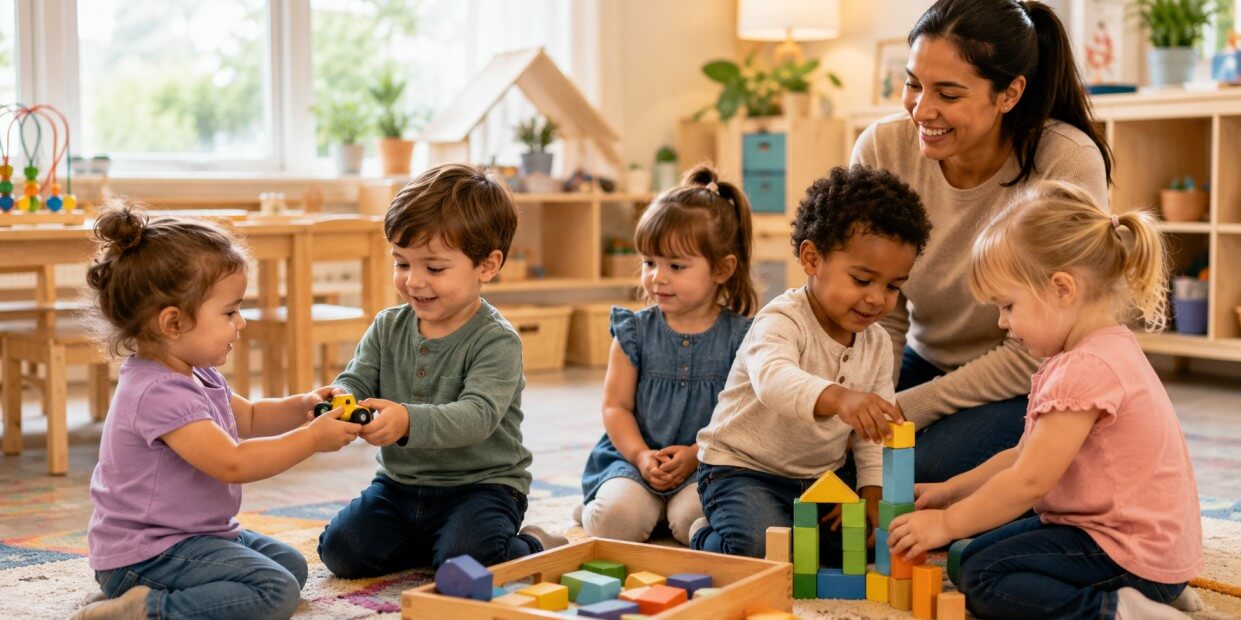
Social development in daycare is not one big lesson. It happens through many small experiences across the day.
The skills below are often the ones parents begin to notice first, especially when children are in a nurturing environment with age-appropriate expectations.
Communication Skills
Toddlers are constantly learning how to express themselves. In daycare, they hear new words, watch how others communicate, and practice asking for help, making requests, and responding to simple instructions.
Even children with limited vocabulary begin to grow socially through gestures, short phrases, eye contact, and repetition. Over time, they become more confident about using language to connect instead of relying only on crying, grabbing, or frustration.
Cooperation and Group Participation
Group care introduces toddlers to the idea that not everything happens one child at a time. They begin learning how to sit together during circle time, clean up with others, join songs, and take part in simple routines as a class.
This early cooperation matters because it teaches children how to function in shared spaces. They start to understand boundaries, shared expectations, and the idea that being part of a group can feel safe and enjoyable.
Empathy and Emotional Awareness
Empathy starts small in the toddler years. A child may notice that another child is crying. They may pause when a friend looks upset. They may begin to understand that their actions affect others.
A caring daycare environment helps build this awareness. Educators name feelings, model gentle behavior, and help toddlers notice emotions in themselves and in the people around them. These early lessons shape emotional intelligence long before children can explain it clearly.
Friendship Skills
Toddler friendships may not look like older friendships, but they are still real and meaningful. Children often start by gravitating toward familiar peers, sitting beside the same child, or laughing together during favorite activities.
These early connections help toddlers feel included. They begin learning what it means to enjoy another child’s company, respond to social cues, and build comfort through shared routines and play.
Why Routine Supports Social Confidence
Social growth is easier when children feel secure. Toddlers do better in group settings when they know what to expect and when the day follows a familiar rhythm.
That is why a predictable routine matters so much. When children know when snack time, play time, outdoor time, and rest time happen, they spend less energy worrying about transitions and more energy learning how to join in with confidence. The importance of routine for toddlers is closely connected to how calm, cooperative, and socially ready they feel.
Feeling Safe Enough to Participate
Some toddlers are naturally eager to jump into group activities. Others need more time to observe before they feel ready. A consistent routine helps both kinds of children.
When the environment feels predictable, toddlers are more likely to try new activities, approach educators, and stay regulated during social moments. That emotional safety supports everything from communication to cooperation.
Independence Grows Alongside Social Skills
Daycare also helps toddlers build independence, which is closely tied to social development. Simple tasks like putting toys away, washing hands, following directions, and choosing an activity all help children feel more capable.
That growing independence changes the way toddlers relate to others. A child who feels confident in the classroom is often more willing to explore, join a group, and communicate needs without becoming overwhelmed.
Why Play-Based Learning Works So Well for Toddlers
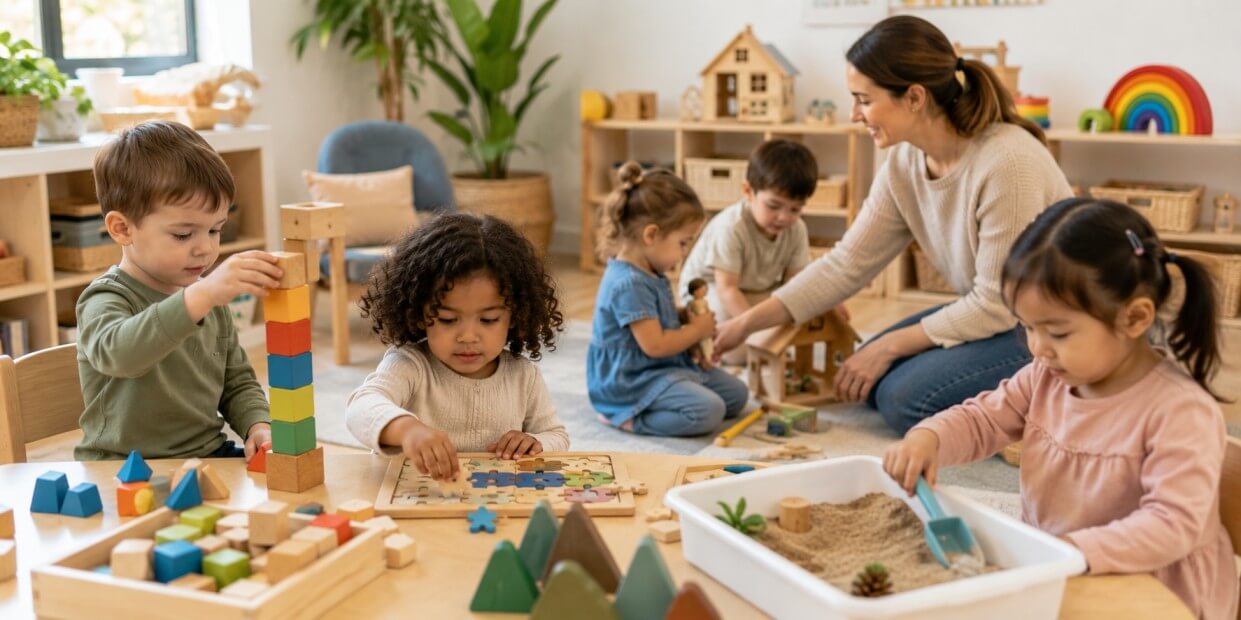
Toddlers do not learn best through lectures or pressure. They learn through movement, repetition, curiosity, and play. That is why play-based daycare is such a strong fit for this stage of life.
Play gives toddlers a reason to communicate, cooperate, imagine, and solve problems together. It makes social learning feel meaningful because the child is actively involved in the experience.
Pretend Play Builds Communication and Cooperation
Pretend kitchens, dolls, dress-up, toy animals, and make-believe games give toddlers a chance to practice social roles in a fun, low-pressure way. They copy language, share ideas, and start learning how to respond to others during play.
These moments may seem simple, but they teach children a great deal. Through pretend play, toddlers begin exploring cooperation, turn-taking, and emotional expression in a way that feels natural.
Group Games Help Children Practice Social Rules
Simple group activities are another powerful tool for social growth. Music circles, movement games, matching games, and cooperative play all teach children how to listen, wait, join in, and respond as part of a group.
That is one reason group games matter for children’s growth. They help toddlers build teamwork, confidence, and communication while keeping learning active and enjoyable.
What If Your Toddler Is Shy or Struggles at First?
Many parents worry when their toddler clings at drop-off, watches quietly, or has trouble sharing in the first few weeks. In most cases, this is a normal part of adjustment, not a sign that daycare is the wrong fit.
Children need time to feel safe in a new environment. Some settle in quickly. Others need more support, repetition, and reassurance before they begin participating more comfortably.
Adjustment Takes Time
There is no perfect timeline for toddler adjustment. Some children warm up within days, while others need a few weeks of steady routine and gentle encouragement.
Parents often feel more confident when they understand that this process is normal.
Parent and Educator Communication Makes a Difference
Social growth happens best when parents and educators work together. If a toddler is shy, frustrated, or still adjusting, open communication can help everyone respond in a consistent and supportive way.
Small updates matter. When parents know what worked during the day, which activities their child enjoyed, or how educators supported a tough moment, they feel more connected and better able to reinforce that progress at home.
What to Look for in a Daycare That Supports Social Development
Not every childcare environment supports social growth in the same way. If social development is a priority for your family, it helps to know what to look for during your search.
Parents comparing different types of daycare in Calgary should pay attention to more than convenience alone. The environment, routines, and educator approach all shape how children learn to connect with others.
Signs of a Strong Social Learning Environment
A daycare that supports toddler social skills often includes:
- warm, responsive educators
- predictable daily routines
- age-appropriate group activities
- gentle guidance during conflicts
- clear communication with families
- play-based learning instead of pressure-heavy instruction
These features help toddlers feel safe enough to explore social interaction at their own pace.
A Natural Example From Chapter1 Daycare
At Chapter1 Daycare, social development is part of the everyday experience rather than a separate lesson. Toddlers are guided through play, daily routines, group activities, and warm interactions that help them practice communication, patience, cooperation, and confidence in ways that feel natural for their age. Families looking for childcare in Calgary often want a setting that balances nurturing care with real early learning, and that is exactly where a thoughtful, play-based environment can make such a lasting difference.
Social Skills Today Support School Readiness Later
When toddlers build social confidence early, they carry that foundation into preschool and beyond. They become more comfortable listening to adults, joining group activities, expressing emotions, and working through small challenges with support.
This is also why broader conversations around social-emotional learning in preschool matter so much. School readiness is not only about letters and numbers. It is also about feeling secure, connected, and able to learn with others.
Final Thoughts
Daycare helps toddlers build social skills because it gives them repeated, supported practice in the moments that matter most. Through sharing, play, routines, communication, and guided interaction, children learn how to be with others in healthy and confident ways.
For parents, that growth may first show up in small ways. A toddler waits a little longer. Uses a new phrase. Joins a game. Notices a friend’s feelings. These are meaningful milestones, and they often begin with the steady rhythm of a nurturing daycare environment.
Frequently Asked Questions
Does daycare help kids socialize?
Yes, quality daycare helps children socialize by giving them regular opportunities to interact with peers and trusted adults. Through guided play and daily routines, toddlers begin learning sharing, communication, and cooperation.
What social skills do toddlers learn in childcare?
Toddlers often learn turn-taking, listening, early empathy, simple conflict resolution, expressive language, and how to join group activities. These skills grow gradually with repetition and support.
Is it normal if my toddler does not share yet?
Yes, that is completely normal. Sharing is a learned skill, and toddlers need time, modeling, and practice before it becomes more natural.
How can parents support social skills at home?
Parents can help by naming feelings, modeling calm communication, arranging simple play opportunities, and giving toddlers chances to practice patience and turn-taking in everyday routines.