


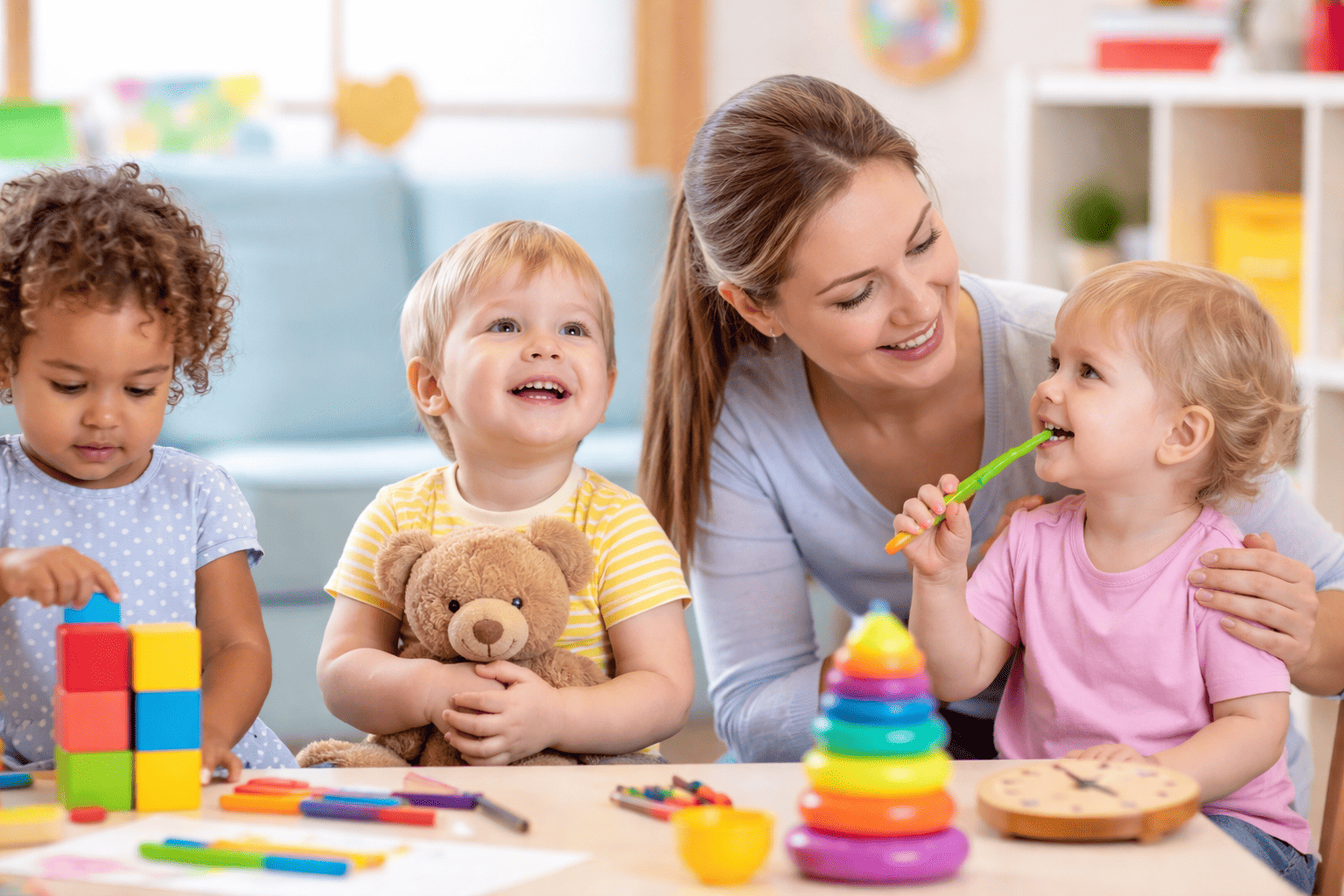
If you live with a toddler, you already know life can feel like a mix of big emotions, sudden energy bursts, and “I do it!” independence followed by “No!” two seconds later. That’s normal. Toddlers are growing fast, learning what to expect from the world, and figuring out how to manage feelings they can’t fully explain yet.
That’s where routine becomes one of the most powerful tools in daily life. A routine isn’t about running your home like a strict schedule. It’s about creating a predictable flow so your toddler knows what comes next. When life feels more predictable, toddlers feel safer. When they feel safer, they cooperate more, melt down less, and grow in confidence.
Routine is the quiet structure behind calmer mornings, smoother transitions, better sleep, and stronger independence. And it works whether your toddler is with you at home, at daycare, or moving between both.
Why routine is important for toddlers
Toddlers thrive on repetition because their brains are building the foundations for everything: language, emotional regulation, social skills, and learning. Unlike adults, toddlers don’t have a strong sense of time. They don’t always understand why something ended, why a change happened, or what “later” means. Without a predictable rhythm, daily life can feel confusing and overwhelming.
A routine reduces that uncertainty. It gives toddlers a sense of order in a world that often feels big and unpredictable. When a toddler knows the sequence breakfast comes after waking, lunch comes after playtime, nap comes after lunch they feel more secure and less anxious.
It’s also important to remember that toddlers crave independence, but they still need guidance. Routines provide that guidance in a gentle way. They teach toddlers how life works, step by step, without constant negotiating.
Routines create emotional security and stability
A steady routine creates a feeling of safety. For toddlers, safety isn’t just about physical safety it’s emotional safety too. When your child knows what’s coming next, they feel more in control, and they’re less likely to react with frustration or fear.
This is why routines often reduce meltdowns. Many toddler meltdowns aren’t “bad behaviour.” They’re emotional overload. Transitions can be hard, especially when toddlers are tired, hungry, or overstimulated. A consistent routine acts like an emotional anchor. It makes transitions more predictable and less stressful.
Even simple routines like “we wash hands before snacks” or “we put shoes in the same place every day” create tiny moments of predictability that add up. Over time, these routines teach toddlers that the world is safe, stable, and understandable.
How routines support emotional and social development
Toddlers are learning to manage feelings, but they can’t do it alone yet. They borrow calm from adults. Routine supports this because it creates repeated moments where toddlers practise emotional skills in a familiar environment.
For example, if your toddler knows that after outdoor play comes snack time, they’re less likely to panic or protest when play ends. They learn that good things return. That builds trust and emotional resilience.
Routines also teach toddlers social skills naturally. In everyday routines, toddlers practise waiting, taking turns, cooperating, and following simple expectations. They learn how to function in a group when routines are consistent like sitting together for snacks, cleaning up before moving to the next activity, or gathering for story time.
These patterns help toddlers learn patience, empathy, and cooperation without needing long explanations. The routine becomes the teacher.
Routines build independence and confidence
One of the most beautiful things about toddlerhood is watching independence grow. But independence doesn’t happen through pressure it happens through repetition.
When toddlers do the same steps again and again, they start to predict what they should do next. That sense of “I know what comes next” is empowering. It turns daily life into something they can participate in rather than something happening to them.
Routines that build independence can be simple:
-
Washing hands before meals
-
Putting shoes or jackets in the same spot
-
Cleaning up toys before moving to the next activity
-
Brushing teeth after bath time
-
Picking a book before bed
Notice how these routines aren’t complicated. The power is in repetition. Each time your toddler completes even one small step, they build confidence. They feel capable. And capable toddlers are more likely to cooperate because they feel respected and included.
The learning benefits of daily routines
Routines don’t just support emotions they support learning too.
Toddlers learn best through patterns. A daily routine teaches the concept of sequence: first, next, then, last. This is an early foundation for problem-solving, language development, and classroom readiness.
Routines also support cognitive growth because repeated experiences help toddlers understand cause and effect. When toddlers learn that after lunch comes nap, they begin to associate the routine with what their body needs. They learn to anticipate rest, hunger, and activity. Over time, routines help regulate their natural rhythms, which supports better behaviour and better learning.
Daily routines are also full of natural language practice. The same phrases repeated every day “Shoes on,” “Hands washed,” “Time for snack,” “Let’s clean up” build vocabulary and comprehension. Toddlers learn what words mean because they hear them consistently in the same context.
What are the benefits of routines in childcare?
In childcare settings, routine matters even more because toddlers are sharing space, attention, and transitions with other children. A predictable daycare routine helps toddlers feel safe in a setting that isn’t home. It reduces separation anxiety and helps them build trust with caregivers.
When toddlers know what to expect at daycare snack time, circle time, outdoor time, lunch, nap they settle in faster and feel more confident. That predictability helps them participate more happily in group activities and reduces stress during transitions.
A consistent childcare routine also supports smoother days for everyone. It creates structure that helps toddlers practise cooperation, waiting, and following simple expectations as part of a community. And when routines are well-managed, toddlers tend to have fewer behavioural challenges because they’re not constantly guessing what’s happening next.
Common toddler routines and why they matter
Morning routine
Morning is often where the day can either feel calm or chaotic. A simple morning routine helps toddlers transition from sleep to the day without stress. Even if your mornings are busy, repeating the same order—wake up, bathroom/diaper change, breakfast, get dressed—helps your toddler cooperate because they know what’s coming.
Mealtime and snack routines
Toddlers do best when they can count on regular meals and snacks. Predictable mealtimes reduce “hangry” meltdowns and support healthier eating habits. Mealtime routines also build social skills like sitting together, trying foods, and learning simple manners through modelling.
Playtime and outdoor routines
Toddlers need movement and exploration, but they also benefit from structure. Having predictable playtime and outdoor time helps toddlers burn energy, practise imagination, and develop physical skills while still feeling grounded in a routine.
Nap and rest routines
Nap routines are a huge part of toddler wellbeing. A consistent rest time helps regulate mood, reduces crankiness, and supports learning. Many toddlers who seem “difficult” in the afternoon are simply overtired. Routine rest times help prevent that cycle.
Bedtime routine at home
Bedtime routines are one of the most powerful routines in daily life. A steady wind-down sequence helps the body and brain shift into rest mode. Even a simple routine bath, pyjamas, teeth, story, sleep signals safety and predictability. Over time, bedtime becomes smoother because your toddler knows exactly what happens next.
Structure vs flexibility: finding the right balance
Routine doesn’t have to mean rigid. In fact, the best routines for toddlers are consistent in order, but flexible in timing.
For example, you might keep the same bedtime steps even if bedtime shifts a little on weekends. Or you might keep the same morning rhythm even if some mornings are faster than others. The goal isn’t perfection. The goal is predictability.
This matters especially for modern families. Parents may work shift schedules. Some children move between home, daycare, grandparents, or co-parenting homes. Flexibility is real life. What helps toddlers most is not a perfect clock schedule, but familiar patterns: the same steps, the same transitions, and the same supportive expectations.
If your toddler resists routines, that doesn’t mean the routine is wrong. It often means the routine is new. Toddlers typically need time and repetition to adjust. Staying calm, giving warnings before transitions (“two more minutes”), and keeping routines simple usually helps more than adding strict rules.
What do children learn from routines?
Toddlers learn so much from routine often without anyone explicitly teaching them. Daily routines help children learn:
Emotional safety and trust
Independence and responsibility
Patience and cooperation
Confidence and resilience
Self-regulation and coping skills
Healthy habits like hygiene and sleep readiness
Early learning skills like sequencing and following steps
And just as importantly, routines teach toddlers that they are cared for. When adults create predictable, loving rhythms, toddlers feel supported. That emotional foundation is what allows learning and growth to happen.
How Chapter1 Daycare supports toddlers through routine
At Chapter1 Daycare in Calgary, routine is at the heart of how we care for and support toddlers. Our programs are thoughtfully designed to create calm, predictable days that help young children feel safe, confident, and ready to learn. We offer age-specific care including Infant Care (3–18 months), Toddler Programs (19 months–3 years), Preschool (3–4.5 years), and Pre-Kindergarten (4–6 years)—each built around a consistent daily rhythm that balances play, learning, movement, meals, and rest.
In our toddler program, children follow a gentle, repeatable flow that includes snack time, active play, outdoor exploration, creative activities, learning moments, and quiet rest.
We also know that every family’s schedule is different. That’s why Chapter1 Daycare proudly supports working parents with flexible childcare options, including extended hours, night care, and weekend care. Even with non-traditional schedules, children still benefit from consistent routines, caring educators, and a stable environment. With two convenient Calgary locations in Cedarbrae and Royal Oak, we make high-quality, routine-based childcare accessible for real family life.
Parents often explore related topics like the benefits of colouring for toddlers and how daily routines support emotional development, both of which reflect how we approach early learning at Chapter1 through play-based activities, structure, and compassion. Our goal is to partner with families to give every child a strong, confident beginning.
A gentle reminder for parents
Routines don’t have to be perfect to be powerful. Even a few predictable rhythms in your day can make life feel calmer for your toddler—and easier for you.
If you’re looking for a daycare that supports toddlers with a nurturing, structured routine and flexible childcare options that fit real schedules, Chapter1 Daycare is here to help.
FAQs about toddler routines
Why is routine important for toddlers?
Routine helps toddlers feel safe and secure because they know what to expect. It reduces anxiety, supports emotional regulation, and builds confidence in daily life.
What are the benefits of routines in childcare?
In childcare, routines help toddlers settle in faster, feel secure away from home, and participate more smoothly in group activities. They also support learning, behaviour, and social development.
What is the importance of having a daily routine?
A daily routine creates structure and predictability. It helps toddlers manage transitions, develop independence, and build healthy habits around sleep, meals, and hygiene.
What do children learn from routines?
Children learn independence, responsibility, patience, cooperation, and self-regulation. They also learn sequencing skills—understanding what comes first, next, and last.
Can routines help with toddler behaviour?
Yes. Routines reduce uncertainty, which often reduces tantrums and resistance. When toddlers know what’s next, they feel calmer and more cooperative.
How long does it take a toddler to adjust to a routine?
It depends on the child, but many toddlers start adjusting within a few days to a couple of weeks. Consistency and calm transitions help.
What if my toddler resists routines?
Keep the routine simple, give transition warnings, and stay consistent. Resistance is normal at first—routine becomes easier as it becomes familiar.
Should routines be the same at daycare and home?
They don’t need to match perfectly, but having similar patterns—like consistent nap and meal expectations—can help toddlers feel more regulated across both environments.