



Toddler sleep can change quickly. A routine that worked a few months ago may suddenly lead to nap refusal, bedtime battles, early waking, or a child who seems exhausted long before dinner.
The goal is not a perfect clock schedule. A healthy toddler sleep schedule should provide enough total sleep, predictable rest times, and flexibility as your child grows. Children ages 1 to 2 generally need 11 to 14 hours of sleep in 24 hours, including naps. Children ages 3 to 5 generally need 10 to 13 hours.
How Much Sleep Does a Toddler Need by Age?
Sleep needs vary, so use these ranges as a guide rather than a strict target.
| Age | Total Sleep | Typical Naps |
|---|---|---|
| 12 to 15 months | 11 to 14 hours | 1 to 2 |
| 15 to 18 months | 11 to 14 hours | Moving toward 1 |
| 18 to 24 months | 11 to 14 hours | Usually 1 |
| 2 years | 11 to 14 hours | Usually 1 |
| 3 years | 10 to 13 hours | 0 to 1 |
| 4 to 5 years | 10 to 13 hours | Often no nap |
Mood, energy, and how easily your child settles can be just as useful as the clock.
Sample Toddler Sleep Schedules by Age
These sample routines are starting points because individual sleep needs vary.
12 to 18 Months
A younger toddler on two naps might wake at 7:00 a.m., nap around 9:30 a.m. and 2:00 p.m., then go to bed around 7:30 p.m. As the two-to-one nap transition begins, the first nap can gradually move later until one midday nap becomes the main rest period.
18 to 24 Months
Most toddlers in this range settle into one midday or early-afternoon nap. A routine might include waking at 7:00 a.m., napping from about 12:30 to 2:30 p.m., and going to bed around 7:30 p.m.
2 Years Old
A typical 2-year-old sleep schedule may include a 7:00 a.m. wake time, a nap from 1:00 to 2:30 or 3:00 p.m., and bedtime between 7:30 and 8:00 p.m.
3 to 5 Years Old
Many 3-year-olds still nap, while others begin skipping it. By ages 4 to 5, quiet time often replaces sleep. On no-nap days, an earlier bedtime can help prevent overtiredness.
Wake Windows, Nap Transitions, and Dropping Naps
Toddler wake windows describe the approximate time a child stays awake between sleep periods. They can be helpful, but they should not become rigid rules. Watch your child’s behaviour as well as the clock.
Yawning, rubbing the eyes, becoming clingy, losing interest in play, or getting increasingly irritable can signal tiredness. Predictable routines also help toddlers understand when meals, play, rest, and bedtime are coming. Our guide to toddler routines explains why familiar daily patterns can support smoother transitions.
Many children move from two naps to one around 15 to 18 months. Signs of readiness can include consistently refusing one nap, taking a long time to fall asleep, or having a second nap that pushes bedtime very late.
To make the transition easier:
- Gradually move the first nap later.
- Offer an earlier bedtime after a short nap.
- Allow an occasional two-nap day if your child clearly needs it.
- Give the new schedule time before changing it again.
The final nap is usually dropped during the preschool years. If your child refuses naps but stays content through the afternoon and sleeps well overnight, quiet time may be enough. Books, puzzles, drawing, or calm independent play can provide a restful pause without requiring sleep.
Families can also learn how preschool nap time changes as children grow.
Should You Wake a Toddler From a Long Nap?
Sometimes a long or late nap can interfere with nighttime sleep. If your child sleeps well during the day but stays awake long past bedtime, look at nap timing and duration before dropping the nap completely.
Try moving the nap earlier or shortening it slightly, then watch bedtime for several days.
What Time Should a Toddler Go to Bed?
There is no universal bedtime for every toddler. Bedtime depends on morning wake time, nap length, when the nap ended, and how much total sleep your child needs.
A toddler who wakes at 7:00 a.m. and takes a solid midday nap may do well with a 7:30 or 8:00 p.m. bedtime. After a short nap or a no-nap day, bedtime may need to move earlier.
A simple routine such as dinner, quiet play, bath time, pyjamas, books, and bed can make the transition easier.
Warm but consistent boundaries help bedtime stay predictable.
Consistency does not mean every day must look identical. Weekends, family outings, illness, and daycare days can shift the schedule. Returning to the usual wake, nap, and bedtime rhythm afterward is often more useful than trying to force a tired toddler through an exact timetable.
Common Toddler Sleep Schedule Problems
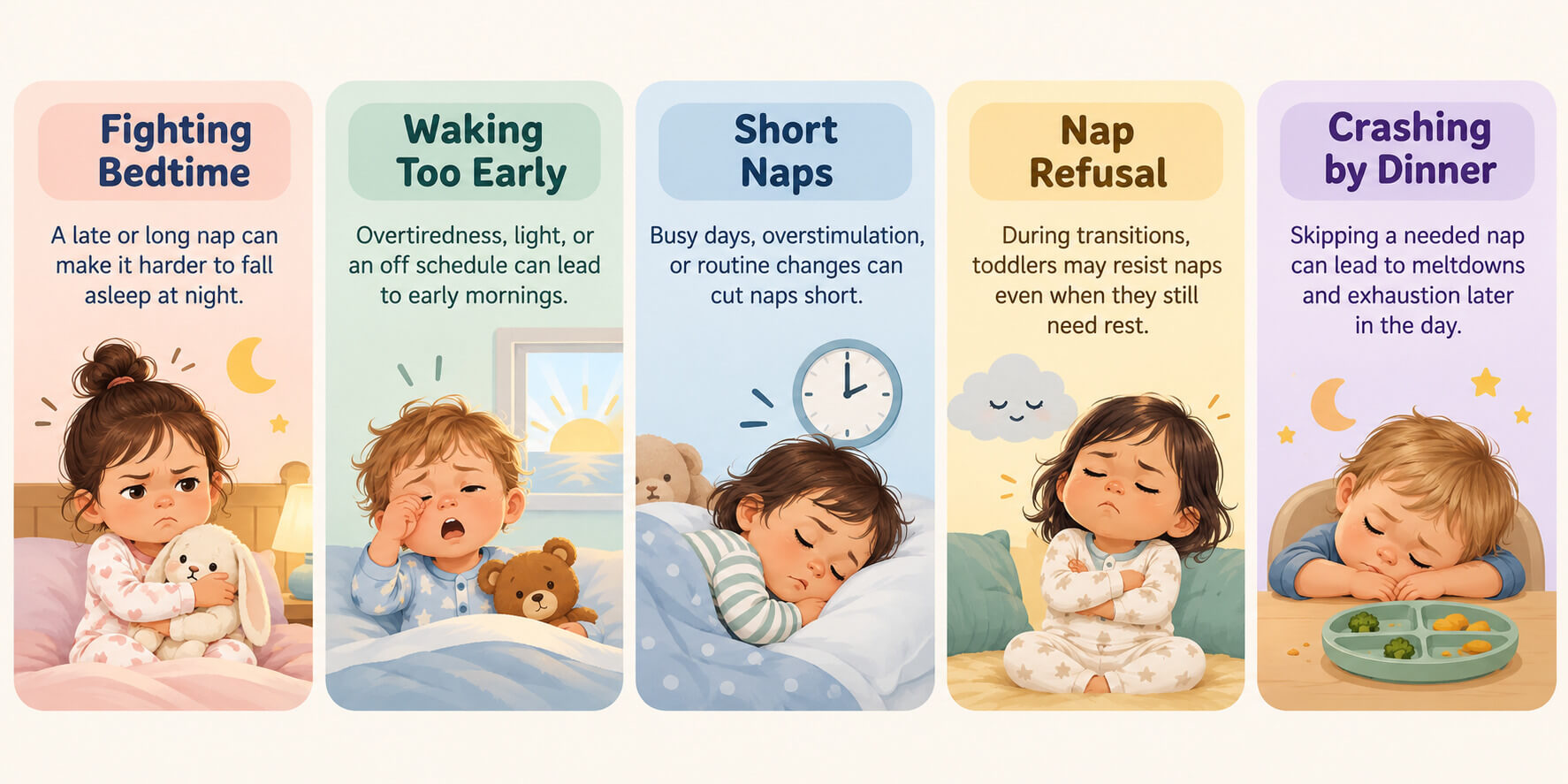
Before making a major adjustment, look for patterns across several days.
Fighting Bedtime
Check whether the afternoon nap has become longer or later. It can also appear during developmental changes or illness.
Waking Too Early
Consider bedtime, total nap time, overtiredness, morning light, and household activity.
Refusing a Nap but Crashing by Dinner
This can happen during nap transitions. Continue offering a rest period and use an earlier bedtime on no-nap days rather than assuming the nap is no longer needed.
How Daycare Nap Times Affect Toddler Sleep
Toddlers may sleep differently at daycare because of group routines, activity levels, new surroundings, and the excitement of being around other children. Home and daycare schedules do not need to match exactly.
Parents can share nap length, bedtime difficulties, early waking, and recent schedule changes with educators.
Chapter1 Daycare’s toddler program includes active play, age-appropriate learning, familiar routines, and rest opportunities for growing children. When sleep needs change, families and educators can work together to support a rhythm that helps children participate during the day while still getting the rest they need at home.
How to Know if Your Toddler’s Schedule Is Working
A workable schedule should leave your child rested enough to participate in daily life, manage the afternoon, and fall asleep without prolonged struggles most nights.
If your child has persistent loud snoring, pauses in breathing, unusual nighttime breathing, extreme daytime sleepiness, or ongoing sleep difficulties that affect daily life, speak with your child’s healthcare provider.
FAQs About Toddler Sleep Schedules
How many hours should a 2-year-old sleep at night?
Two-year-olds generally need 11 to 14 hours of total sleep in 24 hours, including naps. The exact nighttime amount depends partly on daytime sleep.
What time should a 2-year-old go to bed?
Many 2-year-olds settle around 7:00 to 8:00 p.m., but there is no required bedtime. Morning wake time, nap timing, and individual sleep needs matter more than one exact hour.
What is the 5-3-3 rule for sleep training?
The term 5-3-3 is used in different ways online and is not a universal pediatric sleep recommendation. Focus instead on age-appropriate total sleep, a consistent routine, and professional guidance if sleep problems persist.
What is the 10-5-3-2-1 rule for sleep?
This is a general sleep-hygiene framework, not a toddler-specific sleep schedule. For young children, a predictable bedtime routine and calm, screen-free wind-down period are more useful.
What is the 30-60-90 nap rule?
The phrase is used inconsistently online and is not an official pediatric sleep guideline. Toddler naps are better assessed by age, total sleep, mood, bedtime, and daytime functioning.
When should a toddler stop napping?
Many children gradually stop napping during the preschool years. Watch whether your child can comfortably manage the day without sleep and still get enough rest overnight rather than choosing one exact age.