


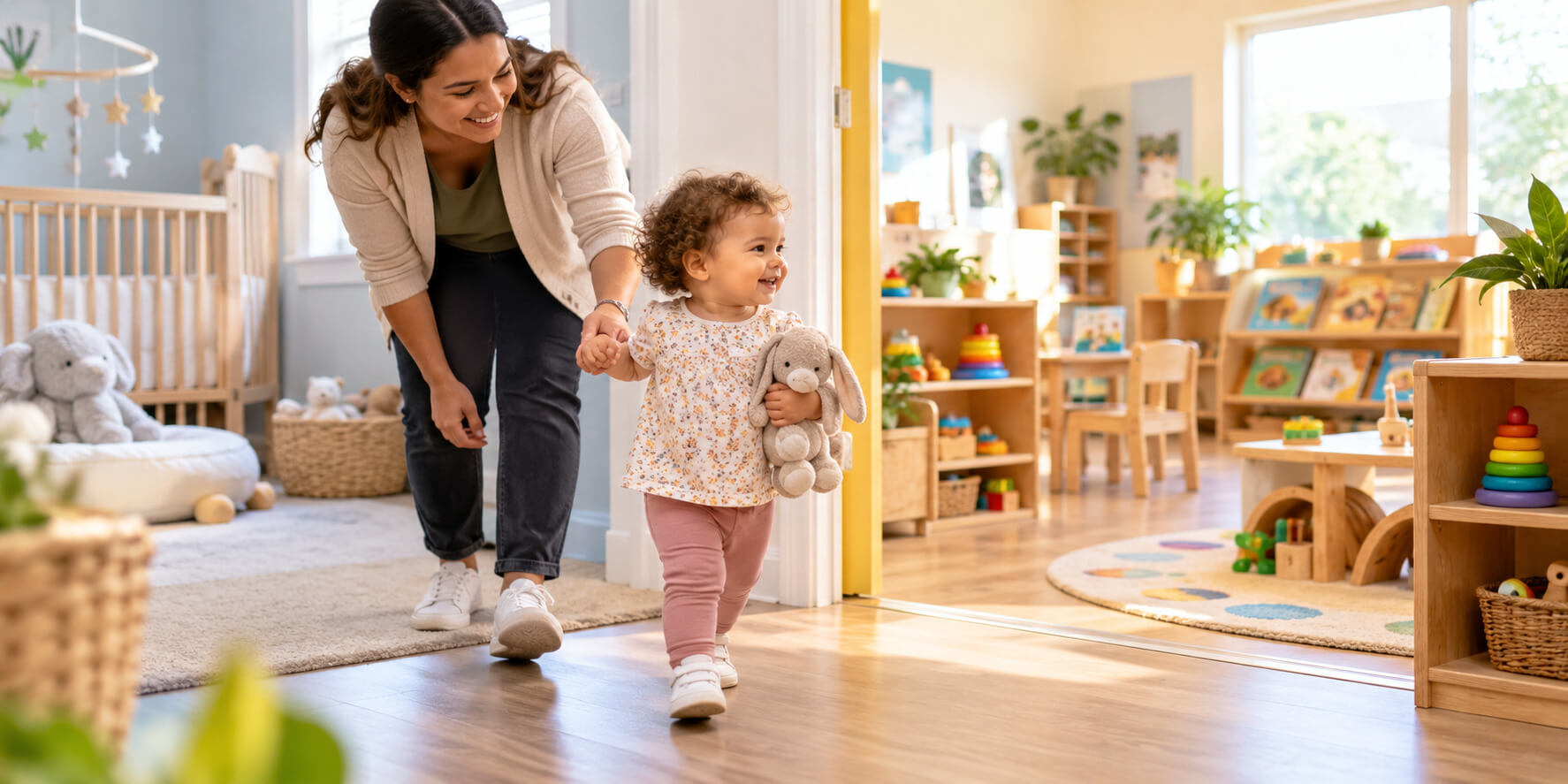
There is no single milestone that determines exactly when every child should move. Childcare programs organize rooms differently, and children develop at their own pace.
Rather than focusing on one skill, consider your child’s overall development, comfort, independence, and ability to participate in the routines of the next room.
Signs Your Child May Be Ready
Your child may be showing readiness if they are exploring more, communicating needs, feeding themselves, following simple routines, or becoming more interested in other children.
Readiness does not mean a child must already be fully independent. Educators continue to provide support while helping toddlers practice new skills and become increasingly confident in their daily routines.
Infant Room vs. Toddler Room: What Changes?
Infant care is often highly individualized around feeding, sleep, comfort, and sensory exploration. Toddler care usually introduces more predictable group routines while still giving children the support they need.
Understanding some of these differences can help families prepare for the transition without expecting everything to change overnight.
Feeding and Mealtimes
Infants may use bottles more often and follow individual feeding schedules. In toddler care, children may begin drinking from straw or sippy cups and have more opportunities to feed themselves.
Mealtimes also become an opportunity to build independence. Toddlers may practice using utensils, holding their own cup, and eating alongside other children.
Sleeping
Some infants still take two naps, while toddler rooms may follow a more consistent group rest period. A new sleep routine can take time to adjust to, and some children may seem more tired after daycare at first.
Parents can help by keeping evening routines calm and predictable while their child becomes accustomed to the new schedule.
Activities and Independence
Children may be encouraged to hold their own cup, use child-safe utensils, help put toys away, and make simple choices.
Toddler activities can also include sensory experiences, music, movement, creative activities, outdoor exploration, books, and simple group learning that supports language, motor, and social development.
How to Prepare Your Child for the Toddler Room at Home
You do not need to recreate a daycare classroom at home. A few age-appropriate changes can help your child become familiar with routines they may experience after moving rooms.
Practicing these skills gradually can help children feel more capable without placing unnecessary pressure on them.
Practice Drinking From a Cup
If your child mainly uses bottles, gradually introduce an age-appropriate straw or sippy cup. Ask the childcare team what is commonly used in the toddler room so home practice supports the new routine.
There is no need to make an abrupt change. Allow your child time to become comfortable with the cup while maintaining the feeding routines that still work for your family.
Encourage Self-Feeding
Let your child practice picking up finger foods and, when appropriate, using a child-safe spoon. Expect some mess. The goal is growing confidence, not perfect table manners.
Giving children regular opportunities to try feeding themselves can make toddler mealtimes feel more familiar.
Build Simple Independence
Encourage small tasks such as putting toys into a basket, carrying a cup, washing hands with help, or choosing between two simple options.
Families preparing for childcare changes may also find our guide on how to prepare your baby for daycare helpful for building predictable routines.
Gradually Introduce the New Toddler Room
When possible, gradual familiarization can make a room change less overwhelming. Your child may begin with short visits, meet the new educators, or spend increasing amounts of time in the toddler space before moving fully.
This gives children an opportunity to become familiar with the room, toys, educators, and other children while still having the security of their existing routine.
Parents can also talk positively about the new classroom at home. Simple phrases about seeing new toys, playing with friends, or spending time with familiar educators can help create positive associations.
Keep Home Routines Consistent
When one part of a toddler’s world changes, familiar routines elsewhere can provide comfort. Try to keep wake-up time, meals, bedtime, and morning preparation reasonably predictable.
Home and daycare schedules do not need to match perfectly, but consistency helps children know what to expect. If possible, avoid making several major changes at once, such as moving rooms, removing bottles, changing naps, and introducing a new bedtime routine.
Predictable routines give young children a sense of security while they adapt to something new during the day.
Help Your Toddler Handle Separation Anxiety
Even children who previously enjoyed daycare may become more emotional when moving to a new classroom. That does not automatically mean the transition is going badly.
A predictable goodbye can help. Keep drop-off warm and fairly brief, tell your child you are leaving, reassure them that you will return, and avoid disappearing without saying goodbye.
It may take time for your child to develop the same level of trust with new educators that they had with their infant-room caregivers. Consistency from both parents and educators can help build that relationship.
What If Your Child Is Not Walking Yet, Still Uses Bottles, or Takes Two Naps?
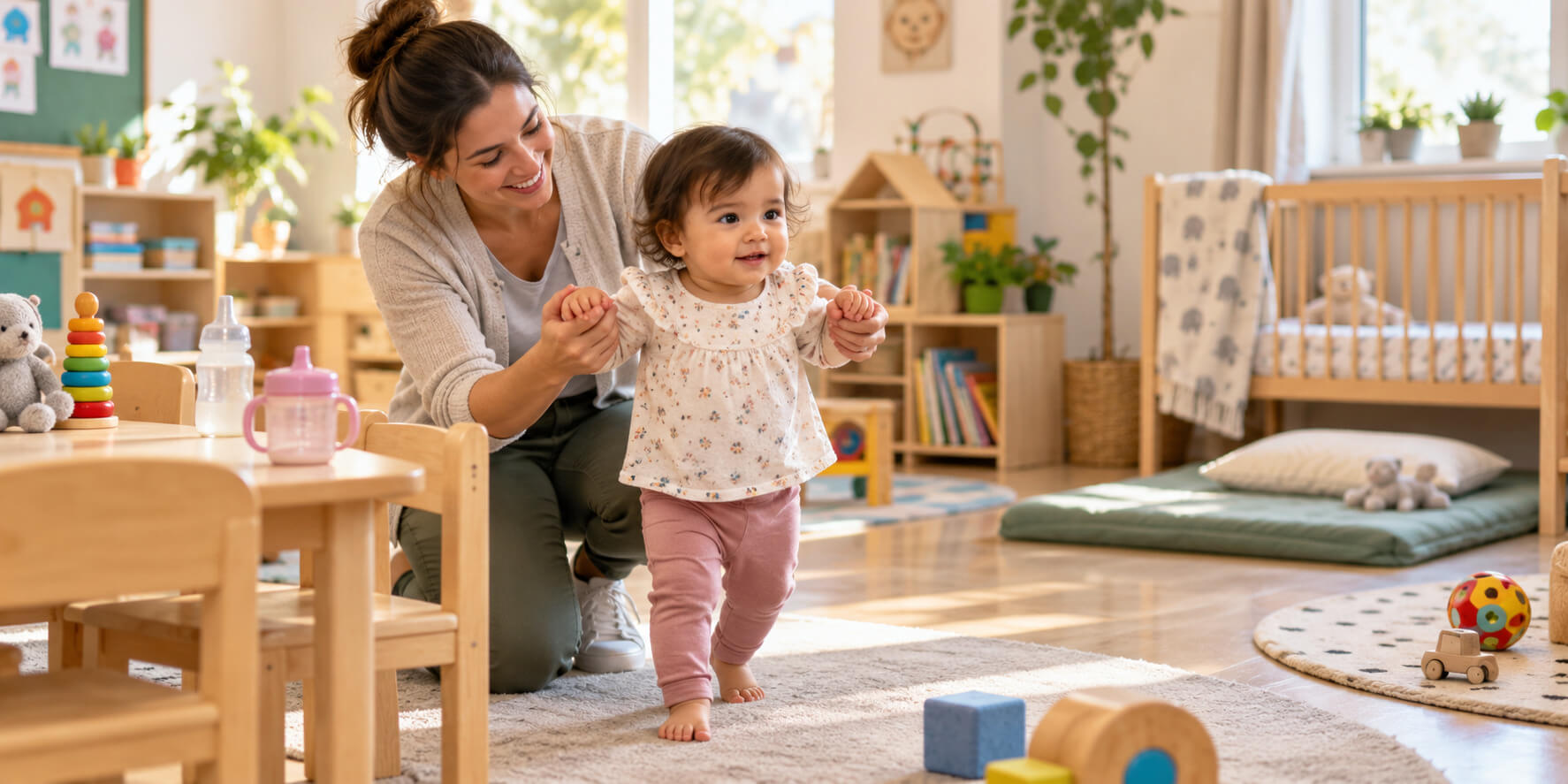
These are common concerns, and they are worth discussing with your childcare team before the transition begins.
Every child develops differently, so the transition should consider your child’s current needs rather than comparing them with other children.
Not Walking Independently Yet
Children reach walking milestones at different times. Ask how mobility is supported in the toddler room and how educators help children who are still standing, cruising, or learning to walk.
Walking ability alone does not describe a child’s overall development or readiness for new learning experiences.
Still Using Bottles
If bottles are limited in the toddler room, begin introducing a suitable cup gradually rather than stopping bottles abruptly because the room change is approaching.
Working with educators can help parents understand what the new routine will look like and prepare accordingly.
Still Taking Two Naps
If your child still needs a morning nap, talk with educators about the toddler schedule and what flexibility may be available while your child adjusts.
Sleep needs can change quickly during the toddler years, so regular communication between home and daycare can be especially helpful.
What to Expect During the First Few Weeks
Every child responds differently. Some settle quickly, while others need more time to become comfortable with new educators, classmates, and routines.
You may notice extra tiredness, clinginess after daycare, changes in appetite, temporary sleep disruption, or renewed crying at drop-off.
Keep communicating with educators about what they see during the day and what you notice at home so everyone can respond consistently.
Children may also surprise you by adjusting to certain parts of the toddler room very quickly. New toys, activities, outdoor play, and friendships can soon become exciting parts of their day.
Questions to Ask Your Daycare Before the Transition
Consider asking:
- How will my child be introduced to the toddler room?
- Will they visit before moving permanently?
- How are bottles, cups, meals, and snacks handled?
- What is the toddler nap routine?
- What skills can we practice at home?
- How will you support difficult drop-offs?
Learning more about the centre’s program information can also help families understand how routines, learning, and development change as children grow.
Growing Into the Toddler Years at Chapter1 Daycare
The toddler years are filled with movement, discovery, communication, and growing independence. Chapter1 Daycare supports this stage through play-based learning, caring educators, age-appropriate routines, social interaction, and opportunities for children to explore at their own pace.
Families can learn more about our infant care and toddler program to see how children are supported across different stages. Our daily activity plans also show how play, creativity, learning, and routine come together throughout the day.
A New Room Is a New Beginning
Moving from the infant room to the toddler room can feel like a big change, but it is also a sign of how much your child is growing.
With gradual preparation, familiar routines, open communication, and reassurance, the transition can become a positive step toward greater confidence and independence. Give your child time, celebrate small wins, and remember that settling into a new classroom is a process.
FAQs
How Do You Transition a Baby to a Toddler Room?
Prepare gradually by introducing new routines at home, practicing age-appropriate independence, keeping drop-offs predictable, and communicating closely with educators. Short visits to the new room can also help when available.
When Should a Child Transition to the Toddler Room?
There is no universal age or single milestone. Timing depends on the childcare program, the child’s development, individual needs, and readiness for the toddler environment.
How Can I Make Transitions Easier for My Toddler?
Keep routines predictable, talk positively about the change, introduce the new environment gradually, use a consistent goodbye routine, and give your child time to build trust with new educators.
Does My Child Need to Be Walking Before Moving to the Toddler Room?
Not necessarily. Policies differ between childcare programs, and children develop mobility at different rates. Ask your centre how they determine readiness.
Is Crying After Moving to the Toddler Room Normal?
Some children may temporarily cry more at drop-off or become clingier at home while adjusting. Consistent routines and reassurance can help them feel secure.
How Long Does It Take a Toddler to Adjust to a New Daycare Room?
Every child is different. Some become comfortable within days, while others may need several weeks to build familiarity with new educators, routines, and the classroom environment.