


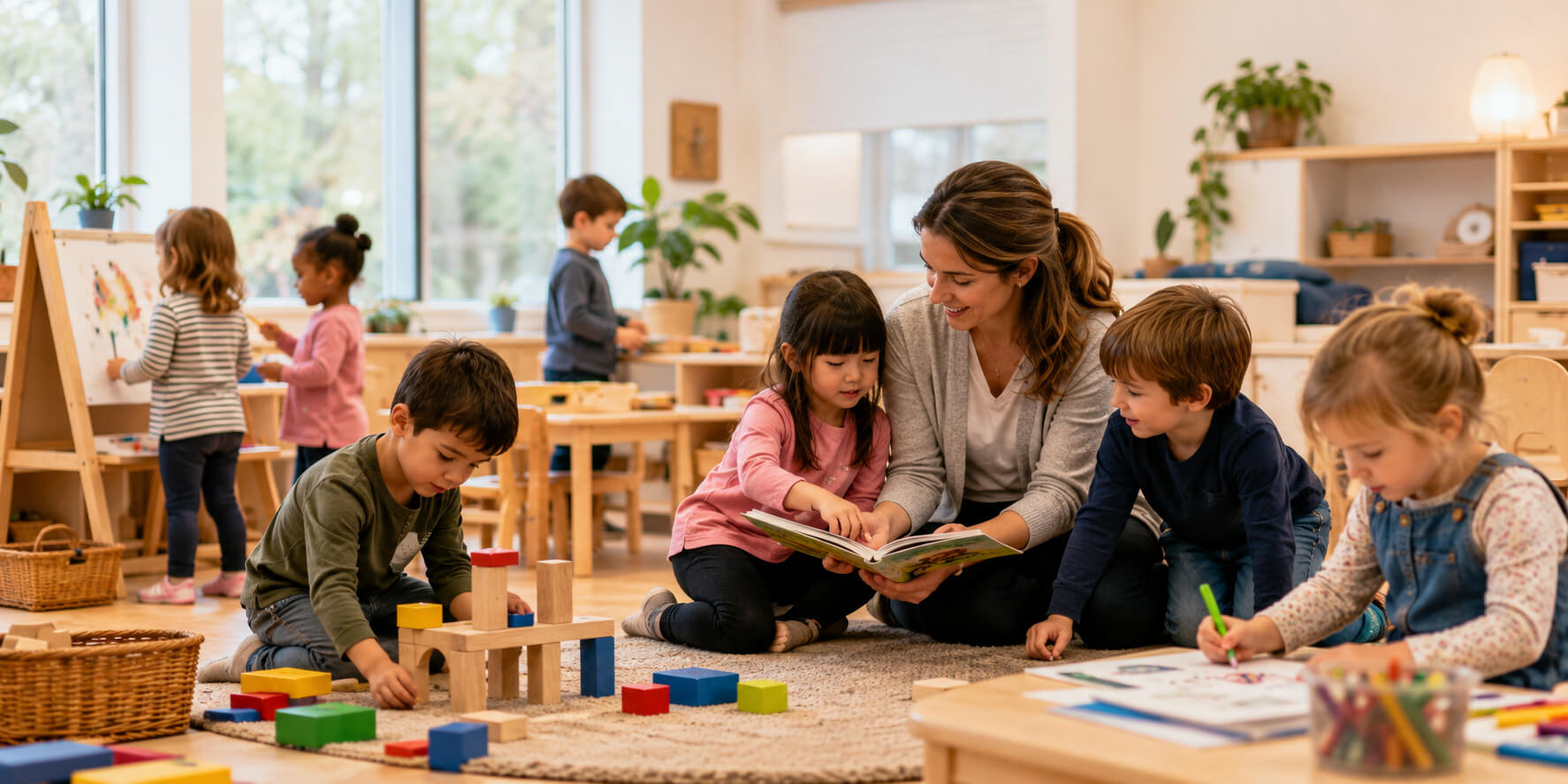
The early years are an important period of growth. Children are learning how to communicate, build relationships, manage emotions, move confidently, solve problems, and understand the world around them. The experiences they have during these years can help create a strong foundation for later learning.
For Alberta parents, however, early childhood education can sometimes feel complicated. Terms such as daycare, preschool, Early Childhood Services, Pre-Kindergarten, Kindergarten, licensed childcare, and play-based learning are often used together, even though they do not always mean the same thing.
This guide explains how early childhood education in Alberta works, what programs are available, what families may pay, and what parents should consider when choosing care for their child.
What Is Early Childhood Education in Alberta?
Early childhood education, often shortened to ECE, includes the learning, care, relationships, play, and developmental experiences children receive during their early years.
It does not necessarily mean formal classroom instruction. Young children often learn most effectively through everyday experiences such as conversations, stories, movement, building, pretend play, sensory exploration, music, outdoor activities, and interactions with other children.
In Alberta, these experiences may take place in licensed daycare centres, preschools, family day homes, Pre-Kindergarten programs, and Kindergarten settings.
Early Childhood Education vs. Early Childhood Services
Early childhood education is the broader term used to describe learning and development during the early years. Early Childhood Services, commonly called ECS in Alberta, has a more specific meaning.
ECS includes educational programming provided before Grade 1. This includes Kindergarten as well as specialized Pre-Kindergarten programming for eligible children who require additional educational support.
Understanding this distinction can help parents determine whether they are searching for regular childcare, preschool education, or a more specialized educational program.
Types of Early Childhood Education Programs in Alberta
Alberta families have several early learning and childcare options. The right choice often depends on the child’s age, developmental needs, family schedule, location, and preferred learning environment.
Licensed Daycare Centres
Licensed daycare centres provide care and early learning for children throughout the day. Depending on the centre, programs may be available for infants, toddlers, preschoolers, and children approaching Kindergarten.
Daycare combines supervision and daily care with opportunities for social development, communication, movement, creativity, exploration, and early learning.
Parents comparing programs can look closely at the centre’s philosophy and daily activities. Reviewing how a centre structures its daycare programs by age can provide a better idea of how learning changes as children grow.
Preschool Programs
Preschool usually provides early learning experiences for children before Kindergarten. Programs often focus on communication, independence, social development, early literacy, early numeracy, creativity, and learning how to participate in a group.
Some preschools operate for shorter periods, while others are integrated into full-day childcare programs. Age requirements and schedules can vary between providers.
Family Day Homes
Family day homes provide childcare in a home-based environment. Some families prefer this setting because children may be cared for in smaller groups and in surroundings that feel more like home.
Parents should still ask about supervision, safety policies, caregiver qualifications, daily routines, activities, and whether the day home participates in Alberta’s regulated childcare system.
Pre-Kindergarten and Kindergarten
Pre-Kindergarten through Alberta’s ECS system is generally designed for eligible children who require additional educational support. It should not be confused with every private preschool program.
Kindergarten is also part of Early Childhood Services. In Alberta, children may begin Kindergarten if they meet the province’s age requirements for that school year.
Early Childhood Education at Different Ages
Children’s developmental needs change quickly during the first few years of life. Quality early childhood education should therefore look different for an infant than it does for a preschooler.
Infants benefit from responsive caregiving, secure relationships, sensory exploration, movement, and frequent communication. Toddlers begin developing greater independence, language, coordination, emotional awareness, and social interest.
Preschool-aged children often become more interested in friendships, imaginative play, problem-solving, stories, numbers, creative activities, and increasingly complex conversations. Programs can gradually support the skills children need for the transition into school.
Parents of younger children can explore how a structured toddler daycare program supports this stage of rapid social, emotional, and language development.
How Play-Based Learning Supports Young Children
Play is not separate from learning during early childhood. For young children, play is one of the main ways learning happens.
A child building a tower is exploring balance, size, planning, and problem-solving. Children pretending to run a restaurant may practice communication, cooperation, counting, writing, and imagination without sitting through a formal lesson.
Play can support:
- social and emotional development
- communication and vocabulary
- early literacy and numeracy
- fine and gross motor development
- creativity and imagination
- independence and confidence
- problem-solving and decision-making
Structured learning can still have an important place in preschool. The goal is to introduce skills in ways that match how young children naturally develop. Our guide to play-based versus academic learning explains why the strongest early learning environments often combine thoughtful guidance with hands-on exploration.
What Is Alberta’s Flight Early Learning Framework?
Flight: Alberta’s Early Learning and Care Framework is an early learning framework developed for educators working with young children.
Rather than providing a rigid series of lessons children must complete, Flight encourages educators to observe children’s interests, create meaningful learning environments, build strong relationships, and support development through play and exploration.
The framework recognizes children as capable learners who actively make sense of their surroundings. Educators can extend learning by asking questions, introducing new materials, encouraging discussion, and responding thoughtfully to children’s ideas.
For parents, the important question is not simply whether a centre mentions a particular framework. It is how educators turn their philosophy into meaningful everyday experiences for children.
What Skills Does Early Childhood Education Develop?
Early childhood education supports much more than academic preparation.
Socially, children learn to participate in groups, communicate with peers, share space, cooperate, resolve small conflicts, and build friendships. Emotionally, they gradually learn to identify feelings, manage frustration, ask for help, and adapt to transitions.
Language development happens throughout the day through stories, conversations, songs, questions, and imaginative play. Cognitive skills grow when children experiment, compare objects, recognize patterns, solve simple problems, count, build, sort, and explore cause and effect.
Physical development is equally important. Running, climbing, dancing, drawing, using utensils, handling blocks, and working with art materials all help strengthen different motor skills.
What Does a Typical Day Look Like?

There is no single schedule that every Alberta childcare centre follows, but young children generally benefit from a balance between predictable routines and opportunities to explore.
A typical day may include arrival and free play, group activities, learning centres, snacks, outdoor time, lunch, rest or quiet activities, creative experiences, and afternoon play.
Consistency helps children understand what comes next and can make transitions easier. At the same time, quality programs leave room for children’s interests and spontaneous learning rather than making every minute overly structured.
How Much Does Childcare Cost in Alberta?
Childcare affordability has changed significantly in Alberta, so parents should make sure they are looking at current information.
For eligible children attending participating licensed daycare facilities and family day homes, Alberta’s affordability system currently uses flat parent fees. Full-time care of 100 hours or more per month is generally $326.25, while part-time care of 50 to 99 hours is generally $230 per month.
Preschool funding works differently, and families may also encounter optional charges for services or activities that fall outside the basic parent fee.
Parents planning their childcare budget can find a more detailed explanation in our guide to child care expenses in Alberta and review Chapter1’s current daycare fee information.
Is Early Childhood Education Free in Alberta?
Early childhood education is not universally free in Alberta.
Kindergarten and certain ECS educational programs operate differently from licensed daycare and preschool programs. Families using licensed childcare may receive the benefit of government affordability funding while still being responsible for a monthly parent fee.
The amount a family pays may also depend on the type of program, number of hours, optional services, and eligibility requirements.
How to Choose Quality Childcare in Alberta
A convenient location and affordable monthly fee are important, but they should not be the only factors parents consider.
When visiting a childcare centre, pay attention to the interactions between educators and children. Children should appear supported, engaged, comfortable asking for help, and able to explore in an age-appropriate environment.
Parents may want to ask:
- How are educators qualified and supported?
- What does a normal day look like?
- How much outdoor and active play is provided?
- How does the centre communicate with families?
- How are challenging behaviours handled?
- How does the program support different developmental needs?
- Are there additional fees beyond the regular childcare fee?
Families should also ask about availability early. Spaces can vary considerably by neighbourhood, age group, and time of year. Our guide to navigating child care waitlists in Calgary explains how parents can make the search more manageable.
Early Learning at Chapter1 Daycare
Chapter1 Daycare provides caring early learning and childcare for Calgary families through age-appropriate activities, play, exploration, consistent routines, and supportive relationships with educators. Children are encouraged to develop confidence, communication, independence, creativity, and social skills in an environment designed around their stage of development.
With childcare options serving families through our Royal Oak, Cedarbrae, and Montgomery communities, the focus remains on creating safe, welcoming experiences where children can learn and grow while parents feel informed and supported.
Final Thoughts
Understanding early childhood education in Alberta becomes easier once parents separate daycare, preschool, ECS, and Kindergarten into their different roles.
The best environment for a child is one that provides safe care, responsive educators, meaningful play, age-appropriate learning, positive relationships, and routines that help children feel secure. Rather than focusing only on how academic a program appears, parents can look for a setting where their child has the opportunity to become confident, curious, independent, and ready for the next stage of learning.
Frequently Asked Questions
What Is Early Childhood Education in Alberta?
Early childhood education includes the learning, care, relationships, play, and developmental experiences children receive before entering formal elementary education. It can include daycare, preschool, family day homes, ECS programs, and Kindergarten.
What Age Does Early Childhood Education Start in Alberta?
Early learning begins from infancy. Licensed childcare programs may provide care for babies, toddlers, and preschoolers, while formal ECS programs have their own age and eligibility requirements.
What Is the Difference Between Daycare and Preschool in Alberta?
Daycare typically provides longer periods of care alongside early learning, while preschool is often focused on shorter early learning sessions before Kindergarten. Some childcare centres integrate preschool learning into full-day programs.
Is Early Childhood Education Free in Alberta?
Not all early childhood education is free. Licensed childcare generally involves parent fees, although Alberta affordability funding reduces eligible daycare and family day home costs. Kindergarten and other ECS programs operate under different funding structures.
How Much Does Daycare Cost in Alberta in 2026?
For eligible children in participating licensed programs, the standard parent fee is generally $326.25 per month for 100 or more hours of care and $230 per month for 50 to 99 hours.
What Is the Flight Framework in Alberta?
Flight is Alberta’s early learning and care framework. It encourages play, exploration, relationships, responsive environments, and learning experiences built around children’s interests and development.
What Age Can a Child Start Kindergarten in Alberta?
Kindergarten eligibility is based on Alberta’s provincial age requirements. Families should confirm the applicable cutoff with their local school authority when preparing to register.