


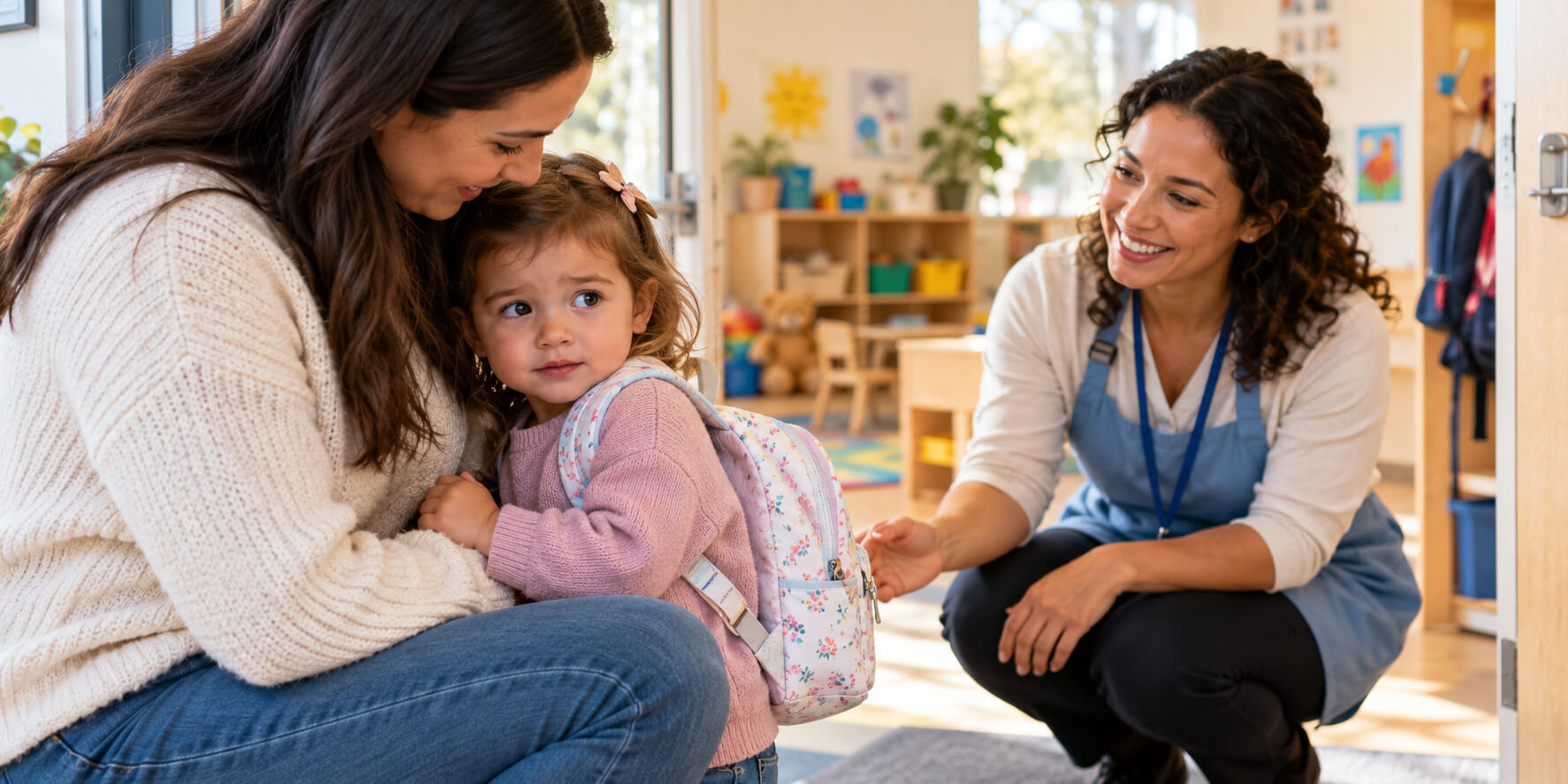
Starting daycare is a big change for a young child. Even children who are usually confident around family members may suddenly become clingy, cry when a parent leaves, or resist getting ready in the morning.
Daycare separation anxiety is a common part of adjusting to a new environment. Your child is learning that you can leave, another trusted adult can care for them, and you will come back. With preparation, predictable routines, and patience, most children gradually become more comfortable with the transition.
The goal is not necessarily to prevent every tear. It is to help your child feel safe enough to build trust, connect with their educators, and begin enjoying their daycare routine.
What Is Daycare Separation Anxiety?
Separation anxiety happens when a child becomes distressed about being away from a parent or another familiar caregiver. It can become especially noticeable when a child begins daycare because several unfamiliar experiences happen at once.
There may be a new classroom, new educators, other children, unfamiliar sounds, different meal and nap routines, and a longer period away from home. Even when the daycare environment is welcoming, your child may need time to understand that it is a safe and predictable place.
Common Signs of Separation Anxiety Before Daycare
Every child responds differently. Some children cry immediately at drop-off, while others show anxiety at home before it is time to leave.
Common signs can include:
- Becoming more clingy than usual
- Crying when daycare is mentioned
- Refusing to get dressed or leave home
- Holding tightly to a parent at drop-off
- Asking repeatedly when a parent will return
- Becoming more emotional in the evening
- Temporary changes in sleep or appetite
- Crying when approaching the daycare entrance
These behaviours do not automatically mean something is wrong with the daycare experience. Often, they are part of learning how to manage a new separation.
Why Starting Daycare Can Trigger Separation Anxiety
Young children depend heavily on familiar people and routines to understand what will happen next. Starting daycare temporarily changes both.
For a toddler especially, knowing that a parent will return later is different from fully understanding what “later” means. A few hours can feel very long when a child is still developing a sense of time.
Children also have different temperaments. One child may walk into the classroom without hesitation on the first morning, while another may need several weeks of consistent routines before drop-offs become easier.
Parents preparing for an upcoming start can also use these first-day daycare tips to make the entire transition feel more familiar.
Can Separation Anxiety Start After a Child Was Doing Well?
Yes. Daycare separation anxiety does not always happen during the first week.
A child who previously walked into daycare happily may suddenly become upset after an illness, vacation, long weekend, classroom change, or disruption to their normal routine. Developmental changes can also make children more aware of separation than they were a few weeks earlier.
Returning to a familiar routine and keeping drop-offs consistent often helps rebuild confidence.
How to Prepare Your Child for Daycare Separation
Preparing before the first day gives your child opportunities to become familiar with the idea of spending time away from you.
You do not need an elaborate preparation plan. A few simple experiences repeated consistently can make daycare feel much less unfamiliar.
Visit the Daycare Together
If possible, let your child see the daycare environment before regular attendance begins.
Seeing the classroom, toys, educators, play spaces, and other children helps turn an unknown place into somewhere they have already experienced with you nearby.
A daycare visit can also help parents feel more confident. Asking the right questions before choosing childcare can give you a better understanding of daily routines, communication, meals, naps, activities, and how educators support children during transitions.
Practice Short Separations
Give your child small opportunities to spend time with another trusted adult before starting daycare.
You might leave them with a grandparent, relative, or familiar caregiver while you complete an errand. Begin with manageable periods and gradually increase the time apart.
These experiences reinforce an important pattern: you leave, your child remains safe, and you return.
Talk Positively About Daycare
Talk about daycare in a warm and realistic way.
You can mention the toys they may explore, children they may meet, activities they may enjoy, or educators who will help them during the day.
Avoid putting too much pressure on your child by saying things such as, “You are going to love every minute,” or, “You are not going to cry.”
Instead, acknowledge that new experiences can feel difficult while showing confidence that they can manage them.
Adjust Daily Routines in Advance
A child may find the transition easier when daycare is not changing every part of the day at once.
If practical, gradually move wake-up times, meals, naps, and bedtime closer to the routine your family will follow once daycare begins.
You can explore Chapter1’s age-appropriate childcare programs to better understand how activities and routines are adapted to different stages of early childhood.
Create a Predictable Daycare Goodbye Routine
A consistent goodbye helps your child know exactly what happens when you arrive.
The routine does not need to be complicated. You might enter together, put away their belongings, give one hug, say the same goodbye phrase, hand them over to their educator, and leave.
Repeating the same sequence each morning creates predictability during a moment that can otherwise feel uncertain.
Keep Goodbyes Warm but Short
When your child cries, staying longer can feel like the kindest response. However, repeatedly delaying your departure can sometimes make the separation more difficult.
Give your child affection and reassurance, say goodbye clearly, and follow through calmly.
Leaving confidently also communicates that you trust the educators and believe your child is safe.
Do Not Sneak Out
Leaving while your child is distracted may prevent crying for a few minutes, but they may become worried when they suddenly realize you are gone.
Instead, say goodbye clearly even if you expect some tears.
Over time, your child learns that separation follows a predictable pattern rather than happening unexpectedly.
Explain When You Will Return in Child-Friendly Language
Young children may not understand clock times such as “4:30.”
Connect your return to something they understand within their daily routine.
You might say:
“I’ll come back after your afternoon snack.”
Or:
“I’ll see you after nap time and playtime.”
Keep the explanation simple and use the same language consistently.
What to Do When Your Toddler Cries at Daycare Drop-Off
Seeing your child cry during daycare drop-off can be emotional for parents too. Try to acknowledge their feelings without turning the goodbye into a long negotiation.
You could say, “I know you want me to stay. Your teacher is here to take care of you, and I will come back after your afternoon snack. I love you.”
Then complete your goodbye routine and leave.
A child can be genuinely upset about saying goodbye and still have a positive day shortly afterward. What happens after you leave can give you a much better picture of how your child is adjusting.
How Daycare Educators Can Help With Separation Anxiety

Supportive educators play an important role in helping children become comfortable away from their parents.
An educator may welcome your child personally, offer reassurance, introduce a familiar activity, or gently redirect their attention toward toys and other children. As relationships develop, the educator becomes another trusted adult your child knows they can turn to for comfort.
Consistent activities also help. Familiar songs, meals, outdoor play, story time, crafts, and play-based learning experiences give children predictable parts of the day to look forward to.
Parents and educators should also communicate regularly. Sharing information about your child’s routines, interests, comfort preferences, and recent changes at home can make it easier to provide consistent support.
Can a Comfort Item Help?
A familiar object can help some children feel connected to home during the first days of daycare.
Depending on daycare policies, this might be a small stuffed animal, blanket, family photograph, or another familiar item.
You can also make the item part of the goodbye routine. For example, your child might hold their favourite stuffed animal while entering the classroom and then place it somewhere safe once they are ready to play.
Always check what your childcare centre allows before bringing comfort items from home.
What Parents Should Avoid During Daycare Drop-Off
Most parents naturally want to comfort a distressed child, but some well-intentioned habits can make separation harder.
Try to avoid:
- Sneaking away without saying goodbye
- Returning repeatedly after leaving
- Extending the goodbye for a long time
- Changing the drop-off routine every morning
- Making promises that your child will not feel sad
- Showing intense worry in front of your child
- Comparing your child’s adjustment with another child’s
Children adjust at different speeds. Consistency is usually more helpful than trying a completely different strategy every morning.
What If Separation Anxiety Gets Worse After Daycare Starts?
Progress is not always a straight line.
Your child may have several excellent mornings followed by a difficult week. Changes at home, missed daycare days, illness, holidays, or simply being tired can temporarily make separation harder again.
Instead of judging the entire daycare experience by the first few minutes at drop-off, ask educators what happens afterward.
Useful questions include:
- How long does my child remain upset?
- Do they begin playing after I leave?
- Are they eating and sleeping normally?
- Are they interacting with educators and other children?
- Are they participating in activities?
- Are certain times of day more difficult?
These answers can help you understand whether your child is gradually becoming comfortable even if goodbye remains emotional.
How Long Does Daycare Separation Anxiety Last?
There is no exact adjustment timeline that applies to every child.
Some children become comfortable within a few days. Others may need several weeks before drop-offs consistently become easier.
Age, temperament, previous experience being away from parents, attendance frequency, relationships with educators, and changes happening at home can all affect the process.
If you are wondering whether your child’s adjustment is progressing normally, understanding how long children take to settle into daycare can help you focus on gradual improvements rather than expecting immediate changes.
When Should Parents Be Concerned?
Crying during drop-off by itself is not usually enough to determine how a child feels about daycare.
Look at the bigger picture. Is your child beginning to engage in play? Are they forming relationships with educators? Are difficult drop-offs becoming shorter or less intense over time?
Talk with your child’s educators if distress remains intense, continues without improvement, significantly affects eating or sleeping, causes frequent physical complaints, or prevents your child from participating throughout the day.
You know your child’s usual behaviour best. A sudden, significant change deserves open communication rather than automatically being dismissed as separation anxiety.
Helping Children Feel Secure at Chapter1 Daycare
Chapter1 Daycare understands that beginning childcare is an important transition for the entire family. Our Calgary childcare programs combine nurturing relationships, predictable routines, age-appropriate activities, and play-based experiences that help children gradually build confidence in their surroundings.
Our educators work closely with families because a smoother transition comes from consistency between home and daycare. By learning each child’s routines, personality, interests, and comfort needs, we can provide supportive experiences as children begin developing trust, friendships, and independence.
Separation Anxiety Gets Easier With Consistency
A successful daycare transition does not require a tear-free first morning.
What matters is helping your child learn, through repeated experience, that saying goodbye is temporary, trusted adults will care for them, and you will always return.
Prepare them gradually, create a predictable goodbye routine, communicate with educators, and give the adjustment time. With patience and consistency, daycare can move from feeling unfamiliar to becoming a comfortable part of your child’s everyday routine.
Frequently Asked Questions
How do daycares handle separation anxiety?
Daycare educators may comfort the child, redirect them toward a familiar activity, maintain predictable routines, and gradually build a trusting relationship. Communication with parents also helps educators understand what comforts and motivates each child.
How can I help my toddler with separation anxiety at daycare?
Practice short separations before daycare begins, talk positively about childcare, create a consistent drop-off routine, keep goodbyes short, and always tell your child when you are leaving.
Is it normal for my toddler to cry every day at daycare?
Some toddlers continue crying at drop-off while still settling quickly after their parent leaves. Ask educators how your child behaves during the rest of the day and watch for gradual improvement over time.
How long does daycare separation anxiety usually last?
There is no fixed timeline. Some children adjust within days, while others need several weeks. Temperament, age, attendance consistency, routines, and previous separation experiences can all influence adjustment.
Should I stay when my child cries at daycare drop-off?
Offer reassurance and affection, but try not to extend the goodbye for a long period. A short, predictable routine can help your child understand what to expect each morning.
What is the 3-3-3 rule for anxiety in children?
The 3-3-3 grounding technique involves noticing three things you can see, three things you can hear, and moving three parts of your body. It may be useful for older children who can understand and follow the activity, but it is generally not the main approach for infants or young toddlers experiencing daycare separation anxiety.
Why has my child suddenly developed separation anxiety at daycare?
Separation anxiety can return after illness, vacations, changes in routine, classroom changes, developmental stages, or periods when a child has spent more time at home. Returning to consistent routines often helps.
Can a comfort item help with daycare separation anxiety?
For some children, yes. A familiar blanket, stuffed animal, or family photo can provide reassurance during the transition if the childcare centre allows personal comfort items.