


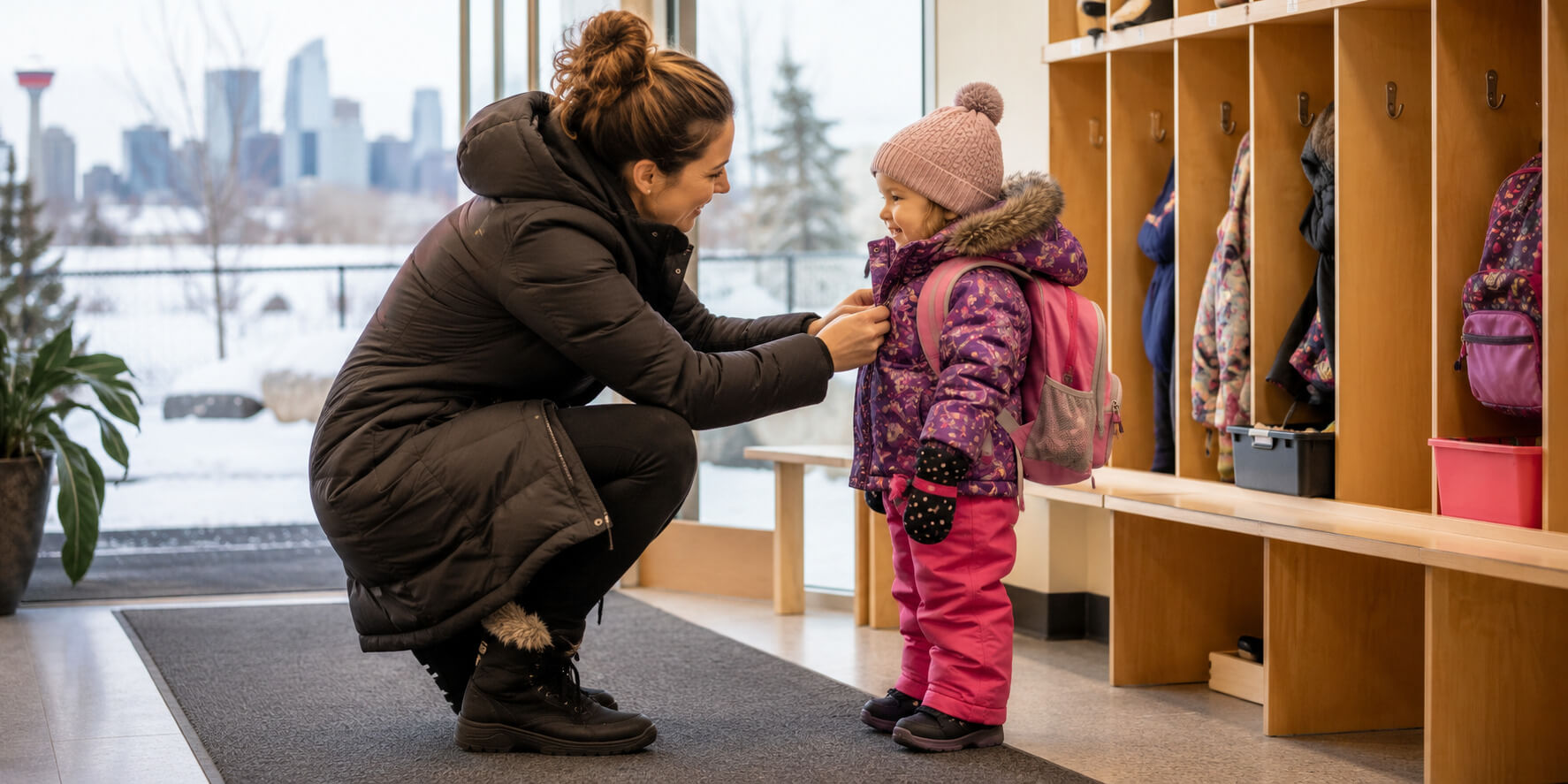
Calgary winters can make daycare mornings a little more complicated. One day may feel relatively mild, while the next brings snow, wind, slush, and temperatures well below freezing. For parents of young children, knowing what to pack for daycare becomes especially important during the colder months.
Children need clothing that keeps them warm outside without making them uncomfortable indoors. They also need backup items because mittens get wet, socks disappear into boots, and snow-covered clothing does not always make it through the entire day.
A simple winter daycare routine can make mornings easier. Focus on comfortable layers, weather-resistant outerwear, warm accessories, spare clothing, and a few practical items that can stay in your child’s daycare bag or cubby.
What Should Children Wear to Daycare During a Calgary Winter?
The goal of winter dressing is not simply to put on the thickest coat available. Children need warmth while still being able to walk, bend, climb, play, and move comfortably.
Layering makes it easier to adjust clothing throughout the day as children move between indoor activities and outdoor play.
Start With a Comfortable Base Layer
A comfortable base layer sits closest to your child’s skin. On colder days, moisture-wicking synthetic or wool thermal clothing can help keep children warm without adding excessive bulk.
For milder winter days, comfortable everyday clothing may be enough underneath outerwear. The important thing is choosing clothing that allows children to move freely and remains comfortable once they return indoors.
Add a Warm Middle Layer
A fleece sweater, wool sweater, sweatshirt, or another insulating layer can provide extra warmth when temperatures drop.
Parents can adjust this layer based on the forecast. Calgary weather varies considerably throughout winter, so children may need an extra fleece on one morning and much lighter layering a few days later.
Finish With Winter Outerwear
A warm winter jacket combined with snow pants works well for many children. A one-piece snowsuit can also be convenient, particularly for younger toddlers who spend time sitting, crawling, or playing directly in the snow.
Choose outerwear that provides protection from wind, snow, and moisture while leaving enough room for comfortable movement.
Essential Winter Gear for Daycare
Clothing is only part of a winter daycare checklist. Small accessories can make a significant difference when children are playing outside in cold or snowy weather.
Make sure winter gear fits properly and is easy enough for your child and their educators to manage during daily transitions.
Insulated Winter Boots
Winter boots should be warm, comfortable, and designed to handle snow and wet conditions. Waterproof or water-resistant boots can help keep children’s feet dry when playground snow becomes wet or slushy.
Proper fit matters too. Boots that are too tight can be uncomfortable, while oversized boots may make running and climbing difficult.
Waterproof Mittens
For toddlers and preschoolers, mittens are often easier to manage and help keep fingers together for warmth. Waterproof or water-resistant outer material is particularly useful during snow play.
Sending a backup pair is a practical idea. The first pair may become wet after outdoor play, leaving the extra pair available later in the day.
A Warm Toque
Choose a toque that fits securely and comfortably covers your child’s ears. Avoid overly loose hats that constantly slide up during movement.
A second toque can also be useful during particularly snowy weeks, especially if one becomes damp or accidentally goes home in another bag.
A Neck Warmer
A soft neck warmer can provide additional protection around the neck without the loose length of a traditional scarf.
Look for one that fits comfortably without being overly tight and that can be removed easily once your child returns indoors.
One-Piece Snowsuit or Jacket and Snow Pants?
Both options can work well for daycare. The right choice often depends on your child’s age, independence, toileting needs, and how easily they can move in the clothing.
Younger toddlers may benefit from a one-piece snowsuit because it provides full-body coverage and reduces gaps where snow can enter. Families with toddlers can also explore how daily movement and independence are supported through a structured toddler daycare program.
Older toddlers and preschoolers may find a separate jacket and snow pants more practical. A two-piece option can also make bathroom routines easier for children who are toilet training or becoming more independent.
There is no single option that works for every child. Comfort, mobility, weather protection, and your daycare’s routines should guide the choice.
What to Pack for Daycare in Winter
A well-prepared daycare bag can save everyone from a difficult afternoon after spilled water, wet snow, or an unexpected clothing change.
Parents do not need to pack an enormous bag every morning. Keeping a small supply of essential items in your child’s cubby can make winter routines much easier.
Consider packing:
- One or two complete changes of clothing
- Extra socks
- A backup pair of mittens
- A spare toque
- Indoor shoes
- A labeled water bottle
- Diapers, wipes, or toilet-training supplies when needed
- A washable wet bag for damp clothing
Check the bag regularly. When spare clothing comes home, replacing it the following morning prevents the backup supply from slowly disappearing.
What to Pack for Daycare for a 1-Year-Old in Winter
A one-year-old usually needs more backup supplies than an older preschooler because diaper changes, meals, spills, and wet clothing are all part of a normal day.
Along with winter clothing, parents may need diapers, wipes, multiple outfits, extra socks, feeding supplies according to their centre’s requirements, and a familiar comfort item if permitted.
Warm mittens, a toque, suitable winter outerwear, and age-appropriate footwear should also be included. For younger children, Chapter1’s infant daycare program provides more context about the routines, feeding, rest, play, and outdoor experiences that can shape what families need to prepare each day.
Children at this age grow quickly, so check winter boots and snowsuits regularly. Clothing that fit comfortably at the beginning of winter may feel restrictive only a few months later.
Winter Daycare Checklist for Toddlers
Toddlers are constantly moving, exploring, and building independence. Their winter clothing needs to protect them from the weather without making movement unnecessarily difficult.
A practical toddler winter setup includes comfortable indoor clothing, winter outerwear, boots, a toque, mittens, and a neck warmer. Keep extra socks and mittens available because these are among the items most likely to become wet.
Toddlers are also beginning to participate in everyday routines. Simple features such as easy zippers, pull-on boots, and mittens that stay securely in place can make dressing less frustrating.
Preschool Winter Daycare Checklist
Preschoolers often want to do more for themselves. Winter dressing provides another opportunity to practise independence, from putting on snow pants to learning which mitten belongs on which hand.
Choose clothing that offers warmth but is still manageable. Easy fasteners, clearly identified belongings, and boots that children can practise putting on themselves can support smoother transitions.
Preschool children may also need fewer diapering supplies, but extra pants, underwear, socks, and shirts remain important. Outdoor play, movement, creative activities, and everyday routines are all part of a well-rounded play-based daycare environment, so clothing should be practical enough for an active day.
How to Label Clothes for Daycare
Winter daycare cubbies can quickly fill with nearly identical black snow pants, colourful mittens, boots, and jackets.
Labeling belongings makes it much easier for educators to return the right items to the right family. Use durable labels or a permanent clothing marker where appropriate.
Remember to label more than the coat. Add your child’s name to snow pants, mittens, toque, neck warmer, winter boots, indoor shoes, water bottle, backpack, wet bag, and spare clothing whenever possible.
Check labels periodically because washing and daily wear can cause names to fade.
Should You Keep a Second Set of Winter Gear at Daycare?
Some families bring winter gear back and forth every day, while others prefer keeping backup items at daycare.
A complete second snowsuit and pair of boots can be convenient, but they are not essential for every family. A more affordable approach is keeping backups of the smaller items that are most likely to become wet or misplaced.
Extra mittens, socks, and a spare toque can solve many common winter-daycare problems without requiring parents to purchase two complete sets of everything.
Whatever system you choose, consistency helps. When children know where their winter belongings are kept, getting ready can gradually become part of their familiar daily routine.
Remember Winter Car-Seat Safety
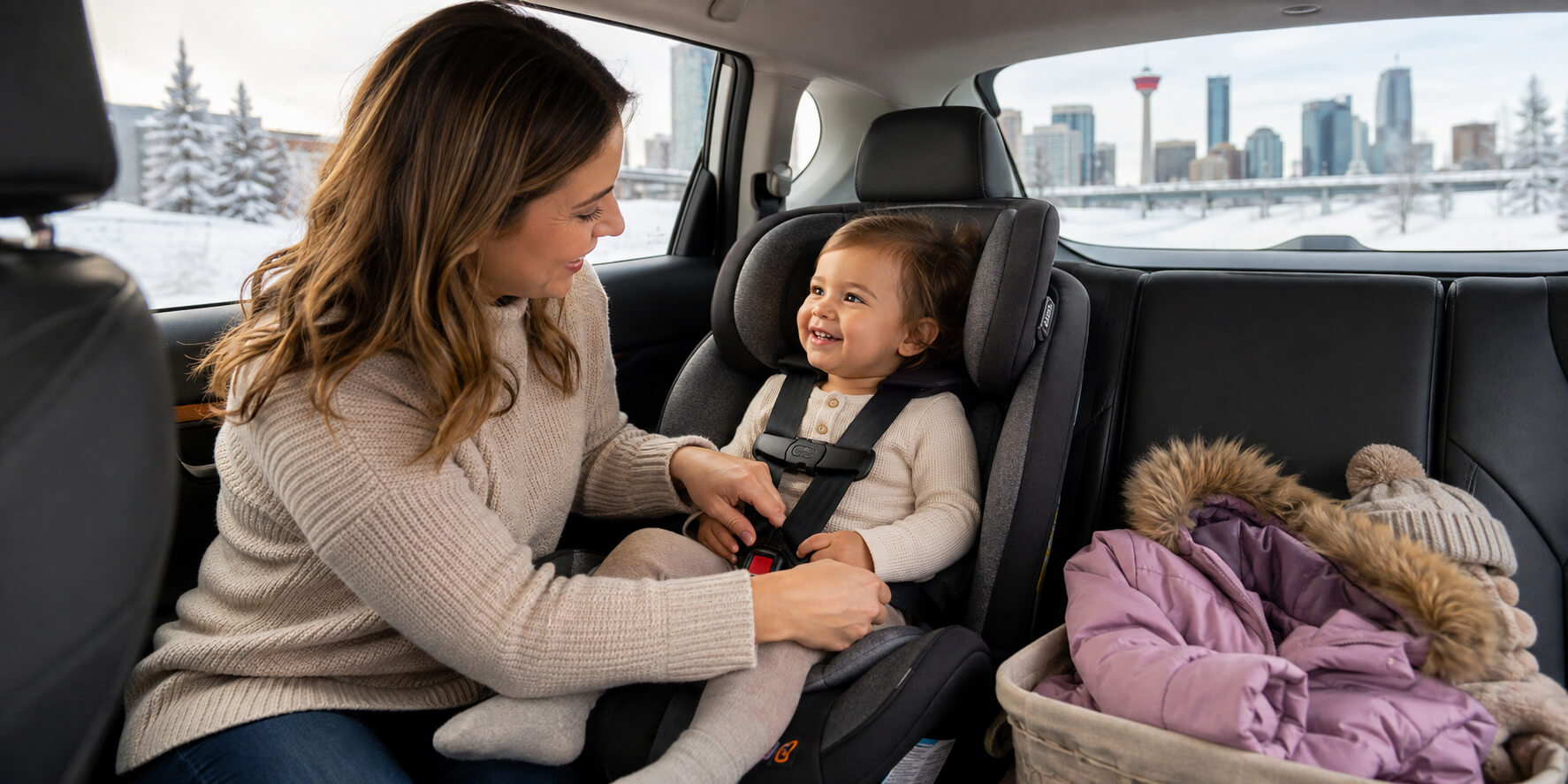
Daycare drop-off often begins with a car ride, so winter clothing also needs to be considered in relation to your child’s car seat.
Bulky coats and heavily padded snowsuits can affect how some car-seat harnesses fit. Parents should follow the instructions provided by their car-seat manufacturer and current Canadian child-passenger safety guidance.
One practical approach may be dressing children in suitable indoor layers for the car ride and adding approved warmth around them according to the restraint manufacturer’s directions.
Check Calgary’s Weather Before Daycare
Calgary winter conditions can change quickly. Temperature alone does not always tell the whole story because wind, snow, moisture, and wind chill can affect how cold conditions feel.
Check the forecast before leaving home and adjust your child’s layers accordingly. Parents should also follow their daycare’s outdoor-play and extreme-weather procedures, since outdoor routines may change when conditions become unsuitable.
Packing flexible layers makes this easier. Instead of relying on one extremely bulky garment, parents can add or remove appropriate layers as conditions change.
Make Winter Daycare Mornings Easier
A few minutes of preparation the night before can make cold Calgary mornings feel much more manageable.
Check the next day’s forecast, place dry mittens inside the child’s boots, restock spare clothes, and make sure wet snow gear has had enough time to dry.
It is also helpful to involve older toddlers and preschoolers. Ask them to find their toque, place their mittens beside their coat, or help pack their indoor shoes. Small responsibilities can gradually make the morning routine smoother while helping children build confidence.
Chapter1 Daycare supports Calgary families through caring, age-appropriate childcare where children can learn, play, build independence, and experience predictable daily routines. Families exploring childcare in Calgary can find programs for different developmental stages across Chapter1’s Royal Oak, Cedarbrae, and Montgomery communities. Working together with educators and keeping children’s seasonal belongings organized can help make winter days more comfortable for everyone.
Frequently Asked Questions
What should my child wear to daycare in a Calgary winter?
Dress your child in comfortable layers that can be adjusted throughout the day. Depending on the weather, this may include a base layer, warm middle layer, insulated jacket or snowsuit, snow pants, winter boots, waterproof mittens, a toque, and a neck warmer.
What should I pack for daycare in winter?
Pack spare clothing, extra socks, backup mittens, a spare toque, indoor shoes, a labeled water bottle, and diapering or toilet-training supplies when needed. A washable wet bag is also helpful for bringing damp clothing home.
What should I pack for daycare for a 1-year-old?
A one-year-old may need diapers, wipes, multiple clothing changes, extra socks, feeding supplies according to daycare requirements, suitable winter outerwear, mittens, a toque, winter footwear, and any approved comfort item.
Should toddlers wear a one-piece snowsuit to daycare?
A one-piece snowsuit can work especially well for younger toddlers because it provides continuous coverage. Two-piece suits can be more convenient for older toddlers, particularly during toilet training. Choose the option that offers good mobility, warmth, and practicality.
How many pairs of mittens should I send to daycare?
Having at least one backup pair available is useful during winter. Mittens can become wet during snow play, and a dry second pair means your child is prepared if they go outside again later.
Should winter clothes stay at daycare?
That depends on your family’s routine and your daycare’s storage options. Some parents keep duplicate gear at daycare, while others bring everything home daily. Keeping extra mittens, socks, and a toque at daycare is a practical middle ground.
How should I label clothes for daycare?
Use durable name labels or a permanent clothing marker where appropriate. Label jackets, snow pants, snowsuits, boots, mittens, toques, neck warmers, indoor shoes, spare clothing, water bottles, and bags.
Do Calgary daycares take children outside during winter?
Outdoor routines depend on the child’s age, weather conditions, temperature, wind chill, and individual daycare policies. Families should ask their childcare provider how outdoor play is handled during colder or extreme winter weather.