


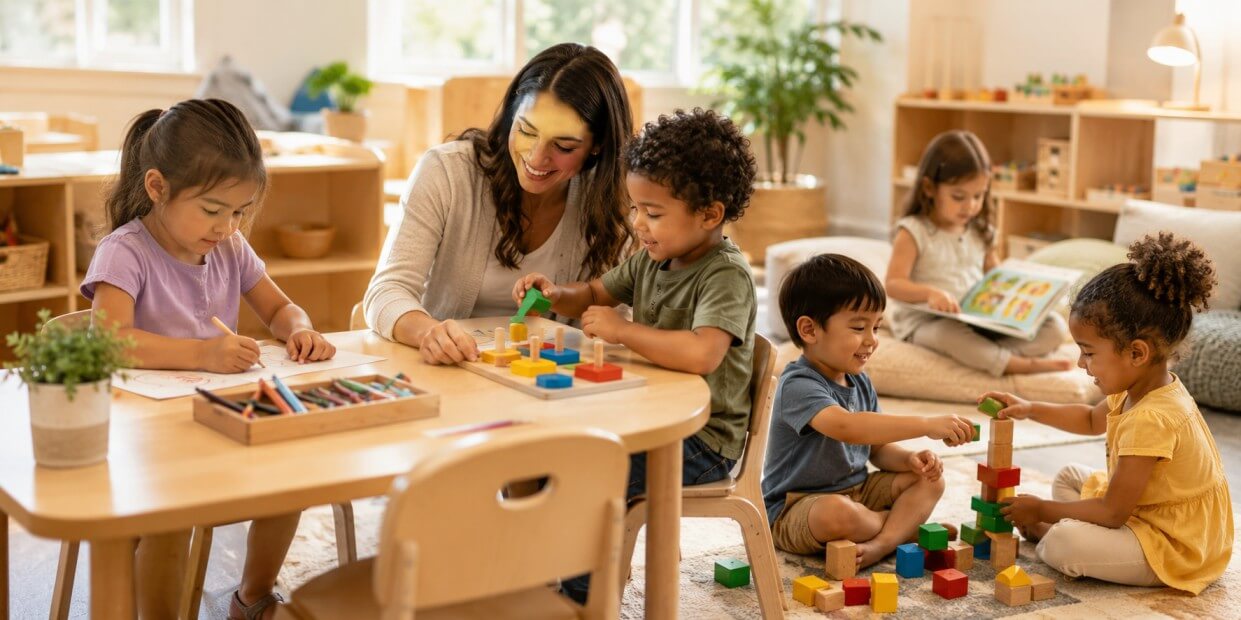
Starting kindergarten is a meaningful milestone for children and parents. It brings a new classroom, new teachers, longer group activities, and greater independence. Many families naturally wonder whether their child knows enough or has developed the right skills to feel comfortable at school.
Kindergarten readiness is not about expecting preschoolers to read books, complete worksheets, or perform every task independently. It develops through play, routines, relationships, conversation, and everyday opportunities to try new things. These experiences help children build the confidence and practical abilities they need to participate in a classroom.
What Does Preschool Readiness Mean?
Preschool readiness describes the collection of skills children gradually build before entering kindergarten. It includes early academic development, but it also covers communication, emotional regulation, physical coordination, social confidence, and independence.
A kindergarten-ready child does not need to have mastered every skill. Children develop at different rates and often show strength in one area while still needing support in another. Readiness is better understood as steady progress rather than a final test.
A strong pre-kindergarten program in Calgary gives children time to practise these skills in a safe environment where mistakes are treated as part of learning.
Kindergarten Readiness Is More Than Letters And Numbers
Parents often focus first on whether their child can count, recognize letters, or write their name. These are helpful early skills, but they are only part of the picture.
Children also need to communicate when they need help, listen during group activities, move between routines, play with classmates, and manage small frustrations. A child who feels secure enough to ask questions and try again is building an important foundation for classroom learning.
Curiosity matters too. Preschoolers who enjoy stories, explore materials, ask questions, and investigate how things work are developing habits that will support them throughout school.
Social Skills Children Build Before Kindergarten
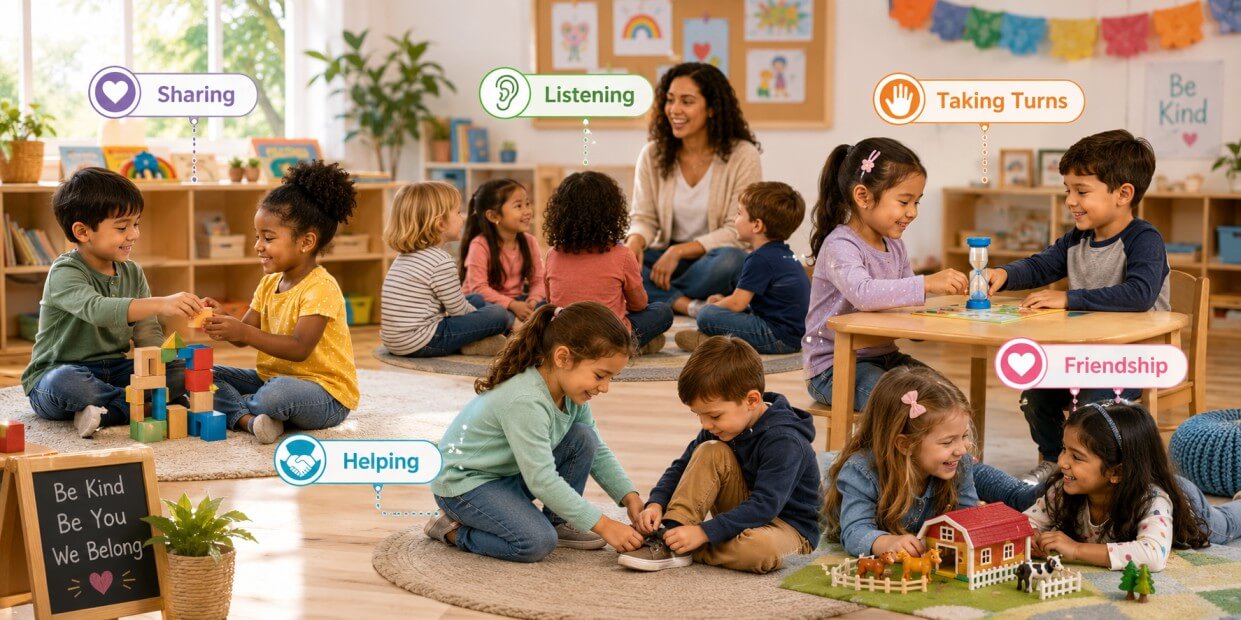
Preschool gives children regular opportunities to interact with peers. Through play and shared routines, they begin learning how to participate in a group while respecting the needs of others.
These abilities take time and repeated practice. A child may still need reminders to wait or share, but every supported interaction contributes to stronger social development.
Sharing And Taking Turns
Shared toys, games, art supplies, sensory materials, and outdoor equipment help children practise patience. They learn that another child may use an item first and that their turn will come.
Educators support this process with simple language, clear expectations, and gentle reminders. Over time, children become better able to wait, exchange materials, and participate without becoming as easily overwhelmed.
Playing And Working With Others
Young children often begin by playing beside one another before they learn to build, pretend, and create together. Preschool provides room for both independent and cooperative play.
Group activities help children listen to different ideas, take on roles, and contribute to a shared goal. These everyday experiences are part of how daycare builds strong social skills that children carry into kindergarten.
Resolving Small Conflicts
Disagreements are a normal part of learning to play with others. Children may want the same toy, disagree about a game, or feel upset when someone changes their plan.
With support, they begin to use words, listen to another child, and explore simple solutions. They learn to ask for a turn, suggest an alternative, or seek help from an adult instead of reacting physically.
Emotional Skills That Build School Confidence
Kindergarten introduces children to unfamiliar people, routines, expectations, and activities. Emotional readiness helps them manage these changes without expecting them to remain calm every moment of the day.
Preschool allows children to experience manageable challenges while caring adults remain nearby. This balance of security and independence helps them become more confident.
Expressing Feelings With Words
Children are better able to participate when they can communicate that they feel sad, worried, frustrated, excited, or tired. Preschool conversations help them connect words with emotions and recognize that feelings can be expressed safely.
Educators may name what they observe and help children identify what they need. Instead of simply reacting, a child gradually learns to say, “I need help,” “I am upset,” or “Can I have a turn?”
Managing Frustration
Not every tower stays standing, puzzle piece fits, or game goes as planned. These small disappointments give children opportunities to pause, accept encouragement, and try a different approach.
Readiness does not mean a child never cries or becomes frustrated. It means they are gradually learning how to recover, accept support, and return to an activity.
Developing Self-Regulation
Self-regulation includes managing attention, movement, emotions, and reactions. Preschool supports it through predictable routines, active play, quiet choices, sensory experiences, and warm educator guidance.
A strong focus on social-emotional learning in preschool helps children build empathy, confidence, resilience, and a healthier response to everyday challenges.
Communication And Listening Skills
Children use language throughout the kindergarten day. They need it to understand directions, share ideas, build friendships, participate in discussions, and request support.
Preschool creates frequent opportunities for language growth through conversation, stories, songs, pretend play, and group activities.
Speaking Clearly And Sharing Ideas
Before kindergarten, many children become better able to speak in complete thoughts that familiar and unfamiliar adults can understand. They may describe an experience, retell part of a story, explain what they created, or share an idea during play.
Children do not need perfect grammar or pronunciation. The goal is growing confidence in expressing needs, thoughts, and feelings.
Listening During Stories And Group Activities
Listening develops gradually. Preschoolers are not expected to sit quietly for extended periods, but they can begin attending to short stories, songs, instructions, and conversations.
Engaging activities help them practise looking, listening, responding to questions, and waiting while another person speaks.
Following Simple Directions
Classroom routines often involve one-step and two-step instructions. A teacher might ask children to put away a toy and join the group or wash their hands before sitting for lunch.
Regular routines make these directions easier to understand. Children become better at remembering what comes next and completing tasks with less support.
Early Literacy Skills Preschoolers Develop
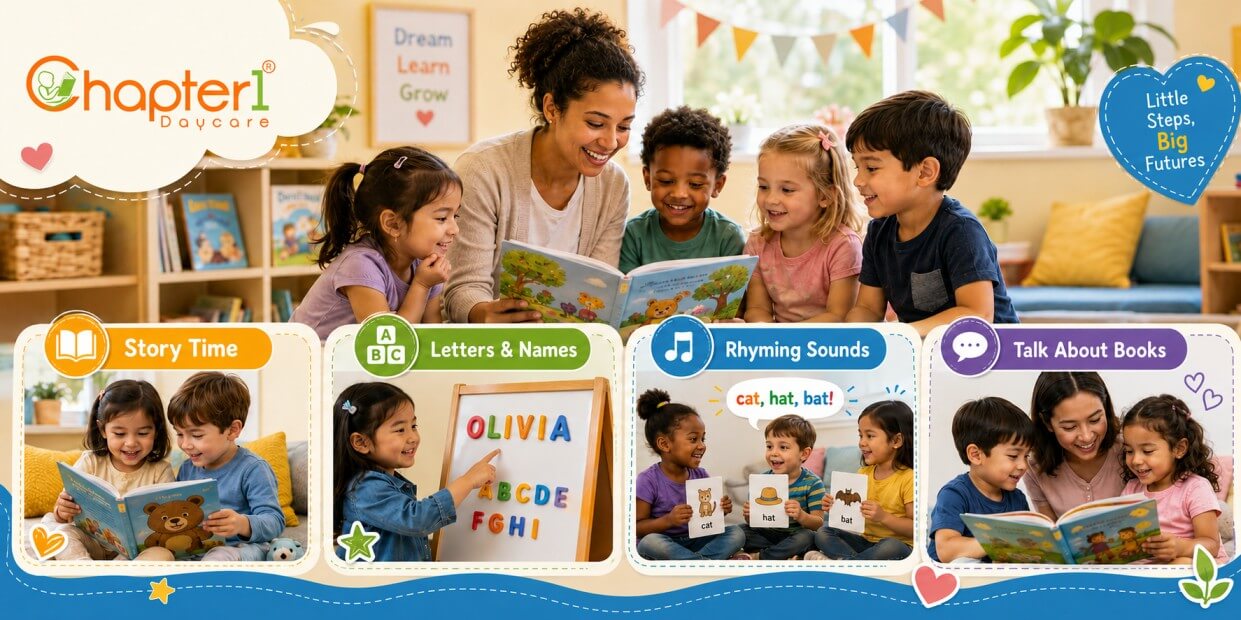
Early literacy begins long before independent reading. It grows through listening, speaking, storytelling, songs, rhymes, drawing, and enjoyable experiences with books.
A balanced preschool curriculum introduces these foundations without turning early childhood into formal schooling.
Enjoying Books And Stories
Children build literacy when they enjoy listening to stories and talking about what happens. They may predict what comes next, describe a character, repeat a familiar phrase, or connect the story to their own life.
Positive experiences with books help children see reading as something comforting, interesting, and enjoyable.
Recognizing Letters And Names
Many preschoolers begin recognizing some uppercase and lowercase letters, especially those in their own name. They may also notice familiar words on signs, labels, or classroom materials.
They do not need to know every letter before kindergarten. Regular exposure through games, songs, stories, and meaningful print is more valuable than memorization under pressure.
Hearing Rhymes And Beginning Sounds
Songs and rhyming games help children notice how words sound. They may identify words that rhyme or recognize that two words begin with the same sound.
This awareness supports later reading development because children begin understanding that spoken words are made of smaller sound patterns.
Early Math And Thinking Skills
Early math appears naturally throughout a preschool day. Children count blocks, compare tower heights, sort art materials, recognize shapes, and notice patterns in music or movement.
These playful experiences help math feel meaningful instead of abstract.
Preschoolers may begin to:
- Count small groups of objects
- Recognize common shapes and colours
- Sort items by size, type, or texture
- Compare which group has more or less
- Continue simple patterns
- Use words such as bigger, smaller, longer, and shorter
Building with blocks, completing puzzles, and experimenting with materials also strengthen problem-solving. Children learn to test ideas, make adjustments, and keep trying when their first plan does not work.
Fine Motor Skills For Early Writing
Before children can comfortably control a pencil, they need strength and coordination in their fingers, hands, and wrists. Preschool activities develop these muscles in ways that feel creative and enjoyable.
Drawing, painting, building, threading beads, shaping playdough, turning book pages, using puzzles, and cutting with child-safe scissors all support fine motor control.
These abilities also help children manage everyday tasks such as fastening clothing, opening containers, using utensils, and handling classroom materials. Physical development is closely connected with independence and school confidence, which is why a well-rounded daycare curriculum supports physical skills alongside early academic growth.
Gross Motor And Body Awareness Skills
Kindergarten children move through classrooms, hallways, playgrounds, and group spaces throughout the day. Gross motor development helps them navigate these environments safely and confidently.
Running, jumping, climbing, balancing, dancing, throwing, and catching strengthen large muscles and coordination. Outdoor play also teaches children how to judge distance, control speed, and become aware of the people and objects around them.
Physical activity can support attention as well. Children often find it easier to listen and participate after they have had healthy opportunities to move.
Independence And Self-Help Skills
Practical independence can make the kindergarten transition smoother. Children feel more capable when they can complete parts of a routine by themselves and know how to ask for assistance when something is difficult.
Useful self-help skills include:
- Using the bathroom with growing independence
- Washing and drying hands
- Eating with utensils
- Drinking from an open cup or suitable bottle
- Putting on a coat
- Managing simple shoes and clothing
- Looking after personal belongings
- Helping clean up after activities
Children do not need to perform every task perfectly. Zippers may still get stuck, containers may be difficult to open, and reminders may still be necessary. What matters is their willingness to participate and attempt age-appropriate responsibilities.
Classroom Habits Children Practise In Preschool
Preschool introduces children to the rhythm of a group learning environment. They become familiar with arrival routines, free play, circle time, meals, outdoor activities, clean-up, and transitions.
Through repetition, children learn that one activity ends and another begins. They become more comfortable joining a group, listening briefly, waiting when necessary, and completing simple responsibilities.
Families comparing preschool and pre-K may notice that pre-kindergarten often adds greater structure while still keeping learning playful and developmentally appropriate.
How Play Builds Kindergarten Readiness
Play is not separate from learning during the preschool years. It is one of the main ways children practise communication, planning, creativity, movement, and cooperation.
Pretend play strengthens language and helps children explore social situations. Block play builds spatial awareness, early math, and problem-solving. Art develops fine motor skills and creative decision-making. Outdoor play supports balance, confidence, and physical health.
Songs strengthen memory and listening. Sensory play encourages focus and discovery. Group games help children follow simple rules, manage excitement, and cooperate with others.
When children feel safe enough to play deeply, they develop the curiosity and confidence that support future classroom learning.
Preschool Readiness At Chapter1 Daycare
Chapter1 Daycare supports school readiness through play-based learning, structured routines, creative activities, outdoor play, and age-appropriate early academics. Within its preschool and pre-kindergarten programs, caring educators help children strengthen communication, independence, social-emotional skills, early literacy, math thinking, and physical coordination. Children are encouraged to explore and grow at their own pace within a safe, welcoming environment where learning remains joyful and meaningful.
How Parents Can Support Readiness At Home
Families do not need complicated lessons or large collections of worksheets. Many readiness skills grow through ordinary daily routines.
Read together and ask your child what they notice. Count steps, toys, or pieces of fruit. Let them sort socks, help set the table, put away belongings, and attempt simple clothing tasks.
Talk about emotions and model how to ask for help. Give your child time to finish manageable tasks instead of immediately stepping in. These everyday moments build capability, language, patience, and confidence.
Final Thoughts
Preschool readiness grows through hundreds of small experiences rather than one final checklist. Children prepare for kindergarten when they play with others, communicate their needs, follow familiar routines, explore early concepts, move confidently, and become more independent.
A child does not need to begin kindergarten knowing everything. They need a secure foundation and a positive relationship with learning. With patient guidance from families and educators, children can enter this next chapter feeling capable, curious, and ready to grow.
FAQs
What skills should children have before kindergarten?
Children benefit from growing communication, social-emotional, listening, motor, independence, early literacy, and early math skills. They do not need to master every ability before kindergarten begins.
Does a child need to read before kindergarten?
No. Enjoying stories, recognizing some letters, hearing rhymes, and understanding that print carries meaning are appropriate early literacy foundations.
What social skills help children in kindergarten?
Sharing, taking turns, joining group activities, expressing feelings, asking for help, listening to others, and beginning to resolve small conflicts are valuable skills.
What self-help skills should preschoolers practise?
Children can practise handwashing, eating independently, using the bathroom, putting on clothing, caring for belongings, and helping clean up.
How does preschool prepare children for kindergarten?
Preschool gives children repeated opportunities to follow routines, communicate, play with peers, develop independence, explore early academic concepts, and learn within a group.
What should preschoolers know academically?
Many preschoolers begin recognizing letters, numbers, shapes, colours, rhymes, patterns, and their own name. Exact abilities vary, and learning should remain playful and age-appropriate.
How can parents support kindergarten readiness at home?
Reading, talking, counting everyday objects, encouraging independence, maintaining routines, and giving children simple responsibilities can all strengthen readiness.
What if my child has not developed every readiness skill?
Children develop at different rates. Speak with your child’s educator or healthcare professional when you have ongoing concerns about communication, movement, behaviour, hearing, vision, or everyday participation.