


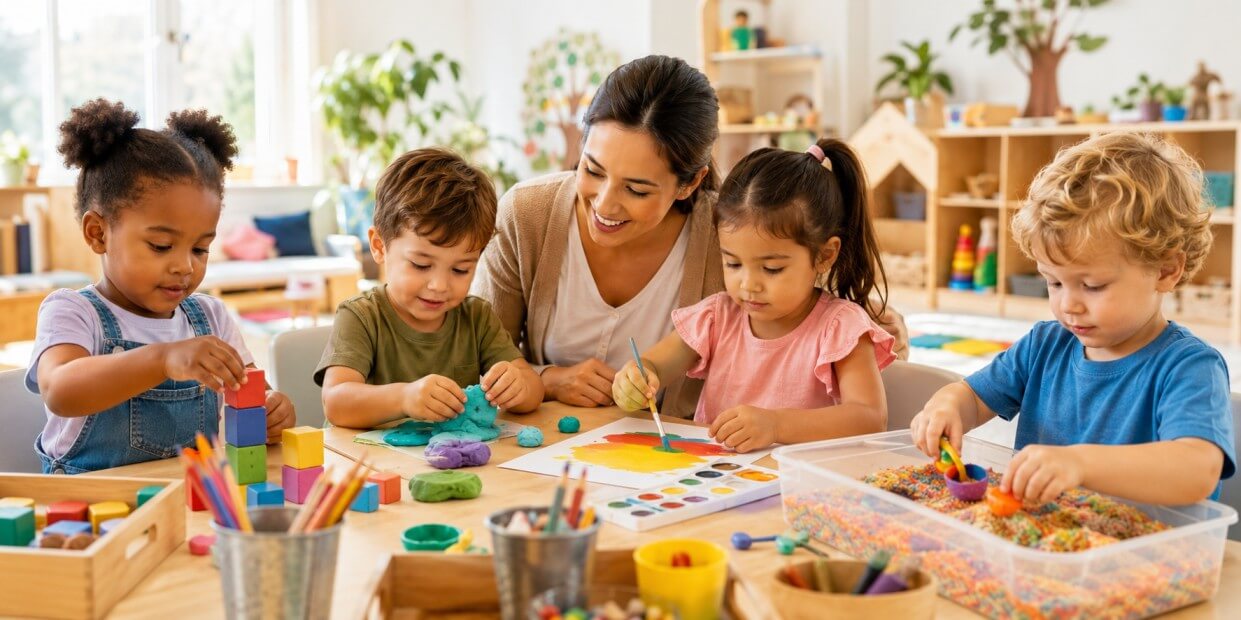
Young children are naturally active learners. They want to touch unfamiliar materials, move objects, build structures, test ideas, and discover what happens when they try something new. These everyday experiences may look like ordinary play, but they are also important opportunities for learning and development.
Hands-on learning allows children to participate directly instead of simply watching or listening. Whether they are pouring water, shaping playdough, stacking blocks, painting, sorting objects, or exploring outdoors, children are building knowledge through meaningful experiences they can see, feel, and remember.
What Is Hands-On Learning?
Hands-on learning is an active approach that helps children understand ideas by doing something themselves. Instead of only being told how an object works, children have the opportunity to touch it, move it, test it, and observe the result.
In early childhood, hands-on learning often takes place through play. Children may build with blocks, experiment with water, create artwork, complete puzzles, care for plants, or take part in imaginative games. Each activity gives them a chance to make decisions and discover how their actions affect the world around them.
This approach is closely connected to play-based learning in early childhood, where children’s natural curiosity becomes the starting point for meaningful development.
Why Young Children Learn Best By Doing
Young children often understand real experiences more easily than abstract explanations. Words such as full, empty, heavy, smooth, balanced, or faster become clearer when children can see and experience those ideas themselves.
For example, a child begins to understand volume by filling and emptying containers. They learn about balance when a block tower falls. They notice differences in size when sorting objects and begin to recognize cause and effect when pushing a toy down a ramp.
These experiences make learning more meaningful because children are actively involved. Instead of trying to remember an isolated fact, they connect the idea with something they have physically done.
Active Experiences Make Ideas Easier To Understand
Hands-on activities turn early concepts into visible and practical experiences. Counting objects gives meaning to numbers, while mixing colours helps children see how one action can create a new result.
Simple experiences can introduce early mathematics, science, language, and creative thinking without placing academic pressure on young children. Learning happens naturally because the activity has a clear and interesting purpose.
Repetition Strengthens Understanding
Children often repeat the same activity many times. They may pour water between the same containers, complete a favourite puzzle, rebuild a tower, or create similar shapes with playdough.
This repetition allows children to practise skills, notice patterns, and improve their control. It also gives them the confidence that comes from becoming more capable at something they previously found difficult.
Hands-On Learning Supports Memory
Children are more likely to remember something when several senses are involved in the experience. A child who touches, sees, moves, and talks about an object has more ways to connect with the idea than a child who only hears an explanation.
Physical experiences also give children useful memory anchors. They may remember how a tower felt when it became unstable, how cold the water was, or what happened when two materials were combined.
This does not mean every activity must be complicated. Simple, age-appropriate experiences can create lasting understanding when children have time to explore and educators help them connect words with what they are doing.
It Builds Problem-Solving And Critical Thinking
Hands-on learning regularly presents children with small challenges. A puzzle piece may not fit, a structure may fall, or a chosen tool may not work as expected. These moments encourage children to pause, think, and try another approach.
Children begin asking questions through their actions. What happens if I turn this piece? How can I make the tower stronger? Which container will hold more? What could I use instead?
These experiences support the same skills discussed in problem-solving for toddlers, including persistence, flexible thinking, and confidence when facing manageable challenges.
Trial And Error Becomes Part Of Learning
Hands-on activities help children understand that mistakes are a normal part of discovery. When something does not work, they can change their approach and try again.
A child rebuilding a fallen structure is learning more than how to stack blocks. They are learning patience, planning, and how to respond when an idea does not succeed immediately.
Small Challenges Build Persistence
Children gain confidence when adults give them time to work through safe challenges instead of completing every task for them. Gentle encouragement can help a child stay involved without removing the opportunity to think independently.
Over time, children begin to understand that they are capable of working through difficulties. This belief supports learning far beyond the original activity.
Hands-On Activities Develop Motor Skills
Many active learning experiences strengthen the muscles and coordination children need for everyday tasks. Fine motor skills involve the hands and fingers, while gross motor skills involve larger movements of the arms, legs, and body.
Both types of development are important. Physical control helps children become more independent while also preparing them for drawing, writing, dressing, eating, and participating confidently in group activities.
Fine Motor Development
Activities such as squeezing playdough, painting, threading large beads, turning puzzle pieces, picking up safe objects, and using child-friendly tools build hand strength and coordination.
These movements prepare children for more detailed tasks later. Before a child can comfortably hold a pencil, they need many opportunities to pinch, grasp, press, twist, and manipulate objects.
Gross Motor Development
Outdoor play, dancing, carrying, climbing, pushing, pulling, and balancing help strengthen the larger muscles of the body. These activities also improve coordination, spatial awareness, and confidence in movement.
A thoughtful toddler program includes active experiences that allow children to move safely while building physical skills at their own pace.
Hands-On Learning Expands Language
Children have more to talk about when they are involved in meaningful activities. Hands-on learning introduces words connected to actions, textures, colours, shapes, positions, sizes, and results.
An educator might describe dough as soft, ask whether a container is full, or talk about why a block rolled instead of staying still. Because children can connect these words with an immediate experience, the language becomes easier to understand.
Group activities also encourage children to listen, explain their ideas, ask for materials, and respond to others. Even short conversations can strengthen vocabulary and communication skills when they happen throughout the day.
It Encourages Creativity And Imagination
Open-ended materials give children the freedom to create different outcomes. A set of blocks might become a house, bridge, tower, road, or pretend shop. A collection of cardboard pieces, fabric, or natural materials can inspire many different ideas.
Unlike activities with only one correct result, open-ended learning encourages children to make choices and express their own thinking. They decide how materials should be used and what their creation represents.
This freedom supports creativity, flexible thinking, and imagination. Children also learn that their ideas have value, which can strengthen confidence and willingness to participate.
Children Build Confidence And Independence
Hands-on learning places children at the centre of the experience. They make choices, complete manageable tasks, and see the results of their own effort.
A child who pours their own water, finishes a puzzle, helps prepare a snack, or creates something independently experiences a meaningful sense of achievement. These moments communicate an important message: “I can try this myself.”
Educators still provide support, but they avoid taking over unnecessarily. The goal is to offer enough guidance for children to feel safe and successful while allowing them to remain active participants.
Collaborative Activities Develop Social Skills
Hands-on learning often happens alongside other children. Building together, sharing art materials, participating in pretend play, or working on a group activity creates natural opportunities for social development.
Children practise skills such as:
- Sharing space and materials
- Waiting for a turn
- Listening to another child’s idea
- Asking for help
- Negotiating simple roles
- Solving small disagreements
These experiences support the development of patience, empathy, and cooperation. They also connect naturally with the ways daycare builds social skills through daily interaction and guided play.
What Hands-On Learning Looks Like In Daycare
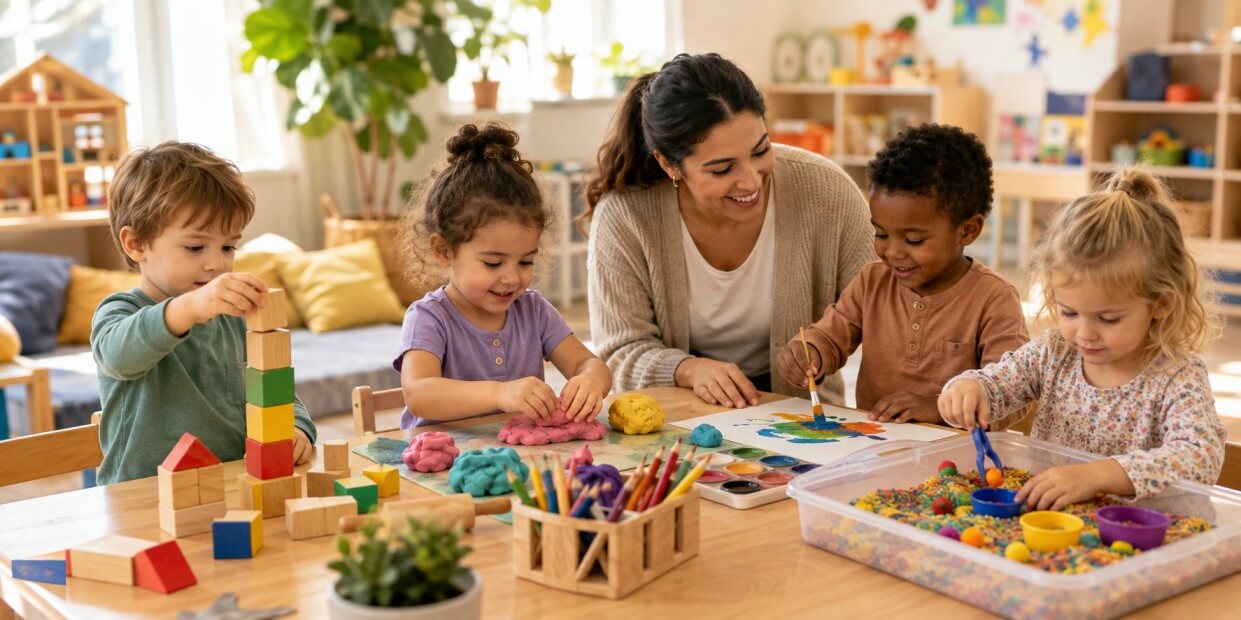
A quality daycare environment offers hands-on learning throughout the day. It is not limited to one activity table or special lesson. Children can learn actively through creative work, routines, outdoor time, group play, and everyday responsibilities.
Nature And Outdoor Exploration
Outdoor experiences allow children to collect leaves, compare stones, dig in soil, notice changes in the weather, and observe plants or insects. These activities build curiosity and encourage children to pay attention to their surroundings.
Nature play can also support movement, language, early science, and sensory development at the same time.
Sensory And Creative Activities
Water play, playdough, painting, textured materials, music, and movement help children explore through their senses. These experiences encourage focus, creativity, motor development, and emotional expression.
Sensory activities can also help children slow down and engage deeply with a task, especially when materials are introduced safely and thoughtfully.
Early Math And Science Experiences
Sorting objects, counting materials, measuring ingredients, building ramps, mixing colours, and testing what sinks or floats can introduce important early concepts.
Children do not need formal lectures to begin understanding patterns, quantities, comparisons, motion, and cause and effect. They learn these ideas by observing what happens during real experiences.
Imaginative And Collaborative Play
Pretend kitchens, dress-up areas, block centres, storytelling, and group projects allow children to use imagination while practising communication.
A pretend restaurant, for example, may involve planning roles, counting items, writing marks on paper, sharing materials, and speaking with others. One activity can support several areas of development at once.
The Educator’s Role In Hands-On Learning
Meaningful hands-on learning requires more than placing toys or materials in a room. Educators thoughtfully select activities that are safe, age-appropriate, and connected to children’s developmental needs.
They observe what interests each child, introduce useful vocabulary, ask open-ended questions, and adjust activities when a child needs more support or a greater challenge. Questions such as “What do you think will happen?” or “How could we make it stronger?” encourage children to think without giving away the answer.
Educators also know when to become involved and when to step back. This balance allows children to explore freely while still benefiting from guidance, structure, and encouragement.
Does Hands-On Learning Prepare Children For School?
School readiness involves much more than recognizing letters or memorizing numbers. Children also need confidence, attention, communication skills, coordination, independence, curiosity, and the ability to work alongside others.
Hands-on learning strengthens these foundations. It helps children follow steps, stay engaged, express ideas, manage frustration, solve problems, and complete everyday tasks with increasing independence.
Early literacy and numeracy can also be introduced naturally through storytelling, counting, sorting, drawing, songs, building, and conversation. This makes learning meaningful without asking young children to work in ways that do not match their developmental stage.
Hands-On Learning At Chapter1 Daycare
Chapter1 Daycare incorporates hands-on discovery into age-appropriate programs for infants, toddlers, preschoolers, and pre-kindergarten children. Caring educators guide children through creative projects, sensory exploration, outdoor play, movement, imaginative activities, and collaborative experiences in a safe and welcoming environment. These daily opportunities help children grow socially, emotionally, physically, and academically while preserving the curiosity and joy that make early learning meaningful.
Supporting Hands-On Learning At Home
Families do not need expensive kits or complicated activities to continue active learning at home. Many ordinary routines offer valuable opportunities for children to participate and discover.
Children can help sort laundry, water plants, prepare simple foods, build with empty boxes, count household objects, draw, explore outdoor textures, or match lids with containers. What matters most is giving them time to try, ask questions, and take part.
Adults can extend the learning by describing what is happening and asking simple questions. A calm comment such as “That container is almost full” can introduce useful language without turning the activity into a formal lesson.
Final Thoughts
Hands-on learning helps young children turn curiosity into understanding. By touching, building, moving, experimenting, and creating, children develop memory, motor control, language, confidence, creativity, and problem-solving skills.
These experiences also help children see themselves as capable learners. In a safe and supportive daycare environment, active learning gives every child space to try ideas, make discoveries, build relationships, and grow at a developmentally appropriate pace.
FAQs
What Is Hands-On Learning In Early Childhood?
Hands-on learning allows children to understand ideas through direct participation. They may touch, build, move, experiment, create, sort, or solve practical problems instead of only listening to an explanation.
Why Is Hands-On Learning Important For Children?
It makes ideas easier to understand and remember while supporting motor skills, language, creativity, confidence, independence, and critical thinking.
Is Hands-On Learning The Same As Play-Based Learning?
The approaches are closely connected, but they are not identical. Hands-on learning means learning through direct experience, while play-based learning uses play as the main setting for exploration and development.
What Are Some Hands-On Activities In Daycare?
Common examples include block building, water play, sensory activities, painting, gardening, sorting, puzzles, simple experiments, music, movement, and imaginative play.
How Does Hands-On Learning Support Problem-Solving?
Children can test an idea, observe the result, make an adjustment, and try again. This process encourages persistence, flexible thinking, and confidence when facing challenges.
Does Hands-On Learning Help With School Readiness?
Yes. It supports early academic concepts as well as attention, communication, coordination, independence, emotional regulation, and the ability to work with others.
What Is The Educator’s Role During Hands-On Activities?
Educators prepare safe materials, observe children, introduce language, ask thoughtful questions, provide appropriate support, and allow children to take an active role in discovering solutions.