


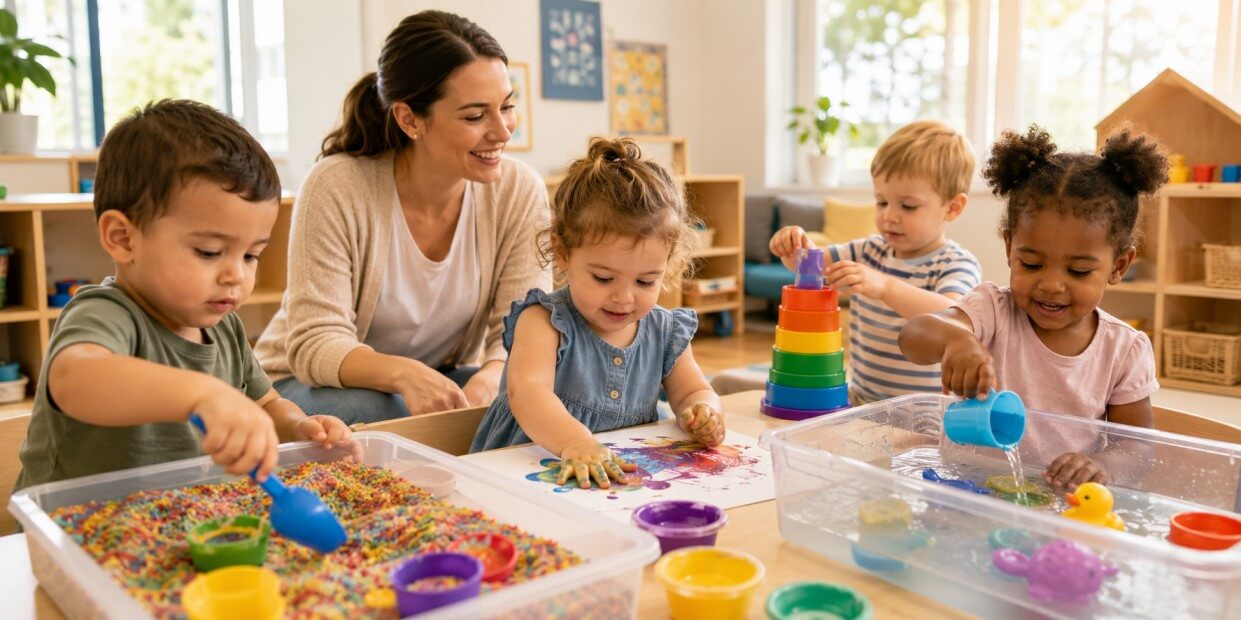
Toddlers learn with their whole bodies. They touch, scoop, pour, squeeze, shake, listen, and move through the world with curiosity. What may look like simple play is often a meaningful learning experience that helps them make sense of what they see, feel, and do every day.
That is one reason sensory play matters so much in early childhood. In a nurturing daycare setting, sensory play gives toddlers the chance to explore safely, build confidence, and develop important skills through hands-on experiences that feel natural and enjoyable.
What Is Sensory Play?
Sensory play is any activity that engages a child’s senses. This can include touch, sight, sound, smell, movement, and sometimes taste when appropriate and safely supervised. For toddlers, sensory play often looks like water play, sand tables, playdough, textured art, music, movement, scooping, pouring, and nature-based exploration.
These activities do more than keep children busy. They help toddlers notice differences, test ideas, and build early understanding through direct experience. This is why sensory exploration is such an important part of play-based learning in daycare.
Why Sensory Play Matters In The Toddler Years
The toddler years are full of fast growth. Children are developing language, body control, independence, emotional awareness, and social understanding all at once. At this stage, hands-on learning works especially well because toddlers are not meant to sit still and absorb information in a purely academic way.
They learn best when they can interact with materials, repeat actions, and discover what happens next. Sensory play supports that natural learning process. It turns curiosity into a meaningful experience and helps children stay engaged while building skills step by step.
How Sensory Play Supports Brain Development

Toddlers are constantly making connections in their growing brains. Every time they squeeze wet sand, pour water from one cup to another, or press shapes into playdough, they are practicing observation, memory, and cause and effect.
A child may wonder what happens when more water is added, when a container is tipped, or when two textures are mixed together. These simple moments encourage early thinking skills. They also help toddlers understand that their actions have results, which is an important part of problem-solving and independence.
This kind of discovery connects closely with early thinking and curiosity. It is also one reason sensory experiences fit so naturally alongside activities that support problem-solving in toddlers.
Learning Through Repetition
Toddlers often repeat the same action many times. They may scoop beans over and over, press their fingers into soft dough repeatedly, or move water from one bowl to another with deep concentration. Repetition is not wasted time. It helps strengthen understanding and gives children the chance to practice a skill until it begins to feel familiar.
This steady repetition also helps children slow down, focus, and feel successful. Those small moments of mastery matter. They build confidence and encourage toddlers to keep exploring.
Building Curiosity And Confidence
Sensory play invites toddlers to try things without pressure. There is often no single right answer. A child can swirl colours, dig in shredded paper, listen to sounds, or explore textures in their own way. This freedom supports creativity and helps children feel safe taking small risks in learning.
When toddlers feel comfortable experimenting, they become more confident learners. That confidence often carries into other parts of the day, including group activities, routines, and communication with others.
How Sensory Play Builds Language Skills
Language grows when toddlers have real experiences to talk about. Sensory play gives educators many natural opportunities to introduce words that describe textures, actions, colours, sounds, and feelings. Children begin to hear and connect words like soft, sticky, rough, smooth, cold, warm, splash, scoop, and squish.
These words become more meaningful because toddlers are not just hearing them. They are feeling and experiencing them in the moment. That makes it easier for children to remember and use them later.
In a quality daycare environment, educators also expand language through conversation. They ask simple questions, describe what the child is doing, and encourage back-and-forth communication. During sensory play, even short interactions can support listening, vocabulary, and expressive language in a very natural way.
This is one reason sensory activities work so well within a strong toddler program. They combine movement, exploration, and language in a way that feels playful but supports real development.
How Sensory Play Strengthens Motor Skills
Many sensory activities help toddlers build both fine motor and gross motor skills. Fine motor skills involve the smaller muscles in the hands and fingers. Gross motor skills involve larger body movements such as lifting, reaching, balancing, climbing, and carrying.
When a toddler pinches dough, picks up pom-poms, pours rice, uses tongs, or stirs water with a spoon, they are strengthening hand muscles and coordination. These early abilities help support future tasks such as feeding, dressing, drawing, and later, pencil grip.
Movement-based sensory play is valuable too. Activities that involve pushing, pulling, digging, jumping, or carrying help children develop body awareness and coordination. These experiences are part of healthy physical development and are supported by active routines and hands-on learning in daycare.
Preparing For Everyday Independence
Motor development is not only about future school skills. It also supports daily independence right now. Toddlers use these abilities when washing hands, opening containers, trying to dress themselves, and helping with simple clean-up tasks.
That is why sensory play can have such practical benefits. It helps build the physical control children need for everyday life while still feeling joyful and age-appropriate.
How Sensory Play Supports Focus And Self-Regulation
Toddlers are still learning how to manage big feelings, transitions, and busy environments. Sensory play can be very helpful because many sensory activities are calming, repetitive, and grounding. Scooping, stirring, pouring, squeezing, or pressing can help children settle into the moment.
This does not mean sensory play is a cure for every emotional challenge. It does mean that it can be a supportive part of a toddler’s day. With patient guidance, these experiences may help children slow down, stay engaged longer, and feel more regulated in their bodies.
This is especially valuable in childcare settings where routines matter. A child who feels calm and supported is often more ready to participate in group time, transitions, meals, and rest. That is one reason consistent daily routines for toddlers work so well alongside play-based experiences.
How Sensory Play Helps Toddlers Learn Social Skills In Daycare
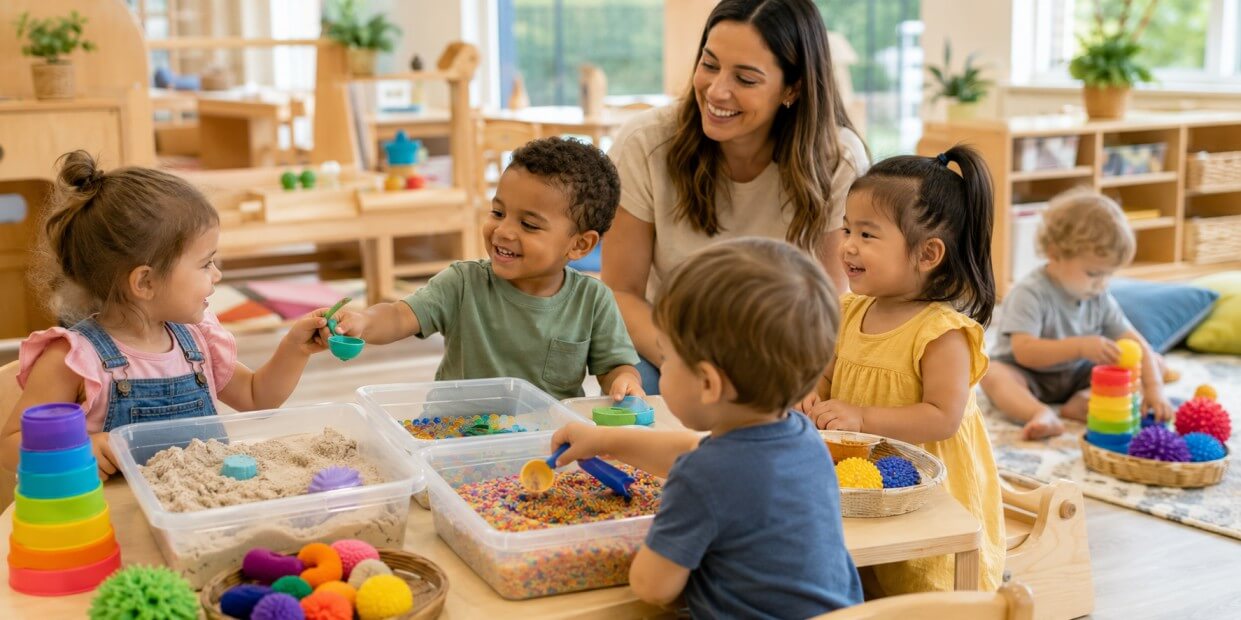
Daycare gives toddlers something home settings cannot always provide in the same way: regular opportunities to learn alongside other young children. Sensory play becomes a shared experience where toddlers begin practicing important social skills.
At a sensory table or creative station, children learn to notice each other, wait for materials, take turns, and play side by side. These early group experiences help toddlers understand that they are part of a shared space. They begin to build patience, cooperation, and awareness of others.
Even simple interactions matter. One child may pass a scoop. Another may copy a friend’s action. An educator may gently guide children through sharing language or encourage them to explore together. These moments help strengthen the same foundations that support social development in daycare.
What Sensory Play Looks Like In Daycare
In a daycare setting, sensory play can be thoughtfully built into the day rather than treated as an occasional extra. It may happen through water tables, playdough activities, music and movement, textured art, outdoor exploration, sensory bins, or nature-based experiences using safe materials.
A strong early learning environment uses sensory play with purpose. The goal is not simply to make a mess. It is to create engaging opportunities for toddlers to discover, communicate, move, and build confidence through hands-on exploration.
At Chapter1 Daycare, this approach fits naturally within the centre’s warm, play-based philosophy. Families looking for childcare in Calgary often want more than supervision. They want a safe, caring environment where children can grow emotionally, socially, and academically. Sensory play supports that whole-child development in a way that feels fun and meaningful for toddlers.
For parents exploring toddler daycare in Calgary, it is helpful to know that these activities are not separate from learning. They are part of how learning happens in the toddler years.
Why Parents Value Sensory Play In Early Learning
Parents often notice the benefits of sensory play over time. A toddler may start using more descriptive words, show better coordination, become more curious, or feel more comfortable joining group activities. These changes may happen gradually, but they are meaningful.
Sensory play also supports school readiness in age-appropriate ways. It encourages attention, listening, early problem-solving, communication, physical control, and confidence with new experiences. Those are important foundations for later learning.
Most of all, sensory play respects how toddlers naturally grow. It allows children to be active participants in their own learning rather than passive observers. That makes early education feel joyful, secure, and developmentally appropriate.
Final Thoughts
Sensory play helps toddlers learn by turning everyday exploration into real developmental progress. Through touch, movement, texture, sound, and hands-on discovery, children build language, coordination, focus, confidence, and social understanding in ways that feel natural to them.
In a high-quality daycare setting, sensory play is far more than entertainment. It is a meaningful part of early learning that supports the whole child. When toddlers are given safe, well-guided opportunities to explore with their senses, they are not just playing. They are building the skills they will carry into preschool, school, and everyday life.
FAQs
What is sensory play for toddlers?
Sensory play includes activities that engage a toddler’s senses, such as touch, sight, sound, smell, and movement. Common examples include water play, sand, playdough, music, textured art, and simple sensory bins.
How does sensory play help toddlers learn in daycare?
It supports brain development, language growth, motor skills, focus, problem-solving, and social learning. In daycare, these experiences are guided in a safe environment and often become part of the daily routine.
Do sensory bins help toddlers?
Yes, when they are age-appropriate and supervised. Sensory bins can help toddlers explore textures, practice scooping and pouring, build vocabulary, and strengthen concentration through hands-on play.
Can sensory play help with toddler behaviour?
Sensory play can support self-regulation by giving toddlers calming, repetitive, and engaging activities that help them focus and feel more settled. It works best as part of a consistent, nurturing routine.
Why is sensory play important in early childhood?
It supports whole-child development during a stage when children learn best through direct experience. Sensory play helps toddlers understand the world around them while building confidence, curiosity, and practical skills.